
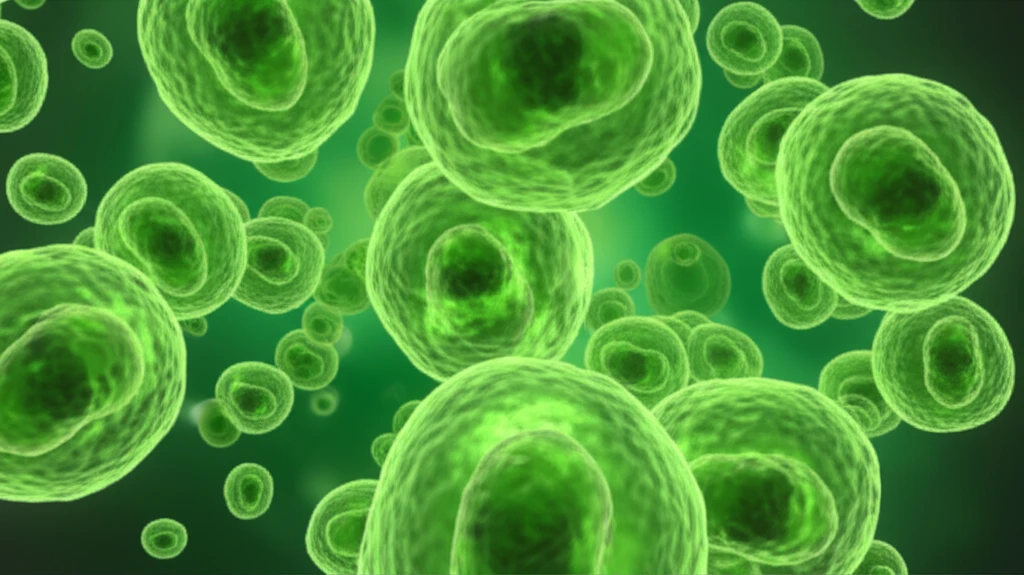
Microscopic view of cells being treated with a natural compound

Unlocking Hope: Tricin's Potential Against Cytomegalovirus (HCMV)

"Could a natural compound offer a new strategy in the fight against this common infection?"


Human cytomegalovirus (HCMV) is a common virus that can infect people of all ages. For most healthy individuals, HCMV poses little threat, often causing mild or no symptoms. However, for those with weakened immune systems, such as transplant recipients or individuals with HIV, HCMV can lead to serious complications and even become life-threatening. This is because the virus can reactivate and spread rapidly when the immune system is unable to keep it in check.

HCMV is a master of disguise, able to persist in the body for years without causing any noticeable issues. It’s estimated that a significant portion of the adult population has been exposed to HCMV at some point in their lives. While this latent infection is usually harmless, it can become a major concern when the immune system is compromised. In these cases, HCMV can cause a range of problems, including pneumonia, hepatitis, and neurological issues.

Researchers are constantly searching for new and effective ways to combat HCMV, particularly in vulnerable populations. Current antiviral treatments can be effective, but they also come with potential side effects and the risk of the virus developing resistance. This is why there’s so much interest in exploring alternative approaches, including natural compounds that might offer a new way to target HCMV.

Tricin: A Natural Compound with Anti-HCMV Potential?

Microscopic view of cells being treated with a natural compound

A recent study has explored the potential of tricin, a natural compound found in various plants, to inhibit HCMV replication. The study, titled "CCL5-dependent replication of human cytomegalovirus is inhibited by tricin in vitro," investigated how tricin affects HCMV in human embryonic lung fibroblast cells (HEL). The findings suggest that tricin could offer a new avenue for developing anti-HCMV therapies.

The study focused on the role of CCL5, a chemokine (a type of signaling protein) that plays a role in inflammation and immune responses. HCMV can induce the expression of CCL5, which, in turn, can further enhance HCMV infection. The researchers discovered that tricin inhibits HCMV replication by targeting CCL5. In other words, tricin appears to disrupt the virus's ability to exploit the CCL5 pathway for its own benefit.

  • Tricin inhibits HCMV replication: The study found that tricin significantly reduced HCMV replication in HEL cells.
  • Decreases CCL5: Tricin treatment led to a decrease in the levels of CCL5 transcripts and protein.
  • CCL5 knockdown reduces HCMV: When the CCL5 gene was “knocked down” (reduced expression), HCMV replication was also significantly lower.
These results suggest that CCL5 is a key player in HCMV infection and that targeting it with compounds like tricin could be a promising strategy. Tricin's ability to inhibit HCMV replication and reduce CCL5 levels makes it an attractive candidate for further investigation as a potential anti-HCMV agent.

What Does This Mean for the Future of HCMV Treatment?

While this study is still in the early stages, it offers a glimmer of hope for new HCMV treatments. The fact that tricin is a natural compound is particularly exciting, as it may offer a safer and more tolerable alternative to existing antiviral drugs. However, it's important to remember that this research was conducted in vitro, meaning in a laboratory setting using cells. More research is needed to determine whether tricin is safe and effective in humans.

About this Article -

This article was crafted using a human-AI hybrid and collaborative approach. AI assisted our team with initial drafting, research insights, identifying key questions, and image generation. Our human editors guided topic selection, defined the angle, structured the content, ensured factual accuracy and relevance, refined the tone, and conducted thorough editing to deliver helpful, high-quality information.See our About page for more information.

This article is based on research published under:

DOI-LINK: 10.1016/j.ijid.2018.04.4267, Alternate LINK

Title: Ccl5-Dependent Replication Of Human Cytomegalovirus Is Inhibited By Tricin In Vitro

Subject: Infectious Diseases

Journal: International Journal of Infectious Diseases

Publisher: Elsevier BV

Authors: T. Murayama, H. Sadanari, M. Takemoto, T. Daikoku

Published: 2018-08-01

Everything You Need To Know

1

What is Human Cytomegalovirus (HCMV), and why is it a concern?

Human Cytomegalovirus (HCMV) is a common virus that infects people of all ages. Typically, it causes mild or no symptoms in healthy individuals. However, HCMV becomes a serious threat to those with weakened immune systems, such as transplant recipients or individuals with HIV. In these vulnerable populations, HCMV can reactivate and spread rapidly, leading to severe complications like pneumonia, hepatitis, and neurological issues because the immune system is unable to control the virus effectively.

2

How does Tricin work against HCMV?

Tricin, a natural compound found in various plants, inhibits HCMV replication by targeting CCL5. The study found that tricin reduces the levels of CCL5 transcripts and protein. CCL5 is a chemokine that HCMV uses to enhance its own replication. By interfering with CCL5, tricin disrupts the virus's ability to exploit this pathway, effectively reducing the virus's ability to multiply within the host cells. This is why it can be considered a potential anti-HCMV agent.

3

What is CCL5's role in HCMV infection, and why is it important?

CCL5 is a chemokine, a type of signaling protein, that plays a role in inflammation and immune responses. HCMV induces the expression of CCL5, and in turn, CCL5 can enhance HCMV infection. The study found that CCL5 is a key player in HCMV infection. Targeting CCL5 with compounds like tricin could be a promising strategy to combat HCMV. The fact that tricin decreases CCL5 means less viral replication.

4

What are the potential benefits of using Tricin for HCMV treatment, and how does this compare to current treatments?

The potential benefits of tricin are significant. As a natural compound, it may offer a safer and more tolerable alternative to existing antiviral drugs. Current antiviral treatments can have side effects and may lead to the virus developing resistance. This makes tricin an attractive area for research because it could potentially offer a new way to combat HCMV without these drawbacks. However, it's important to remember that research is ongoing and was performed in vitro, meaning in a laboratory setting using cells.

5

What are the next steps in researching Tricin for HCMV treatment?

The study mentioned in the content was conducted in vitro, so the next steps involve further research. More research is needed to determine whether tricin is safe and effective in humans. This would likely involve in vivo studies, which use animal models to assess the drug's effectiveness and safety. If these studies are successful, clinical trials in humans would be the next step to evaluate tricin's efficacy and potential side effects in a clinical setting. These steps are crucial to validate tricin as a viable anti-HCMV treatment option.

Newsletter Subscribe

Subscribe to get the latest articles and insights directly in your inbox.