
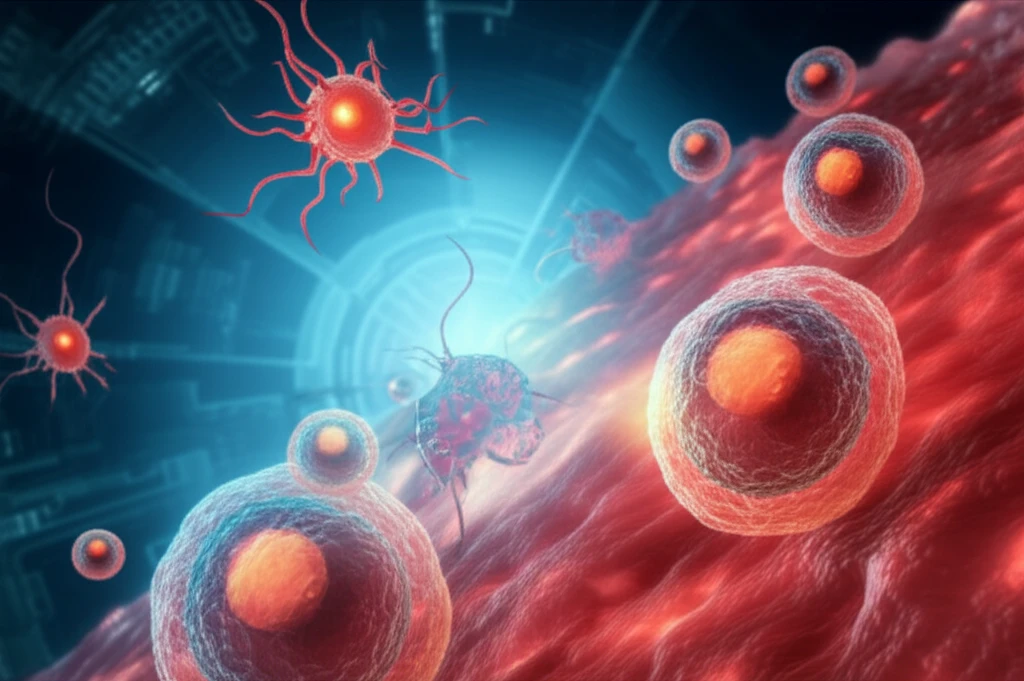
Illustration of cancer cells being targeted by immune cells, symbolizing a new cancer therapy approach.

Unlocking Hope: How a New Therapy is Revolutionizing Cancer Treatment

"Promising research reveals a novel approach to cancer treatment, offering new possibilities for patients and a shift in how we fight the disease."


In the relentless battle against cancer, scientists are constantly seeking innovative treatments to improve patient outcomes and quality of life. A recent study has unveiled a promising new therapy that could revolutionize how we approach cancer treatment. This groundbreaking research focuses on inducing immunological death in tumor cells, offering a novel approach that could lead to more effective and targeted therapies.

The concept of immunological death, where the body's own immune system is harnessed to eliminate cancer cells, has gained significant traction in recent years. Unlike traditional chemotherapy, which can have harsh side effects, this new therapy aims to specifically target and destroy tumor cells while leaving healthy cells unharmed. This precision is a critical advantage, potentially minimizing the debilitating effects often associated with conventional treatments.

This article will delve into the details of this innovative therapy, exploring its mechanism of action, potential benefits, and the implications it holds for the future of cancer treatment. We will examine the research findings, the types of cancer it targets, and what this means for patients and their families, offering an in-depth look at a treatment that brings hope and a new perspective to the fight against cancer.

The Science Behind Immunological Death: A New Approach to Cancer Treatment

Illustration of cancer cells being targeted by immune cells, symbolizing a new cancer therapy approach.

The core of this innovative therapy lies in its ability to induce immunological death within tumor cells. This process involves a series of steps where a specific compound, in this case, EY-6, interacts with cancer cells, triggering a cascade of events that leads to their destruction. The treatment works by activating the body's immune system to recognize and eliminate the cancer cells. This is achieved by stimulating the production of certain proteins and cytokines that signal the immune system.

One of the key mechanisms involves the increased expression of a protein called CRT (calreticulin) on the surface of the tumor cells. CRT acts as an 'eat-me' signal, attracting immune cells like dendritic cells to engulf and present the tumor antigens. Additionally, the therapy stimulates the secretion of cytokines such as IFN-y and IL-12, which are essential for activating the immune system and promoting an anti-tumor response. This targeted approach aims to eliminate cancer cells while minimizing damage to the surrounding healthy tissues.

  • Targeted Action: Specifically targets and destroys tumor cells, reducing harm to healthy cells.
  • Immune Activation: Stimulates the body's immune system to recognize and eliminate cancer cells.
  • Cytokine Production: Increases the production of cytokines, like IFN-y and IL-12, to boost the immune response.
  • CRT Expression: Enhances the expression of the CRT protein, signaling immune cells to engulf tumor cells.
The research has shown that this therapy is effective against various human tumor cell lines, including those found in colon and gastric cancers, as well as multiple myeloma. The studies have demonstrated that the treatment induces significant tumor cell death in a dose-dependent manner. This is a promising indicator that the therapy can be tailored to suit individual patient needs and the specific characteristics of their cancer.

Looking Ahead: The Future of Cancer Treatment

The development of this innovative therapy marks a significant step forward in the fight against cancer. By harnessing the power of the immune system and targeting tumor cells with precision, this treatment holds tremendous promise for improving patient outcomes and reducing the side effects of traditional therapies. As research continues, and the therapy is further developed, it has the potential to transform the landscape of cancer treatment, offering hope and a brighter future for those affected by this devastating disease.

About this Article -

This article was crafted using a human-AI hybrid and collaborative approach. AI assisted our team with initial drafting, research insights, identifying key questions, and image generation. Our human editors guided topic selection, defined the angle, structured the content, ensured factual accuracy and relevance, refined the tone, and conducted thorough editing to deliver helpful, high-quality information.See our About page for more information.

Everything You Need To Know

1

What is immunological death and how does this therapy utilize it to fight cancer?

Immunological death is a process where the body's immune system is harnessed to eliminate cancer cells. This novel therapy induces immunological death in tumor cells using a specific compound, like EY-6, which interacts with cancer cells to trigger their destruction. This process activates the immune system to recognize and eliminate cancer cells, marking a shift from traditional chemotherapy by specifically targeting tumor cells while minimizing harm to healthy cells. This targeted action differentiates it from traditional methods, potentially reducing the harsh side effects often associated with conventional treatments.

2

How does this new cancer therapy differ from traditional chemotherapy treatments?

Unlike traditional chemotherapy, which can have harsh side effects due to its impact on both healthy and cancerous cells, this new therapy focuses on inducing immunological death specifically in tumor cells. This targeted approach involves compounds like EY-6 interacting with cancer cells, triggering a cascade of events that leads to their destruction while leaving healthy cells unharmed. This minimizes the debilitating effects often associated with conventional treatments and harnesses the body's immune system to fight the cancer.

3

What role do proteins like CRT and cytokines such as IFN-y and IL-12 play in this new cancer therapy?

In this therapy, CRT (calreticulin) acts as an 'eat-me' signal on the surface of tumor cells, attracting immune cells like dendritic cells to engulf and present tumor antigens. Cytokines such as IFN-y and IL-12 are essential for activating the immune system and promoting an anti-tumor response. These components work together to ensure the immune system can effectively recognize, target, and eliminate cancer cells, showcasing a coordinated immune response against the tumor.

4

Against what types of cancer cells has this therapy shown effectiveness in studies?

Research has demonstrated that this therapy is effective against various human tumor cell lines, including those found in colon and gastric cancers, as well as multiple myeloma. The studies have shown that the treatment induces significant tumor cell death in a dose-dependent manner, suggesting that the therapy can be tailored to suit individual patient needs and the specific characteristics of their cancer. This adaptability is crucial for personalizing cancer treatment strategies.

5

What are the potential implications of inducing immunological death in cancer treatment, and how might it change the future of cancer care?

Inducing immunological death holds significant promise for improving patient outcomes by specifically targeting tumor cells while minimizing harm to healthy cells. This approach has the potential to reduce the severe side effects associated with traditional chemotherapy, leading to an improved quality of life for patients. Furthermore, by harnessing the power of the immune system, this therapy could offer more durable and long-lasting responses, potentially transforming the landscape of cancer treatment and providing a brighter future for those affected by this devastating disease. Further research and development in this area could lead to more personalized and effective cancer therapies.

Newsletter Subscribe

Subscribe to get the latest articles and insights directly in your inbox.