
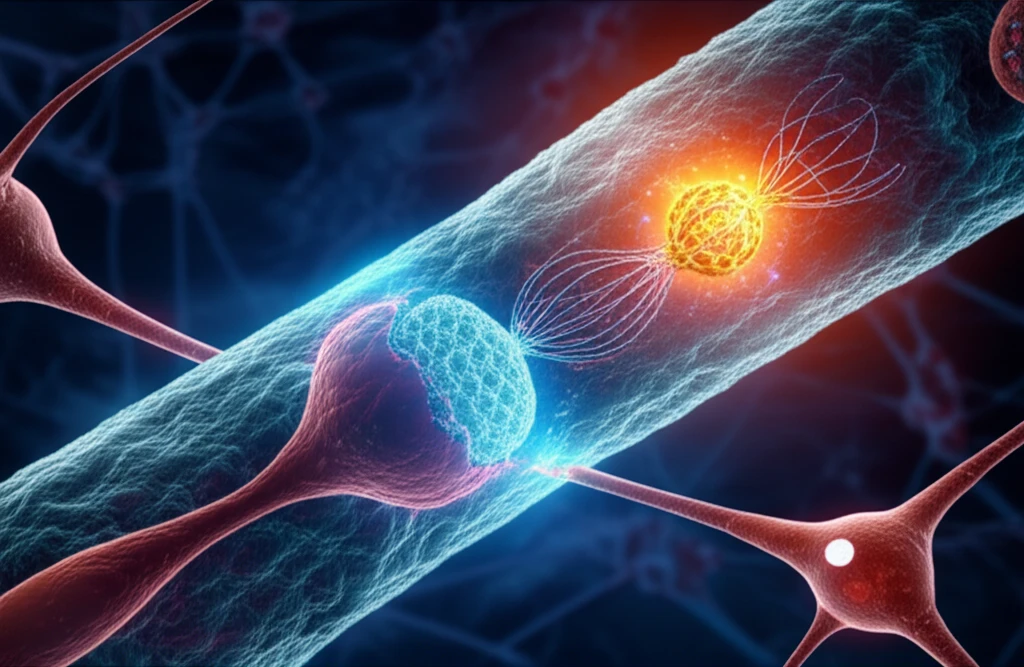
Unlocking Hope: Groundbreaking Research Reveals New Insights into Treating Myasthenia Gravis

"Scientists Discover How a Specific RNA Molecule Could Revolutionize Treatment for Autoimmune Disease, Offering New Hope for Millions."
Myasthenia gravis (MG) is a chronic autoimmune neuromuscular disease that causes weakness in the skeletal muscles, which are responsible for breathing and moving parts of the body. It occurs when the immune system mistakenly attacks the connection between nerves and muscles, known as the neuromuscular junction. While current treatments exist, they aren't always effective, and new, targeted therapies are urgently needed.
In a significant breakthrough, recent research published in Clinical Immunology has identified a specific long non-coding RNA (lncRNA) molecule, IFNG-AS1, as a key player in the disease. This discovery is more than just a scientific finding; it's a beacon of hope for those living with MG, as it offers new avenues for treatment and a better understanding of the disease's mechanisms.
This groundbreaking research is a step towards developing more effective therapies for myasthenia gravis, and represents a big step forward in our understanding of this disease. The study reveals the potential of targeting IFNG-AS1, potentially revolutionizing the treatment landscape for this challenging condition.
The Science Behind MG and the Role of IFNG-AS1
MG primarily affects the muscles that control eye movement, facial expression, chewing, swallowing, and breathing. The hallmark of MG is muscle weakness that worsens with activity and improves with rest. This debilitating disease affects people of all ages, with women being more commonly affected than men.
- The Immune System's Role: In MG, the immune system produces antibodies that mistakenly attack the receptors at the neuromuscular junction.
- IFNG-AS1's Influence: The study revealed that IFNG-AS1 impacts how CD4+ T cells behave, particularly their activation levels.
- Potential for Treatment: The researchers' insights on IFNG-AS1's role could lead to the development of therapies that target this molecule to moderate the immune response and alleviate MG symptoms.
Looking Ahead: The Future of MG Treatment
The research on IFNG-AS1 offers new hope to those affected by MG, showing how much more we are learning about how to treat this disease. Further studies will be crucial to exploring the full therapeutic potential of IFNG-AS1. The study findings are a solid basis for future clinical trials. These trials could pave the way for innovative, targeted treatments that alleviate MG symptoms and improve patients' lives. The goal of these efforts is to give people with myasthenia gravis a brighter future.