
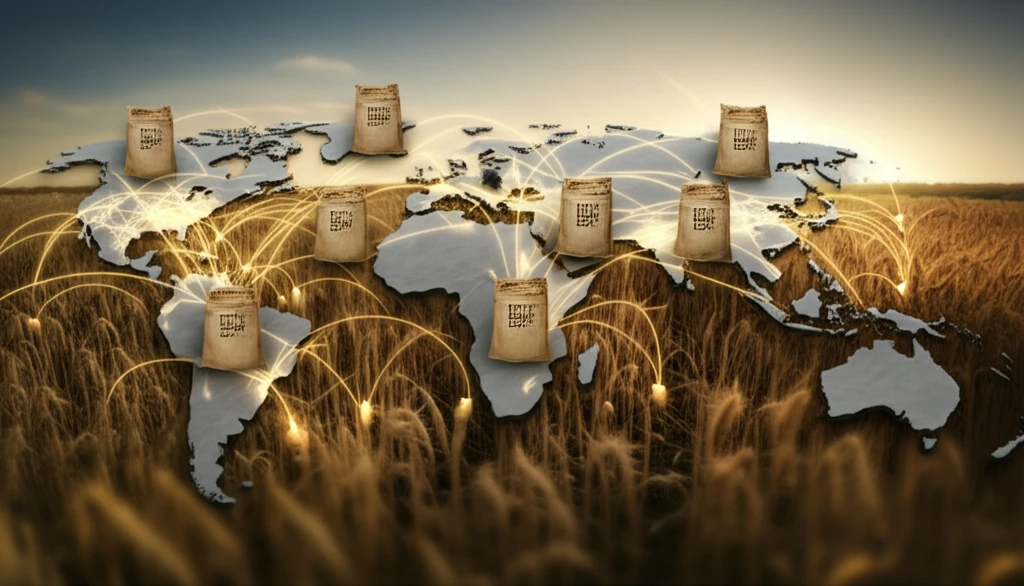
Unlocking Global Food Security: How Tracking Phosphate Trade Can Save Our Future

"Discover how analyzing the trade of phosphate, a crucial element for fertilizers, is essential for understanding and securing global food supplies in an era of geopolitical shifts."
In an era defined by rapid geopolitical shifts and increasing concerns over food security, understanding the global flow of essential resources has never been more critical. Among these resources, phosphorus stands out as a key element in the production of fertilizers, which are vital for sustaining agricultural output and feeding the world's growing population.
Phosphorus, unlike other agricultural inputs, is non-renewable and unevenly distributed across the globe. This scarcity, coupled with its essential role in crop production, makes the phosphate supply chain a critical point of vulnerability. Disruptions to this supply chain, whether from political instability, trade restrictions, or resource depletion, can have far-reaching consequences for global food security and economic stability.
Recognizing these challenges, a team of researchers has developed a novel approach to trace the flow of phosphate from its origins in mines to its final use in agricultural fields. By analyzing trade data and incorporating factors such as net exports and weighting factors, this method provides a detailed map of phosphate flows on a country level. This enhanced visibility is crucial for improving environmental accounting, mitigating supply chain risks, and ensuring the sustainable use of this essential resource.
Mapping the Global Phosphate Network: Why It Matters
The traditional approach to understanding resource flows often falls short when it comes to phosphate. While global reserves are not currently scarce, the concentration of phosphate rock mining in a limited number of countries creates a complex trade network with the potential to amplify shocks from both the supply and demand sides. This necessitates a more detailed mapping of phosphate flows to identify potential vulnerabilities and inform policy decisions.
- Enhanced accuracy in material flow analyses.
- Improved environmental accounting for phosphorus and other resources.
- Better understanding of supply chain risks and vulnerabilities.
- Informed decision-making for policymakers and industry stakeholders.
Securing Our Food Future: The Path Forward
The insights gained from this research have the potential to transform how we manage phosphate resources and secure our global food supply. By providing a more accurate and detailed picture of phosphate flows, this method enables policymakers and industry stakeholders to make informed decisions, mitigate supply chain risks, and promote the sustainable use of this essential resource. As the world grapples with increasing food security challenges, this type of innovative analysis is crucial for ensuring a stable and resilient food system for future generations.