
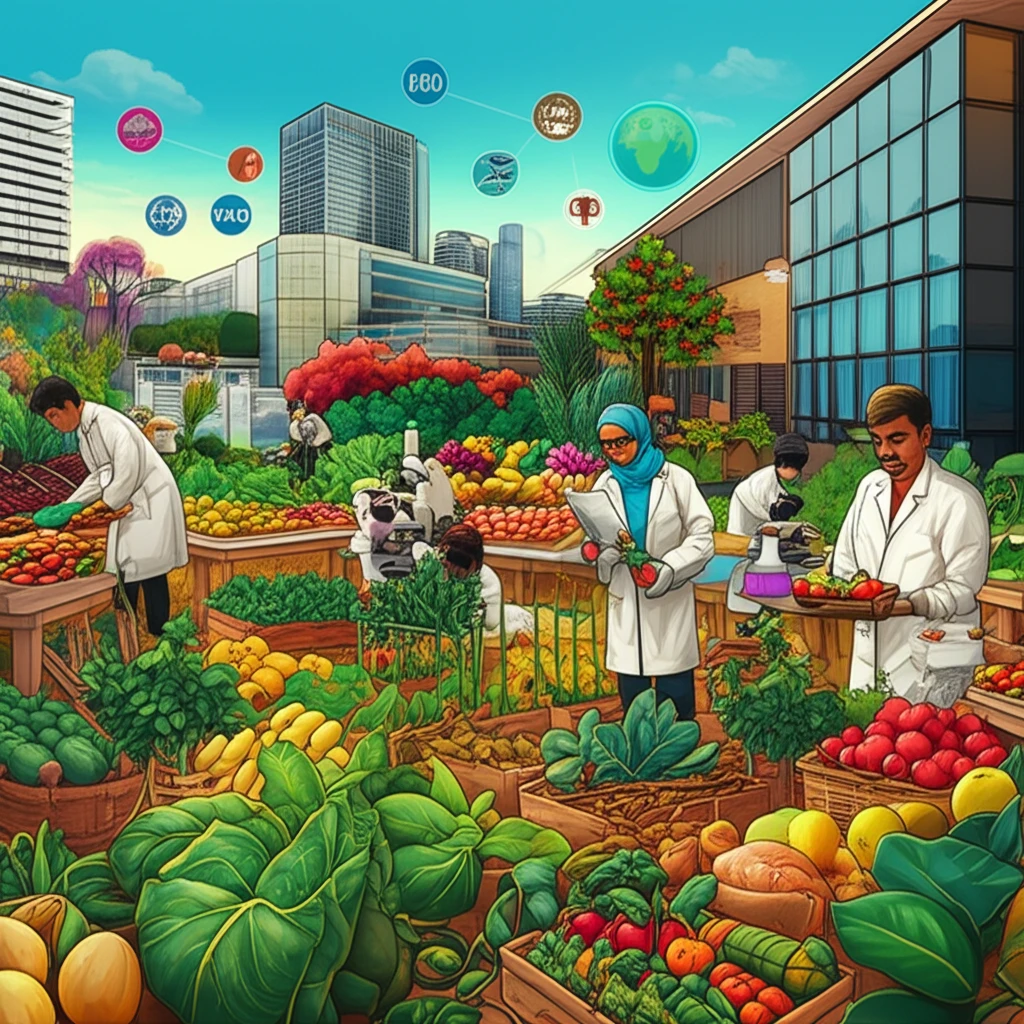
Illustration showing diverse people working together to produce safe food and research, symbolizing global food security and the power of collaboration.

Unlocking Food Security: How Collective Expertise Can Fight Food Safety Hazards

"From Local Universities to Global Impact: The Power of Knowledge in Securing Safer Food for All."


The global food landscape faces complex challenges. From climate change to international trade dynamics, ensuring a safe and secure food supply is more critical than ever. Recent data paints a stark picture: millions face foodborne illnesses annually, with the burden disproportionately affecting low- and middle-income countries. These realities demand urgent and effective solutions.

This article delves into a powerful methodology: Collective Expertise. It's a transformative approach that harnesses the knowledge and resources within local communities, universities, and private sectors to tackle food safety hazards. By translating scientific insights into actionable strategies, Collective Expertise empowers nations to protect their populations and contribute to global food security.

We'll explore the challenges that plague food safety, the innovative use of existing resources, and how this methodology can create positive, sustainable change. Get ready to discover how this collaborative approach can revolutionize food safety and protect the health of people worldwide.

The Alarming Reality of Food Safety Hazards: A Global Crisis

Illustration showing diverse people working together to produce safe food and research, symbolizing global food security and the power of collaboration.

Foodborne illnesses are a significant and often underestimated threat. These illnesses, caused by pathogens, toxins, and chemical contaminants, lead to millions of illnesses and countless deaths worldwide. The consequences are especially dire in low- and middle-income countries, where resources are limited, and infrastructure is often lacking. The scale of the problem is massive.

According to the World Health Organization (WHO), the statistics are grim. Approximately 600 million people fall ill due to contaminated food annually, with 420,000 deaths. This crisis is not merely a health issue; it undermines economies, strains healthcare systems, and erodes public trust. Addressing these challenges demands a comprehensive understanding of their multifaceted nature.

  • Microbiological Contamination: Bacteria, viruses, and parasites like Salmonella, E. coli, and Norovirus are significant culprits.
  • Chemical Contamination: Residues from pesticides, heavy metals, and industrial pollutants pose severe risks.
  • Limited Infrastructure: Lack of proper storage, transportation, and sanitation contribute to the spread of contaminants.
  • Ineffective Regulations: Weak enforcement of food safety standards exacerbates the problem.
The rise of globalization further complicates matters. Food chains are now international, increasing the risk of contamination and the spread of diseases across borders. Understanding the scope of these issues, as well as creating solutions, is key to safeguarding the global population and fortifying against future health challenges.

A Path Forward: Empowering a Safer Food Future

Collective Expertise represents a beacon of hope in a world facing growing food safety challenges. By fostering collaboration, translating knowledge into action, and promoting community engagement, this methodology offers a sustainable path toward safeguarding food supplies and protecting vulnerable populations. As you reflect on the content of this article, consider the role that you play in ensuring the health and safety of people. Collective Expertise, with its focus on empowerment, collaboration, and informed decision-making, paves the way for a healthier, safer future for all.

About this Article -

This article was crafted using a human-AI hybrid and collaborative approach. AI assisted our team with initial drafting, research insights, identifying key questions, and image generation. Our human editors guided topic selection, defined the angle, structured the content, ensured factual accuracy and relevance, refined the tone, and conducted thorough editing to deliver helpful, high-quality information.See our About page for more information.

Everything You Need To Know

1

What are the primary food safety hazards discussed, and why are they so concerning?

The major food safety hazards identified include Microbiological Contamination from pathogens like Salmonella and E. coli, Chemical Contamination from pesticides and heavy metals, challenges stemming from Limited Infrastructure like inadequate storage and sanitation, and Ineffective Regulations that fail to enforce safety standards. These are concerning because they lead to millions of illnesses and deaths annually, especially impacting low- and middle-income countries. Furthermore, these hazards undermine economies, strain healthcare systems, and erode public trust, demanding urgent and effective solutions.

2

How does Collective Expertise improve food safety compared to traditional methods?

Collective Expertise is a transformative approach that harnesses the knowledge and resources within local communities, universities, and the private sectors. It contrasts with traditional, often top-down, approaches by fostering collaboration, translating scientific insights into actionable strategies, and promoting community engagement. This enables nations to protect their populations more effectively by adapting solutions to local contexts, enhancing sustainability and long-term impact compared to isolated interventions.

3

What role does globalization play in the food safety crisis, and how does it affect the spread of foodborne illnesses?

Globalization significantly complicates food safety by creating international food chains, increasing the risk of contamination and the spread of diseases across borders. The movement of food products across vast distances and diverse regulatory environments allows pathogens, toxins, and contaminants to travel and affect broader populations more rapidly than ever before. This underscores the need for global collaboration and harmonized food safety standards.

4

Can you explain the meaning of 'low- and middle-income countries' in relation to food safety and why they are disproportionately affected?

Low- and middle-income countries (LMICs) face a disproportionate burden of foodborne illnesses due to several factors. They often have limited resources, weaker infrastructure (including inadequate storage, transportation, and sanitation), and less robust regulatory frameworks. These countries also might have limited access to advanced technologies and expertise for testing and monitoring food safety. This combination of factors makes their populations more vulnerable to contamination and its consequences.

5

How can individuals contribute to the success of Collective Expertise in ensuring food safety?

Individuals can contribute to the success of Collective Expertise in several ways. They can become informed consumers, advocating for safer food practices and supporting local initiatives. They can participate in community-based food safety programs, sharing knowledge and promoting safe food handling practices within their communities. Additionally, individuals can support and advocate for stronger regulations and enforcement of food safety standards, holding both the government and food industry accountable for their roles in ensuring the health and safety of the population.

Newsletter Subscribe

Subscribe to get the latest articles and insights directly in your inbox.