
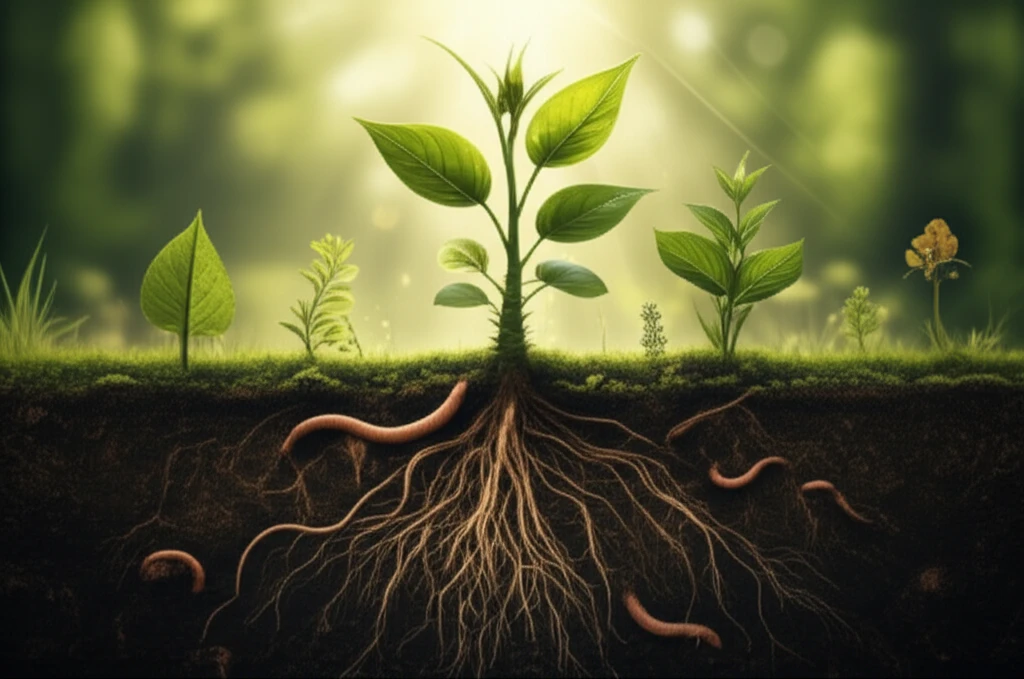
Unlocking Earth's Secrets: How Soil Health Impacts Our World

"From Farms to Forests: Exploring the Vital Role of Soil in a Changing Climate"
We often overlook it, but the soil beneath our feet is a dynamic ecosystem, teeming with life and playing a crucial role in our planet's health. This vital layer of earth supports agriculture, regulates climate, and provides essential ecosystem services. Understanding the hydro-physical properties and organic carbon content of soil is key to unlocking its secrets and ensuring a sustainable future. Recent research sheds light on how different land uses and management practices impact soil health, highlighting the importance of sustainable land management.
Soil degradation is a global challenge, threatening food security and environmental stability. Intensive agricultural practices, deforestation, and unsustainable land management can lead to erosion, reduced organic matter, and diminished water infiltration. These changes not only affect crop yields but also contribute to climate change and loss of biodiversity. Recognizing the intricate relationship between soil health and environmental sustainability is the first step towards implementing effective solutions.
This article delves into the hydro-physical properties and organic carbon content of soil, exploring how different land uses and management systems affect its quality. We will examine research findings from studies conducted in Brazil, focusing on the impact of various practices on soil structure, water infiltration, and carbon storage. By understanding these dynamics, we can work towards more sustainable land management practices that benefit both the environment and human well-being.
The Building Blocks of Healthy Soil: Hydro-Physical Properties and Organic Carbon
Healthy soil is a complex matrix of minerals, organic matter, water, and air. Its physical properties, such as bulk density, porosity, and water infiltration rate, significantly influence its ability to support plant life, regulate water flow, and store carbon. Organic carbon, derived from decomposed plant and animal matter, is a critical indicator of soil health, as it improves soil structure, enhances water retention, and provides essential nutrients for plants.
- Bulk Density: Lower bulk density indicates a healthier soil structure, allowing for better root growth and water infiltration.
- Porosity: Higher total porosity and macroporosity enhance water and air movement within the soil.
- Water Infiltration Rate: A faster infiltration rate prevents runoff and erosion, allowing water to reach plant roots.
- Organic Carbon Content: Increased organic carbon improves soil structure, water retention, and nutrient availability.
Investing in Soil: A Path to a Sustainable Future
The research underscores the critical need for sustainable land management practices that prioritize soil health. By adopting practices such as no-tillage farming, cover cropping, and agroforestry, we can enhance soil organic carbon, improve water infiltration, and reduce soil degradation. These measures not only benefit agriculture but also contribute to mitigating climate change and preserving biodiversity. Protecting and restoring soil health is an investment in a more sustainable and resilient future for all.