
Unlocking Dental Secrets: How Understanding Your Mental Foramen Can Improve Your Health

"A comprehensive guide to the mental foramen, its importance in dental health, and how digital imaging is revolutionizing its study."
The mental foramen (MF), a small but significant opening on the outer surface of the mandible (lower jaw), plays a vital role in dental health and surgical procedures. Understanding its precise location is crucial for dentists and surgeons to avoid nerve damage, ensure successful implant placements, and perform other delicate operations in the lower jaw. For patients, knowing more about this anatomical feature can lead to better-informed discussions with their dental professionals and a greater appreciation for the complexity of oral health.
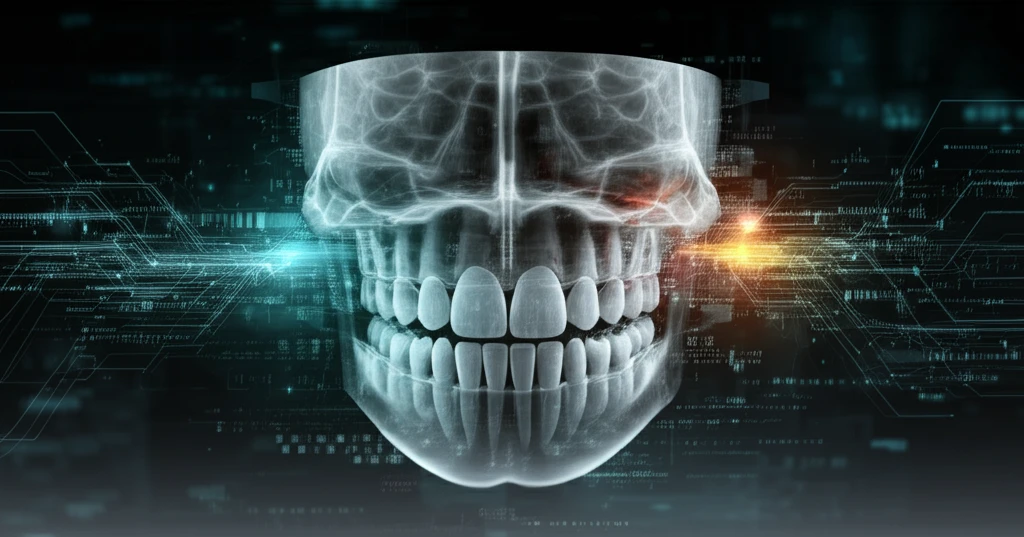
Traditionally, the mental foramen has been studied using conventional panoramic radiographs. However, the advent of digital panoramic radiographs has revolutionized the field, offering enhanced image quality and precision. This technological advancement allows for more accurate localization of the MF, which can vary significantly among individuals due to factors such as ethnicity, sex, and age. This improved accuracy has the potential to significantly enhance the safety and efficacy of various dental treatments.
This article explores the importance of the mental foramen, the challenges in locating it accurately, and how digital panoramic radiographs are transforming our understanding of this critical anatomical structure. We’ll delve into a recent study conducted in Chile that utilizes this technology to map the location of the MF in a specific population, providing valuable insights for dental professionals and offering a glimpse into the future of personalized dental care.
Why Knowing Your Mental Foramen Matters: Implications for Dental Procedures
The mental foramen is the exit point for the mental nerve (MN), a branch of the inferior alveolar nerve. This nerve is responsible for providing sensation to the lower lip, chin, and the gums and vestibule (the area between the teeth and cheek) from the first molar forward. Because of the mental nerve's function, knowing the exact location of the MF is critical for several reasons:
- Avoiding Nerve Damage: During implant placement, extractions, or other surgical procedures, damage to the mental nerve can result in numbness, tingling, or pain in the lower lip and chin. Precise knowledge of the MF location minimizes this risk.
- Ensuring Successful Implant Placement: The MF's location dictates the safe zone for implant placement in the lower jaw. Implants placed too close to the MF can compress or damage the mental nerve, leading to complications.
- Guiding Surgical Procedures: Orthognathic surgery (corrective jaw surgery), periapical surgery (surgery around the root of a tooth), and other maxillofacial procedures require a thorough understanding of the MF's location to ensure optimal outcomes and minimize complications.
- Forensic Analysis: Along with the mandibular canal, the MF serves as a crucial reference point in forensic dentistry for identification purposes.
- Diagnosing Oral Pathologies: Knowledge of the MF's normal location and appearance helps in identifying abnormalities or pathological changes in the surrounding tissues.
The Future of Dental Care: Personalized Approaches Based on Accurate MF Localization
The study by Fuentes et al. underscores the importance of digital panoramic radiographs in accurately locating the mental foramen. By understanding the variations in MF location among different populations, dental professionals can tailor their treatment plans to minimize risks and optimize patient outcomes. The move towards personalized dental care, guided by advanced imaging techniques, promises a future where procedures are safer, more effective, and better suited to the individual needs of each patient.