
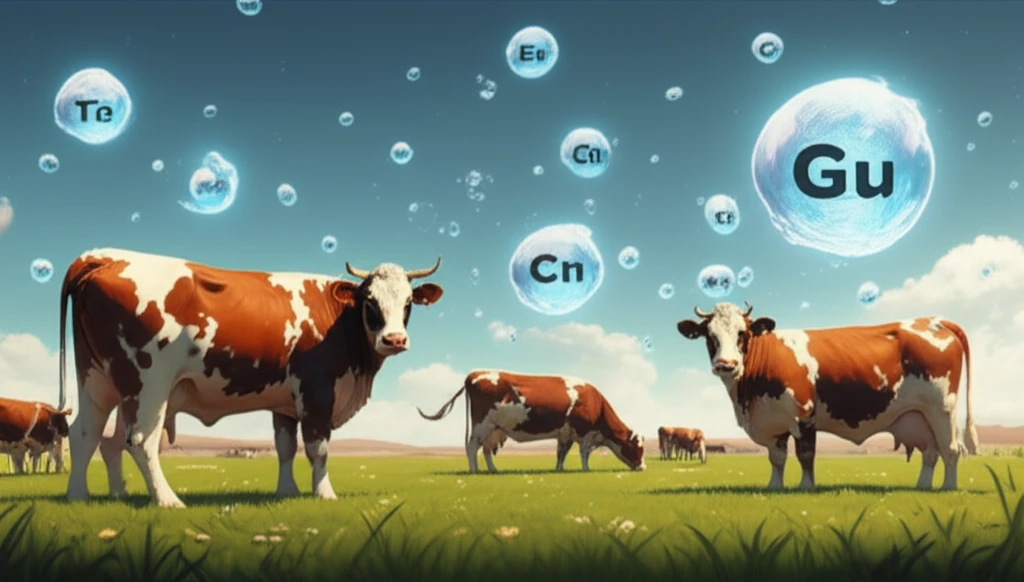
Cattle grazing in a pasture with trace minerals visualized above.

Unlocking Cattle Health: How Trace Minerals Impact Fertility and Growth

"A deep dive into the effects of trace mineral sources on the reproductive success and overall well-being of Angus and Brangus heifers and mature bulls."


For cattle farmers and ranchers, optimizing livestock health and reproductive success are paramount. A critical, yet often overlooked, aspect of cattle management is the provision of adequate trace minerals. These micronutrients play a vital role in various physiological processes, influencing everything from growth rates to fertility.

Recent research has shed light on the impact of different trace mineral sources on cattle, specifically focusing on Angus and Brangus heifers, and mature bulls. These studies delve into how the source of these minerals – whether inorganic or organic – affects key performance indicators such as growth, reproductive rates, and sperm quality.

This article synthesizes the findings of these studies, providing practical insights for producers looking to enhance their cattle's health and productivity through strategic trace mineral supplementation. We'll explore the nuances of mineral sources, their effects on various aspects of cattle physiology, and actionable recommendations for optimizing your herd management practices.

Trace Minerals and Heifer Development: What the Research Shows

Cattle grazing in a pasture with trace minerals visualized above.

A study published in the Journal of Animal Science examined the effects of pre- and postnatal trace mineral (TM) sources on the growth and reproductive performance of Angus and Brangus heifers. The researchers employed a 2x2 factorial design, supplementing cows with either inorganic or organic TM sources. Their goal was to determine if the TM source influenced the heifers' subsequent reproductive success.

The study revealed several key findings:

  • Growth: No significant differences were observed in body weight (BW) or body condition score (BCS) between heifers supplemented with inorganic versus organic TM sources.
  • Reproductive Tract Development: Heifers receiving organic TM tended to have a higher reproductive tract score (RTS) compared to those receiving inorganic TM. Brangus heifers, in general, exhibited higher RTS than Angus heifers.
  • Pubertal Status: The TM source did not impact pubertal status at the start of the breeding season.
  • Pregnancy Rates: While there was no significant difference in pregnancy rates between inorganic and organic TM groups, Brangus heifers showed higher pregnancy rates than Angus heifers.
  • Overall Impact: The TM source affected reproductive tract development but did not influence pubertal status or final pregnancy rates. Breed, however, played a significant role in reproductive success.
These results suggest that while trace mineral supplementation is crucial, the specific source (inorganic vs. organic) may have a limited impact on overall pregnancy rates. However, the improved reproductive tract development observed with organic TM warrants further investigation. Breed differences highlight the importance of considering genetic factors in reproductive management.

Optimizing Trace Mineral Supplementation: Key Takeaways

Trace minerals are undoubtedly essential for cattle health, playing a crucial role in growth, reproduction, and overall well-being. While the source of these minerals (inorganic vs. organic) may not always be the determining factor in pregnancy rates, it can influence reproductive tract development and sperm quality.

Consider these recommendations when formulating your trace mineral supplementation strategy:

Consult with a qualified nutritionist or veterinarian to determine the specific needs of your herd based on breed, age, and physiological status. Regularly monitor your cattle's health and reproductive performance to assess the effectiveness of your supplementation program. Stay informed about the latest research on trace mineral nutrition to optimize your management practices.

About this Article -

This article was crafted using a human-AI hybrid and collaborative approach. AI assisted our team with initial drafting, research insights, identifying key questions, and image generation. Our human editors guided topic selection, defined the angle, structured the content, ensured factual accuracy and relevance, refined the tone, and conducted thorough editing to deliver helpful, high-quality information.See our About page for more information.

Everything You Need To Know

1

What are trace minerals, and why are they important for cattle?

Trace minerals are essential micronutrients vital for cattle, playing a crucial role in various physiological processes. They influence growth rates, fertility, and overall well-being. Specific examples include the impact of trace mineral sources on the reproductive success and overall well-being of Angus and Brangus heifers and mature bulls. They affect growth, reproductive health, and spermatozoa quality, influencing key performance indicators such as growth, reproductive rates, and sperm quality.

2

How do different sources of trace minerals affect cattle?

Research indicates that the source of trace minerals, whether inorganic or organic, can influence key performance indicators. Studies on Angus and Brangus heifers and mature bulls show that the source can affect growth, reproductive rates, and sperm quality. For instance, heifers receiving organic trace minerals tended to have a higher reproductive tract score compared to those receiving inorganic trace minerals. However, the source may not always determine pregnancy rates, but it can affect reproductive tract development and sperm quality.

3

How does the source of trace minerals affect reproductive health in heifers?

The source of trace minerals can influence the reproductive tract development in heifers. The study revealed that heifers receiving organic trace minerals tended to have a higher reproductive tract score (RTS) compared to those receiving inorganic trace minerals. This suggests that the type of trace mineral supplement can impact the development of the reproductive system, which is a crucial aspect of reproductive success in cattle.

4

Did the source of trace minerals affect pregnancy rates?

While the study did not find a significant difference in pregnancy rates between inorganic and organic trace mineral groups, it did observe that Brangus heifers exhibited higher pregnancy rates than Angus heifers. This highlights the importance of breed in reproductive success. Although the source of trace minerals didn't significantly influence final pregnancy rates, the breed itself played a significant role, suggesting genetic factors are important.

5

How can cattle farmers optimize trace mineral supplementation for their herds?

To optimize cattle health, it's crucial to consider trace mineral supplementation. Strategic use of either inorganic or organic trace minerals can influence different aspects of cattle physiology. While the source of the trace minerals may not always be the determining factor in pregnancy rates, it can influence reproductive tract development and sperm quality. Farmers and ranchers should consider that breed can play a significant role in reproductive success, as observed in the differences between Angus and Brangus heifers. The goal is to enhance cattle health and productivity through informed decisions regarding trace mineral supplementation.

Newsletter Subscribe

Subscribe to get the latest articles and insights directly in your inbox.