
Unlocking Cardiovascular Health: How Resistin Impacts Your Body

"New Research Reveals Resistin's Role in Blood Clotting and Endothelial Function"
Cardiovascular diseases remain the leading cause of death globally, highlighting the critical need to understand the underlying factors contributing to these conditions. Among the key players in cardiovascular health is the vascular endothelium, the inner lining of blood vessels. Endothelial cells maintain a delicate balance between pro-coagulant and anti-coagulant processes, as well as inflammatory responses. Dysfunction in these cells can disrupt this balance, leading to thrombosis and coagulation issues.
One of the protective mechanisms of endothelial cells is the formation of activated protein C (APC), a crucial regulator of blood coagulation. APC is formed through a complex involving thrombin, thrombomodulin, and endothelial protein C receptor (EPCR). This complex helps to deactivate coagulation cascade factors, preventing excessive clotting and maintaining vascular health. Disruptions in this process can have significant consequences, underscoring the importance of understanding the factors that influence APC formation.
Emerging research has focused on resistin, an adipocyte-secreted hormone associated with obesity and insulin resistance, and its potential impact on cardiovascular health. While murine resistin is primarily expressed by adipocytes, its human counterpart is found predominantly in peripheral blood mononuclear cells and macrophages. Studies have shown that resistin can increase vascular adhesion molecules and promote monolayer permeability in endothelial cells. Recent findings now reveal a new role for resistin in disturbing APC formation, shedding light on its broader implications for cardiovascular health.
Resistin's Role in Obesity and Metabolic Research
Resistin is classified as a novel adipokine, alongside chemerin, visfatin, and apelin, and has attracted growing scientific interest in recent years. Data on related adipokines like leptin and adiponectin have provided consistent findings regarding their roles in reproductive axis control, establishing a framework for understanding resistin. The UK's Office for National Statistics serves as a major source of official data, though specific cardiovascular statistics attributable to resistin are not directly provided in available sources.
Measuring Human Resistin: Laboratory Methods
Human resistin is measured using enzyme-linked immunosorbent assay (ELISA) kits that require careful preparation of standard solutions. Protocols specify reconstituting lyophilized human resistin standard with distilled or deionized water to achieve a 10 ng/mL concentration, or using EIA Diluent for stock solutions of 4 ng/mL. These standardized laboratory procedures allow researchers to quantify resistin levels in biological samples, though they represent in vitro measurement approaches with inherent limitations.
The Origins of Resistin Research
The provided source materials for this subsection do not contain specific historical milestones or foundational discoveries related to resistin research. Available sources cover topics including Codex reset tracking, U.S. foreign relations history, and unrelated political commentary, which do not contribute to understanding resistin's discovery or development as a biomarker.
Resistin's Impact on Protein C Activation and EPCR Suppression
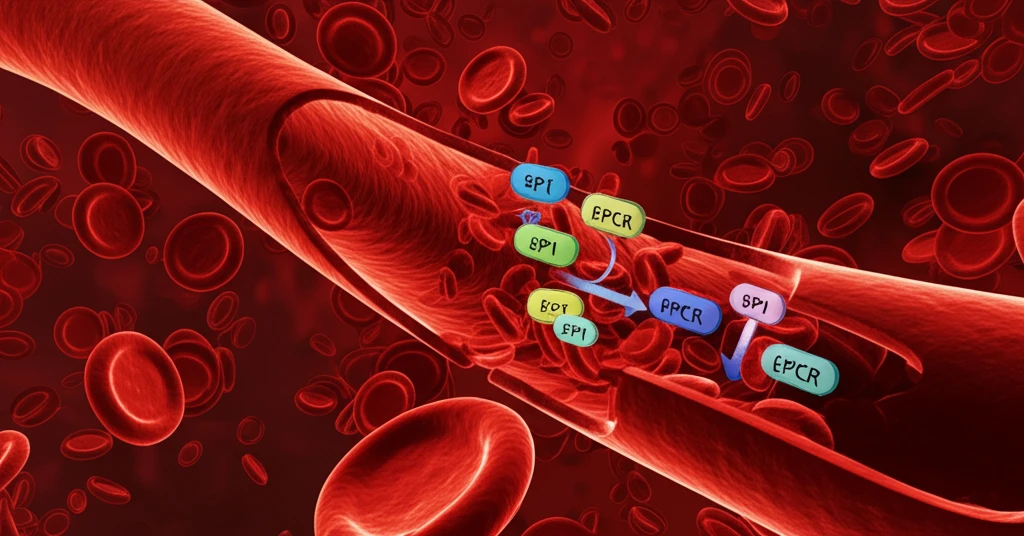
A recent study investigated the effects of resistin on thrombin-induced protein C activation in endothelial cells. The findings revealed that resistin suppresses this activation, indicating a potential disruption in the body's natural anticoagulant processes. Further analysis showed that resistin treatment leads to a reduction in EPCR expression, while thrombomodulin (TM) levels remain unaffected. This suggests that resistin specifically targets EPCR, a key component in the APC formation complex.
- Resistin suppresses thrombin-induced protein C activation.
- Resistin reduces EPCR expression but does not affect thrombomodulin levels.
- Resistin induces SP1 expression.
- Increased SP1 expression downregulates EPCR.
Resistin in Pancreatic Function and Inflammation
Recent research has identified resistin immunoreactivity in the periphery of rat pancreatic islets, with expression confirmed at both mRNA and protein levels. Studies have shown that resistin co-localizes with glucagon in pancreatic alpha cells, suggesting a role in pancreatic endocrine function. Additionally, research published in 2026 has investigated anti-inflammatory mechanisms of human resistin, specifically examining how it regulates lipopolysaccharide-induced interleukin-1β and tumor necrosis factor-α expression through activation of peroxisome proliferator-activated receptor γ (PPARγ).
Limitations in Resistin Research Understanding
The source materials provided for this subsection do not contain information about counter arguments, failures, or criticisms related to resistin research. Available sources address unrelated topics including video game troubleshooting, cybersecurity news, political commentary, and general web search functionality, which do not provide evidence of research limitations or opposing viewpoints regarding resistin's role in cardiovascular health.
Resistin's Multifaceted Biological Roles
Research has traced resistin's journey from being primarily associated with metabolism to its implications in cancer development, positioning it as a small secretory molecule with diverse biological functions. Resistin has been implicated in the development of insulin resistance under obese conditions and has been linked to various cellular and metabolic functions over recent decades. Studies comparing resistin with other adipokines like visfatin have used anthropometric and biochemical parameters, with adiponectin, HMW oligomers, leptin, and resistin analyzed by ELISA methodologies.
Implications and Future Directions
The discovery of resistin's role in disturbing APC formation opens new avenues for understanding and addressing cardiovascular risks associated with obesity and insulin resistance. By identifying the SP1-EPCR pathway as a key mediator of resistin's effects, researchers can explore targeted interventions to restore proper endothelial function and prevent thrombotic events. Further studies are needed to fully elucidate the clinical implications of these findings and develop effective strategies to mitigate the adverse cardiovascular effects of resistin.
Expert Perspectives on Resistin Research
The source materials provided for this subsection do not contain expert commentary or synthesis specifically addressing resistin and cardiovascular health. Available sources include a Russian-language medical portal, an engineering calculation tool, an AI detection service, and relationship advice content, none of which provide relevant expert analysis of resistin's role in cardiovascular disease or clinical applications.
Resistin-Like Molecules and Future Research Directions
The Resistin-Like Molecules (RELM) family, including α, β, and γ variants, share structural and sequence homology with resistin but exhibit significant diversity in expression and function within mammalian hosts. This diversity suggests that future research may uncover distinct roles for different resistin-like molecules in infection, inflammation, and metabolic disorders. Understanding these molecular differences could open new therapeutic avenues for cardiovascular and metabolic diseases.
Systemic Challenges in Cardiovascular Research
The source materials provided for this subsection do not contain information about systemic challenges in cardiovascular research or broader contextual factors affecting resistin studies. Available sources focus on video gaming content including Genshin Impact guides, damage leaderboards, and character optimization tools, which are unrelated to understanding the systemic challenges faced in cardiovascular health research and biomarker development.
Bone Health and Inflammatory Markers in Clinical Context
Research in postmenopausal patients with rheumatoid arthritis has studied the relationship between bone turnover markers (BTMs), bone mineral density (BMD), body mass, and inflammatory markers. While this study does not directly measure resistin, it demonstrates the clinical approach of examining multiple biomarkers together to understand disease processes in patient populations. The methodology of correlating inflammatory markers with clinical outcomes provides a framework for future studies examining resistin's real-world impact on patient health.