
Unlocking Breast Cancer Secrets: How Exosomes Could Revolutionize Treatment Response Prediction

"New research highlights the potential of plasma-derived exosomes in predicting how breast cancer patients respond to CDK4/6 inhibitors, paving the way for personalized treatment strategies."
Breast cancer remains a significant health challenge globally, with hormone receptor-positive (HR+) advanced breast cancer being a common subtype. Cyclin-dependent kinase 4/6 inhibitors (CDK4/6i) have emerged as a vital treatment option, improving progression-free survival (PFS) for many patients. However, not all patients respond equally, underscoring the need for predictive biomarkers that can guide treatment decisions.
Traditional methods of monitoring treatment response often rely on clinical evaluations and imaging, which can be time-consuming and may not always provide a clear picture of the underlying biological processes. There is a growing interest in liquid biopsies, particularly the analysis of exosomes, as a non-invasive way to gain insights into tumor dynamics and treatment response.
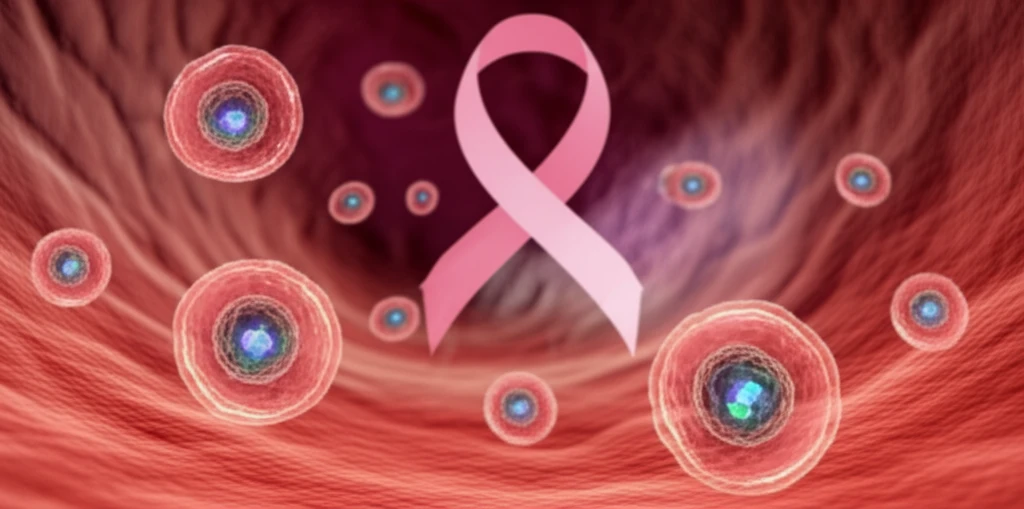
Exosomes are tiny vesicles secreted by cells, including cancer cells, and carry a cargo of proteins, RNA, and other molecules that reflect the state of the cell. By analyzing the contents of exosomes circulating in the blood, researchers hope to identify biomarkers that can predict treatment response, monitor disease progression, and even detect resistance mechanisms early on.
Exosomes: Tiny Messengers with Big Potential
The recent study presented in the Annals of Oncology sheds light on the potential of plasma-derived exosomes to predict the response to CDK4/6 inhibitors in breast cancer patients. Researchers focused on the expression of thymidine kinase 1 (TK1) and cyclin-dependent kinase 9 (CDK9) in exosomes, hypothesizing that these molecules could serve as indicators of treatment efficacy.
- Study Design: Prospective analysis of breast cancer patients undergoing CDK4/6i treatment.
- Sample Collection: Blood samples taken at baseline and after 3 months of treatment.
- Exosome Analysis: RNA extracted from plasma-derived exosomes and analyzed for TK1, CDK4, 6, and 9 expression.
- Response Evaluation: Objective responses defined using RECIST criteria v.1.1.
The Future of Breast Cancer Treatment: Personalized Approaches
While the study's findings are promising, further research is needed to validate these results in larger cohorts and to determine the optimal way to incorporate exosomal biomarkers into clinical practice. However, this study represents an important step towards personalized medicine in breast cancer, where treatment decisions are tailored to the individual characteristics of each patient's disease. By identifying patients who are most likely to respond to CDK4/6 inhibitors, we can avoid unnecessary treatments and ensure that patients receive the most effective therapy from the start.