
Unlocking Brain Health: How Sulfur Compounds Like Taurine Modulate Brain Receptors

"Could understanding the interaction between sulfur-containing compounds and brain receptors pave the way for new treatments for neurological disorders?"
For years, scientists have been intrigued by the roles of certain amino acids in modulating brain function. Among these, taurine, a naturally occurring amino acid, has stood out for its ability to influence inhibitory neurotransmitter receptors. Recent studies have deepened this interest, particularly exploring whether taurine's effects are structurally dependent.
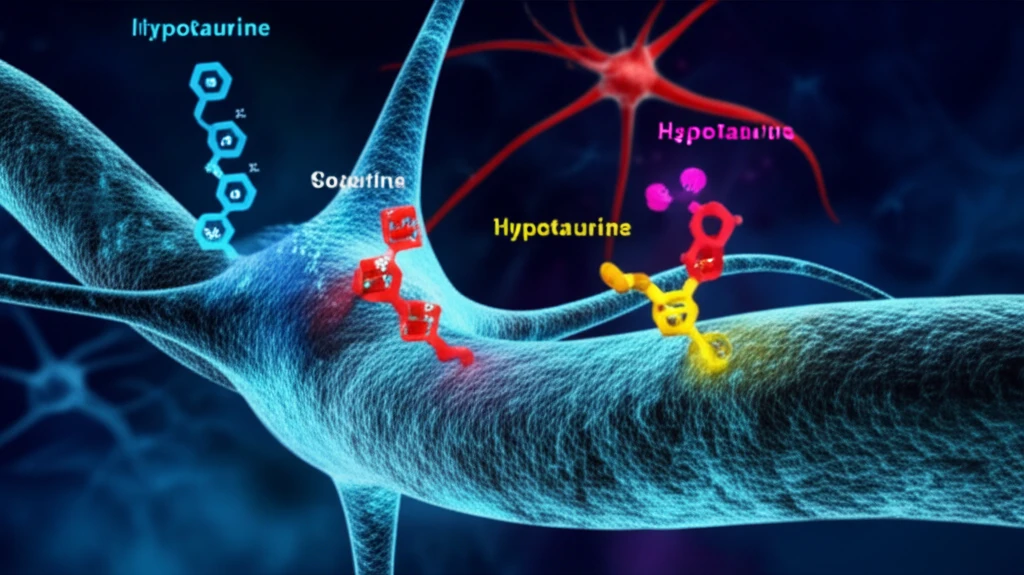
A new study published in BMC Neuroscience has investigated how compounds structurally related to taurine—specifically homotaurine, hypotaurine, and isethionic acid—interact with GABA-ρ1 receptors (GABAc-ρ1R). These receptors are crucial for regulating inhibitory signals in the brain, and understanding how they are modulated could open new therapeutic avenues.
Researchers at the Universidad Nacional Autónoma de México and collaborating institutions sought to determine if the distinctive effects of taurine on GABAc-ρ1R could be attributed to its unique structure. By testing structurally similar compounds, the study sheds light on the intricate relationship between molecular structure and receptor function.
What the Study Revealed: The Distinct Roles of Sulfur-Containing Compounds?
The researchers conducted experiments using Xenopus laevis oocytes, a common model for studying receptor function. They found that both hypotaurine and homotaurine could partially activate GABAc-ρ1R. This activation led to an increased deactivation time of the receptor, suggesting a modulation of its activity. Isethionic acid, however, showed no such effect.
- Hypotaurine: Acts as a positive modulator, enhancing the GABA current.
- Homotaurine: Exhibits a negative modulation, decreasing the GABA current.
- Isethionic acid: Shows no significant effect on GABAc-ρ1R activation.
Why This Matters: Implications for Future Therapies
This research underscores the complexity of how subtle structural differences in sulfur-containing compounds can lead to varied effects on brain receptors. The finding that homotaurine and hypotaurine, structurally related to taurine, act as partial agonists of GABAc-ρ1R, occupying the same agonist binding site but with different modulatory effects, opens intriguing possibilities for targeted drug development.