
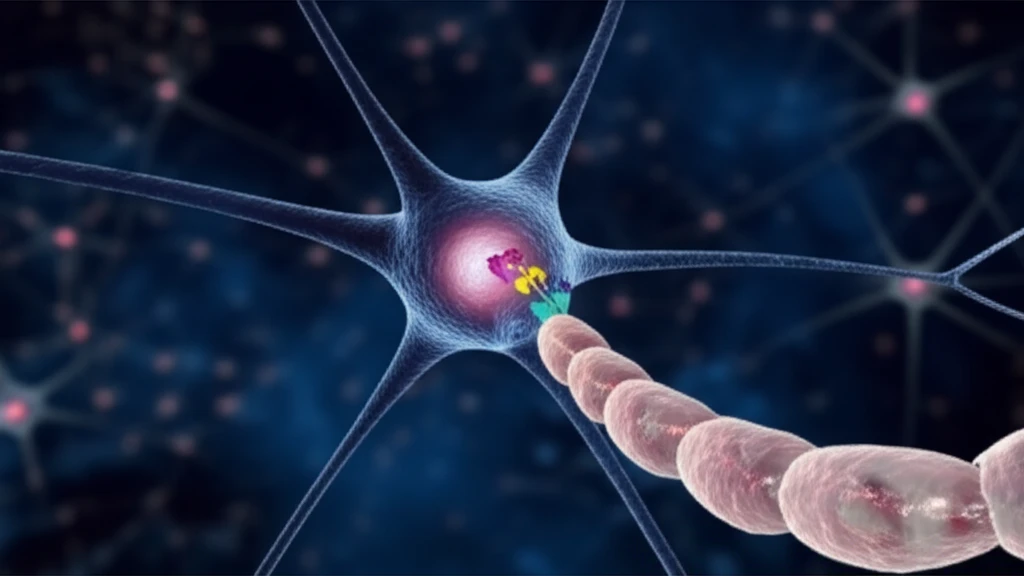
Neuron with p75 receptor interacting with BACE1 and amyloid plaques

Unlocking Alzheimer's: How p75 Receptor Could Be Key to New Treatments

"Groundbreaking research unveils the p75 neurotrophin receptor's role in amyloid plaque formation, offering new avenues for Alzheimer's disease therapies."


Alzheimer's disease (AD), a devastating neurodegenerative condition, is characterized by the relentless accumulation of amyloid-beta (Aβ) plaques in the brain. This process disrupts crucial neural pathways, leading to synaptic dysfunction, memory loss, and ultimately, cell death. Understanding the mechanisms that drive Aβ plaque formation is critical for developing effective treatments.

A growing body of evidence suggests that the p75 neurotrophin receptor, a protein found on the surface of nerve cells, plays a significant role in AD. Elevated levels of p75 have been observed in the brains of AD patients, hinting at its involvement in the disease's progression. However, the precise mechanisms by which p75 contributes to AD have remained elusive – until now.

Recent research sheds light on this critical connection, demonstrating that p75 interacts directly with beta-site amyloid precursor protein cleaving enzyme-1 (BACE1), a key enzyme involved in the production of Aβ. This interaction appears to promote the localization of these proteins within endosomes, cellular compartments where Aβ production is heightened. This discovery could pave the way for new therapeutic strategies targeting p75 to prevent or slow down the development of Alzheimer's disease.

The p75-BACE1 Connection: A New Target for Alzheimer's Therapies?

Neuron with p75 receptor interacting with BACE1 and amyloid plaques

The study reveals a novel interaction between p75 and BACE1, particularly when Aβ is present. Researchers found that this interaction enhances the co-localization of BACE1 and amyloid precursor protein (APP) within cortical neurons, the brain cells most affected by AD. Furthermore, the presence of both Aβ and p75 increases the localization of APP and BACE1 in early endosomes, suggesting that p75 promotes the trafficking of these proteins to cellular compartments where Aβ production is accelerated.

To delve deeper into the mechanisms driving this process, the researchers investigated the role of c-Jun N-terminal kinase (JNK), an enzyme involved in cellular stress responses. They discovered that the presence of Aβ and p75 leads to increased phosphorylation of APP-Thr668 and BACE1-Ser498 by JNK. This phosphorylation appears to be critical for the localization of APP and BACE1 within endosomes.

Key findings of the research include:
  • p75 interacts with BACE1, an interaction that is enhanced by the presence of amyloid-beta (Aβ).
  • This interaction promotes the co-localization of BACE1 and amyloid precursor protein (APP) in cortical neurons.
  • The presence of Aβ and p75 increases the localization of APP and BACE1 in early endosomes.
  • Aβ and p75 lead to increased phosphorylation of APP-Thr668 and BACE1-Ser498 by c-Jun N-terminal kinase (JNK).
These findings suggest that p75 plays a central role in amyloidogenesis, the process by which Aβ plaques are formed. By interacting with BACE1 and promoting the trafficking of APP and BACE1 to endosomes, p75 appears to create a positive feedback loop that accelerates Aβ production. Understanding this mechanism could lead to the development of therapies that target p75 to disrupt this cycle and slow the progression of AD.

The Future of Alzheimer's Treatment: Targeting p75

This research provides a compelling rationale for targeting p75 as a potential therapeutic strategy for Alzheimer's disease. By disrupting the interaction between p75 and BACE1, or by preventing the trafficking of APP and BACE1 to endosomes, it may be possible to reduce Aβ production and slow the progression of the disease.

Several approaches could be used to target p75. One strategy would be to develop small molecules that specifically block the interaction between p75 and BACE1. Another approach would be to target the JNK pathway, which appears to be critical for the phosphorylation of APP and BACE1. Clinical trials are needed to evaluate the safety and efficacy of these therapies.

While research is still in early stages, the discovery of p75 role in amyloid plaque formation offers hope for more effective treatments for Alzheimers disease.

About this Article -

This article was crafted using a human-AI hybrid and collaborative approach. AI assisted our team with initial drafting, research insights, identifying key questions, and image generation. Our human editors guided topic selection, defined the angle, structured the content, ensured factual accuracy and relevance, refined the tone, and conducted thorough editing to deliver helpful, high-quality information.See our About page for more information.

Everything You Need To Know

1

How does the p75 neurotrophin receptor influence the formation of amyloid plaques in Alzheimer's disease?

The research indicates that the p75 neurotrophin receptor interacts with beta-site amyloid precursor protein cleaving enzyme-1 (BACE1). This interaction enhances the co-localization of BACE1 and amyloid precursor protein (APP) within cortical neurons, specifically in early endosomes. This process is further influenced by the presence of amyloid-beta (Aβ) and involves increased phosphorylation of APP-Thr668 and BACE1-Ser498 by c-Jun N-terminal kinase (JNK), ultimately accelerating Aβ production.

2

What happens to the interaction between p75 neurotrophin receptor and beta-site amyloid precursor protein cleaving enzyme-1 (BACE1) when amyloid-beta is present?

The study found that when amyloid-beta (Aβ) is present, the interaction between p75 neurotrophin receptor and beta-site amyloid precursor protein cleaving enzyme-1 (BACE1) is enhanced. This increased interaction promotes the localization of BACE1 and amyloid precursor protein (APP) within cortical neurons and early endosomes. This process is mediated by c-Jun N-terminal kinase (JNK), which phosphorylates APP and BACE1, thus contributing to the formation of amyloid plaques, a hallmark of Alzheimer's disease.

3

What implications do the interactions involving p75 neurotrophin receptor, beta-site amyloid precursor protein cleaving enzyme-1 (BACE1), and amyloid precursor protein (APP) have for the progression of Alzheimer's?

The identified interactions suggest that the p75 neurotrophin receptor plays a central role in amyloidogenesis, the formation of amyloid-beta (Aβ) plaques. By interacting with beta-site amyloid precursor protein cleaving enzyme-1 (BACE1) and facilitating the trafficking of amyloid precursor protein (APP) and BACE1 to endosomes, p75 appears to create a feedback loop that accelerates Aβ production. Disrupting this interaction could potentially slow the progression of Alzheimer's disease.

4

In what ways could targeting the p75 neurotrophin receptor lead to new treatments for Alzheimer's disease?

Targeting the p75 neurotrophin receptor offers a potential therapeutic strategy for Alzheimer's disease. By disrupting the interaction between p75 and beta-site amyloid precursor protein cleaving enzyme-1 (BACE1), or by preventing the movement of amyloid precursor protein (APP) and BACE1 to endosomes, researchers hope to reduce amyloid-beta (Aβ) production. Future treatments might focus on developing drugs that specifically target p75 to disrupt this cycle, offering a new approach to managing and slowing the progression of Alzheimer's.

5

What role does c-Jun N-terminal kinase (JNK) play in the interaction between p75, amyloid-beta, and the formation of amyloid plaques?

C-Jun N-terminal kinase (JNK) is an enzyme involved in cellular stress responses. In the context of Alzheimer's disease, research indicates that the presence of amyloid-beta (Aβ) and the p75 neurotrophin receptor lead to increased phosphorylation of amyloid precursor protein (APP) at Thr668 and beta-site amyloid precursor protein cleaving enzyme-1 (BACE1) at Ser498 by JNK. This phosphorylation is critical for localizing APP and BACE1 within endosomes, contributing to the production of Aβ plaques. Understanding this process could lead to targeted therapies that modulate JNK activity to reduce Aβ plaque formation.

Newsletter Subscribe

Subscribe to get the latest articles and insights directly in your inbox.