
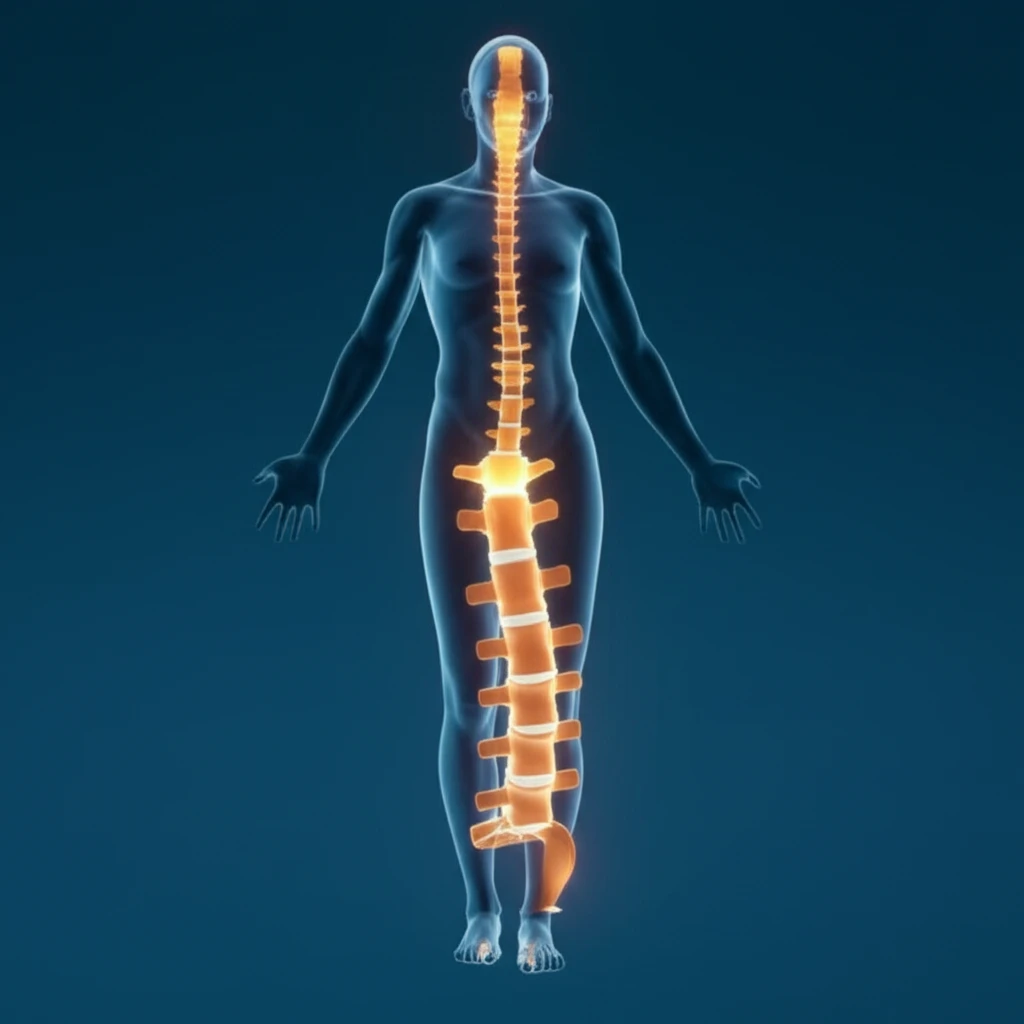
Unlocking a Pain-Free Back: How Sagittal Balance Impacts Spondylolisthesis

"Discover how understanding your spine's alignment can lead to better health and quality of life if you're living with spondylolisthesis."
Living with spondylolisthesis, where a vertebra slips out of place, can significantly impact your daily life. While the condition itself is a mechanical issue, its effects ripple outwards, influencing everything from pain levels to your overall sense of well-being.
One key area of focus in understanding and managing spondylolisthesis is sagittal balance. This refers to the alignment of your spine from the side view, and it's a critical factor in how your body distributes weight and maintains stability. When this balance is disrupted, it can lead to increased strain, pain, and reduced quality of life.
Recent research has shed light on the intricate relationship between specific spinal measurements, overall sagittal balance, and health-related quality of life in adults with lumbosacral spondylolisthesis. This article will break down these findings, offering you a clearer understanding of how your spinal alignment impacts your health and what steps you can take to improve your well-being.
The Sagittal Imbalance Connection: How Your Spine's Alignment Affects Your Health
Researchers conducted a study analyzing data from a multi-center, prospective study to investigate the impact of sagittal alignment and lumbosacral parameters on health status in adults with L5-S1 spondylolisthesis. The study looked at a variety of factors, including:
- C7 Sagittal Vertical Axis Deviation (SVA): Measures how far forward your head is positioned relative to your pelvis.
- T1 and T9 Spinopelvic Inclinations: Assess the tilt of your upper spine.
- Pelvic Tilt (PT) and Pelvic Incidence (PI): Measurements of your pelvic alignment.
- Sacral Slope (SS): The angle of your sacrum (the base of your spine).
- Slip Angle and Meyerding Slip Grade: Assess the degree of slippage of the vertebra.
- Labele Classification: A system for classifying the severity of the spondylolisthesis.
Taking Control: What This Means for You
This research highlights a crucial point: lumbosacral spondylolisthesis significantly impacts both your mental and physical well-being. While the effects are similar between those with low-grade and high-grade slips, the study emphasizes that multiple global and local radiographic sagittal parameters negatively affect your health-related quality of life (HRQoL).
The good news is that by understanding these connections, you can take a more proactive approach to managing your condition. Improvement of global sagittal balance and lumbopelvic parameters in adults with lumbosacral spondylolisthesis may be useful in improving health status in adults.
Talk to your doctor about assessing your sagittal balance and lumbopelvic parameters. By identifying specific areas of imbalance, you and your healthcare team can develop a targeted treatment plan to improve your spinal alignment, reduce pain, and enhance your overall quality of life.