
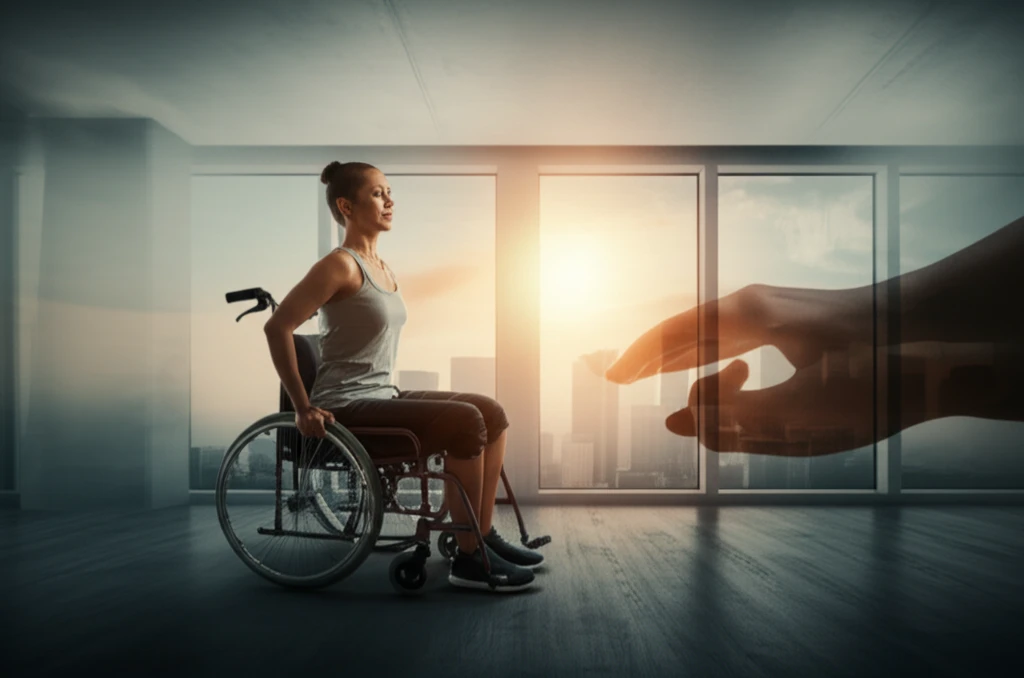
Empowered stroke survivor engaged in self-rehabilitation exercises.

Unlock Your Potential: How Self-Rehabilitation Can Transform Stroke Recovery

"Discover the power of self-directed rehabilitation programs in improving upper limb function and quality of life after a stroke. Learn how these innovative approaches are changing lives and offering new hope for chronic stroke patients."


Stroke, a leading cause of long-term disability, often leaves individuals with significant upper limb impairment. This can severely impact daily activities, independence, and overall quality of life. Traditional rehabilitation approaches are essential, but innovative strategies are emerging to empower patients in their recovery journey.

Self-rehabilitation programs are gaining traction as a powerful tool for stroke survivors. These programs equip individuals with the knowledge and resources to actively participate in their rehabilitation, promoting independence and long-term progress. By taking control of their recovery, patients can achieve remarkable improvements in upper limb function and overall well-being.

This article delves into the world of self-rehabilitation for stroke patients, exploring its benefits, practical applications, and the latest research supporting its efficacy. Discover how these programs are transforming lives and offering new hope for a brighter future after stroke.

The Power of Self-Rehabilitation: What the Research Shows

Empowered stroke survivor engaged in self-rehabilitation exercises.

A groundbreaking study published in the Annals of Physical and Rehabilitation Medicine investigated the effectiveness of a self-rehabilitation program for upper limb recovery among chronic Beninese stroke patients. The randomized controlled trial, conducted by researchers from the National University Hospital of Cotonou and Université catholique de Louvain, involved 59 participants with hemiplegia (paralysis on one side of the body) for more than six months after a stroke.

The experimental group (28 patients) participated in an 8-week self-rehabilitation program at home, while the control group (31 patients) received no study-related treatment. Participants were evaluated before treatment (T0), at the end of treatment (T1), and eight weeks later (T2). The primary outcome was manual ability, assessed using the ABILHAND Stroke scale for Benin. Secondary outcomes included neurological impairments (Fugl-Meyer assessment), manual dexterity (Box and Block Test, Wolf Motor Function Test), and quality of life (WHOQOL-Brief).

  • Improved Manual Ability: The experimental group showed significantly greater improvement in manual ability compared to the control group (p<0.001).
  • Sustained Gains: Within the experimental group, the improvement from baseline (T0) to the end of treatment (T1) was maintained at the eight-week follow-up (T2), indicating lasting benefits.
  • Enhanced Quality of Life: Participants in the self-rehabilitation program also experienced improvements in their overall quality of life.
These findings strongly suggest that self-rehabilitation programs can be a feasible and effective approach to enhance manual ability and improve quality of life for chronic stroke patients. The program's intensive nature, incorporating unimanual and bimanual functional exercises, helps patients relearn and practice everyday movements.

Empowering Your Recovery: Practical Steps to Get Started

Self-rehabilitation empowers you to take an active role in your stroke recovery. By understanding the principles of neuroplasticity, setting realistic goals, and working with healthcare professionals, you can unlock your potential for healing and improved function. Remember, your journey to recovery is unique, and self-rehabilitation can be a powerful tool in achieving your personal best.

About this Article -

This article was crafted using a human-AI hybrid and collaborative approach. AI assisted our team with initial drafting, research insights, identifying key questions, and image generation. Our human editors guided topic selection, defined the angle, structured the content, ensured factual accuracy and relevance, refined the tone, and conducted thorough editing to deliver helpful, high-quality information.See our About page for more information.

This article is based on research published under:

DOI-LINK: 10.1016/j.rehab.2018.05.166, Alternate LINK

Title: A Randomized Controlled Trial Assessing The Efficacy Of An Upper Limb Self-Rehabilitation Programme Among Chronic Beninese Stroke Patients

Subject: Rehabilitation

Journal: Annals of Physical and Rehabilitation Medicine

Publisher: Elsevier BV

Authors: D.D. Niama Natta, T. Lejeune, C. Detrembleur, B. Yarou, E. Sogbossi, E. Alagnidé, T. Kpadonou, G. Staquart

Published: 2018-07-01

Everything You Need To Know

1

What is self-rehabilitation in the context of stroke recovery?

Self-rehabilitation refers to patient-led programs designed to improve upper limb function and overall well-being after a stroke. It empowers individuals to actively participate in their recovery by providing them with the knowledge and resources needed to perform exercises and activities at home. This approach contrasts with traditional rehabilitation methods that may be more clinician-driven, emphasizing patient independence and long-term progress in regaining function and improving quality of life. The aim is to help stroke survivors regain control over their lives and achieve lasting improvements through consistent practice and engagement.

2

How effective are self-rehabilitation programs for stroke patients?

Research, such as the study in the Annals of Physical and Rehabilitation Medicine, indicates that self-rehabilitation programs can be highly effective, especially for chronic stroke patients. This study, involving Beninese stroke patients, demonstrated significant improvements in manual ability, as measured by the ABILHAND Stroke scale for Benin, within the experimental group compared to the control group. The gains were sustained even eight weeks after the program's completion. Additionally, participants in these programs also experienced improvements in their overall quality of life, highlighting the comprehensive benefits of this approach. These results underscore the potential of self-rehabilitation to enhance functional outcomes and improve the well-being of stroke survivors.

3

What specific assessments were used to measure the impact of self-rehabilitation in the study?

The study employed several assessments to measure the impact of self-rehabilitation. The primary outcome, manual ability, was assessed using the ABILHAND Stroke scale for Benin. Secondary outcomes included neurological impairments, measured by the Fugl-Meyer assessment, manual dexterity, evaluated using the Box and Block Test and the Wolf Motor Function Test, and quality of life, assessed with the WHOQOL-Brief. These tools provided a comprehensive view of the program's effects, covering functional abilities, neurological status, and overall well-being. The use of these diverse assessments helped in quantifying the benefits of the self-rehabilitation program across multiple dimensions of recovery.

4

What kind of exercises are typically included in a self-rehabilitation program?

Self-rehabilitation programs often incorporate unimanual and bimanual functional exercises. Unimanual exercises focus on using one hand at a time to relearn and practice movements, while bimanual exercises involve the coordination of both hands. These exercises are designed to mimic everyday activities and help patients regain control and coordination of their upper limbs. The intensive nature of these exercises is crucial for neuroplasticity, the brain's ability to reorganize itself by forming new neural connections throughout life. Through consistent practice of these functional exercises, stroke patients can relearn essential movements and improve their independence.

5

What are the key takeaways and implications of the study on self-rehabilitation?

The key takeaways from the research highlight the feasibility and effectiveness of self-rehabilitation programs in enhancing manual ability and improving the quality of life for chronic stroke patients. The study demonstrated significant and sustained improvements in manual ability, alongside enhanced quality of life, indicating lasting benefits. This approach empowers stroke survivors to actively participate in their recovery, promoting independence and long-term progress. The implications are significant, suggesting that self-rehabilitation can be a valuable addition to traditional rehabilitation methods, offering new hope for a brighter future after stroke by providing practical and accessible strategies for recovery. Healthcare professionals can use this information to help patients to get a better quality of life after stroke.

Newsletter Subscribe

Subscribe to get the latest articles and insights directly in your inbox.