
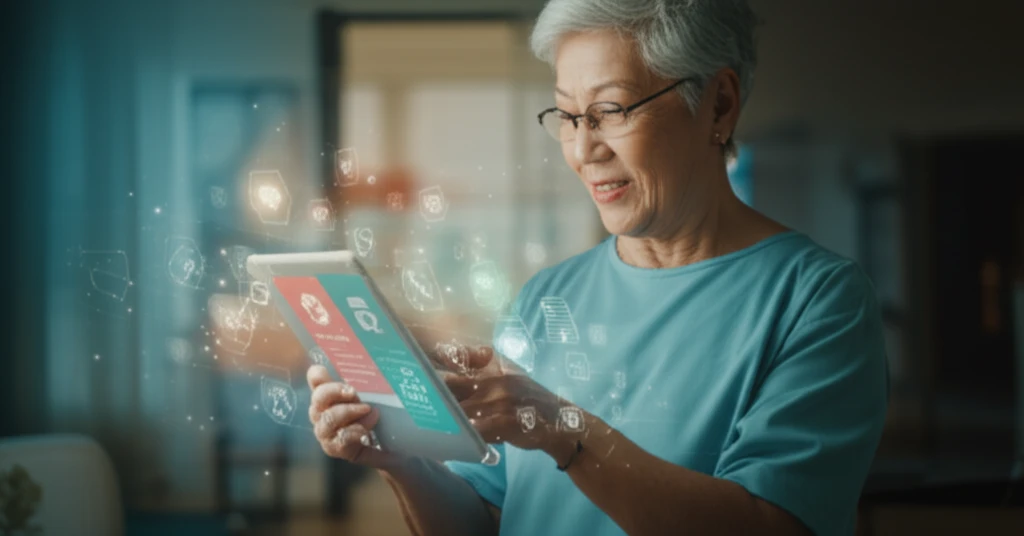
Senior using patient portal on tablet

Unlock Your Health: The Power of Patient Portals for Older Adults

"Discover how patient portals can revolutionize healthcare for seniors, offering greater control and access to vital health information."


In an era where technology increasingly shapes our lives, healthcare is no exception. For older adults managing chronic conditions, patient portals (PPs) emerge as a particularly promising tool. These online platforms offer the potential to revolutionize how seniors engage with their healthcare, providing unprecedented access to information and control over their medical journey.

However, the adoption rates of patient portals among older adults have been historically low. This gap often stems from a lack of technological literacy and insufficient support during the implementation process. Addressing this disparity is crucial to ensure that all individuals, regardless of age, can benefit from the advantages of digital health solutions.

Recent research has focused on bridging this digital divide, exploring innovative approaches to enhance patient portal usability and promote adoption among older populations. One such approach is the Theory-based Patient portal e-Learning Program (T-PeP), designed to empower seniors with the knowledge and skills necessary to navigate and utilize these platforms effectively.

Why Patient Portals Matter for Seniors

Senior using patient portal on tablet

Patient portals are more than just a digital convenience; they represent a fundamental shift in how healthcare is managed. For older adults, who often juggle multiple chronic conditions and complex treatment plans, these portals offer a centralized hub for accessing vital health information.

Here's a look at the key benefits:

  • Enhanced Access to Medical Records: View lab results, medication lists, and medical history anytime, anywhere.
  • Improved Communication with Providers: Securely message doctors and nurses with questions and concerns.
  • Streamlined Appointment Scheduling: Request and manage appointments online, reducing phone calls and wait times.
  • Medication Management: Request prescription refills and track medication adherence.
  • Empowered Health Decision-Making: Access educational resources and make more informed choices about your health.
By providing these capabilities, patient portals foster a sense of control and engagement in one's own healthcare, leading to better health outcomes and improved quality of life. Moreover, these tools can facilitate better communication with family caregivers, ensuring a collaborative approach to managing the senior's health.

The Future of Senior Healthcare: Embracing Technology

The journey to integrate technology into senior healthcare is ongoing, but the potential benefits are undeniable. By addressing the barriers to patient portal adoption and promoting user-friendly e-learning programs, we can empower older adults to take control of their health and improve their overall well-being. Further research and development in this area are crucial to ensure that technology serves as a bridge to better health for all, regardless of age or technological proficiency.

About this Article -

This article was crafted using a human-AI hybrid and collaborative approach. AI assisted our team with initial drafting, research insights, identifying key questions, and image generation. Our human editors guided topic selection, defined the angle, structured the content, ensured factual accuracy and relevance, refined the tone, and conducted thorough editing to deliver helpful, high-quality information.See our About page for more information.

Everything You Need To Know

1

What exactly are Patient Portals and what do they do?

Patient Portals (PPs) are online platforms designed to give patients greater access to and control over their healthcare information. They act as a central point where individuals can view lab results, medication lists, medical history, schedule appointments, communicate with healthcare providers, and manage prescriptions. The ultimate goal of patient portals is to foster a sense of control and engagement in one's own healthcare, leading to better health outcomes and an improved quality of life. However, their effectiveness depends on patient adoption and usability, especially for older adults who may face technological challenges.

2

What are the main advantages of using Patient Portals?

Patient portals offer several key benefits. They enhance access to medical records, allowing patients to view lab results, medication lists, and medical history anytime, anywhere. Patient portals improve communication with providers through secure messaging, streamline appointment scheduling, facilitate medication management through prescription refills and adherence tracking, and empower health decision-making by providing access to educational resources. These benefits are especially important for older adults managing chronic conditions, as patient portals provide a centralized hub for accessing vital health information and promoting better health management.

3

Why aren't more older adults using Patient Portals?

Low adoption rates of patient portals among older adults are a significant concern. This is primarily due to a lack of technological literacy and insufficient support during the implementation process. Without adequate training and support, seniors may find it difficult to navigate and utilize these platforms effectively. Addressing this digital divide is crucial to ensure that all individuals, regardless of age, can benefit from the advantages of digital health solutions. Programs like the Theory-based Patient portal e-Learning Program (T-PeP) are designed to bridge this gap by empowering seniors with the necessary knowledge and skills.

4

What is the Theory-based Patient portal e-Learning Program (T-PeP) and what does it do?

The Theory-based Patient portal e-Learning Program (T-PeP) is designed to empower older adults with the knowledge and skills necessary to navigate and utilize Patient Portals effectively. The goal is to increase adoption and engagement among older adults, bridging the digital divide that often hinders their access to and use of digital health solutions. By providing targeted education and support, T-PeP aims to enhance seniors' ability to manage their healthcare, communicate with providers, and make informed decisions about their health.

5

How do Patient Portals help older adults be more independent and manage their health better?

Patient Portals promote independence and better health management by providing older adults with direct access to their health information and tools. This empowers them to take a more active role in their care, track medications, schedule appointments, and communicate with providers. Enhanced access and control can lead to improved adherence to treatment plans, better management of chronic conditions, and a greater sense of self-efficacy in managing their health. This is significant because it shifts the focus from passive recipient of care to an active participant in their own well-being.

Newsletter Subscribe

Subscribe to get the latest articles and insights directly in your inbox.