
Unlock Your Fertility: The Power of Glutathione (GSH) in Sperm Health

"New research reveals how optimizing thiol levels can combat oxidative stress and improve sperm quality."
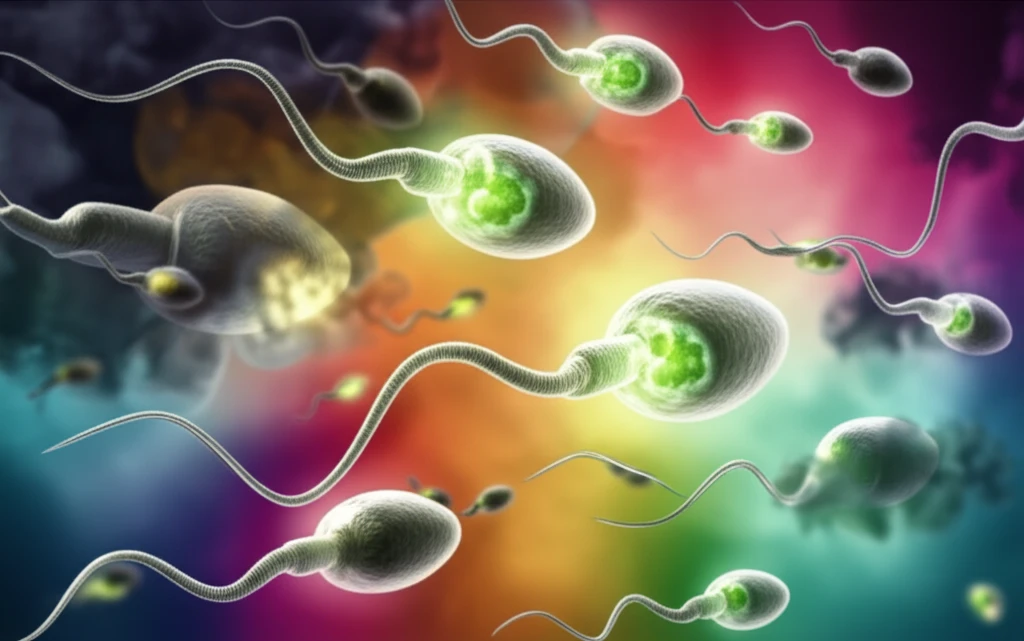
For couples navigating the complex world of fertility, sperm health is a critical factor. While discussions often center on female reproductive health, the vitality of sperm plays an equally important role in conception. Recent scientific investigations are shedding light on the intricate mechanisms that govern sperm quality, with a particular focus on the impact of oxidative stress and the protective power of antioxidants.
Oxidative stress occurs when there's an imbalance between the production of free radicals and the body's ability to neutralize them with antioxidants. This imbalance can damage sperm, affecting their motility (ability to swim), viability (ability to stay alive), and overall functionality. Think of it like this: if sperm are constantly battling a barrage of harmful elements, their energy is depleted, and their ability to reach and fertilize an egg is compromised.
Enter glutathione (GSH), a powerful antioxidant naturally produced in the body. Emerging research suggests that GSH plays a crucial role in protecting sperm from oxidative stress and maintaining their health. This article explores the fascinating link between GSH and sperm quality, offering insights into how optimizing thiol levels may unlock new possibilities for improving fertility.
GSH and Male Fertility
Oxidative stress is considered one cause of male subfertility or infertility. The cited review identifies glutathione S-transferases (GSTs) as crucial antioxidant enzymes involved in sperm defense mechanisms. A 2025 study suggests that decreased GSH accumulation or the absence of reduced glutathione within sperm cells, rather than increased GSSG accumulation, may be associated with lower sperm counts. Research on unexplained infertility has also examined sperm glutathione peroxidase activity and GSH levels using semen analysis based on the 2010 WHO criteria.
Tracing Glutathione's History
The provided historical guide describes glutathione research from its initial observation through the elucidation of its structure, biosynthesis, and physiological roles. It presents these developments as milestones supported by experimental context and seminal studies. A separate history places glutathione's story from the beginning of the 20th century through current trials, including scientific milestones and medical applications.
The Science Behind GSH: How it Protects Sperm
A groundbreaking study by Ortega Ferrusola et al. (2018) delved into the significance of thiols, particularly glutathione (GSH), in regulating stallion sperm function. This research, conducted at the University of Extremadura (Spain) and the University of Newcastle (Australia), highlights the vulnerability of sperm to redox deregulation – an imbalance in the oxidation-reduction processes within cells. This deregulation leads to the production of 4-hydroxynonenal, a toxic byproduct of lipid peroxidation, ultimately contributing to sperm senescence (aging).
- GSH Depletion Harms Sperm: When GSH levels were artificially reduced, sperm suffered significant damage.
- Cysteine to the Rescue: Adding cysteine, a precursor to GSH, helped prevent the damage caused by GSH depletion.
- Sperm Can Synthesize GSH: The research suggests that stallion sperm possess the ability to synthesize GSH, utilizing exogenous cysteine.
- Enzymes Confirmed: The presence of Glutathione Synthetase (GSS) and glutamate-cysteine ligase (GCLC), two enzymes required to synthesize GSH, were detected in stallion spermatozoa.
Redox Research in Sperm
A review of aldehyde dehydrogenases in male reproduction states that the World Health Organization defines infertility as the inability of a couple to conceive after at least 12 months of regular, unprotected sexual intercourse. In duck semen freezing research, glutathione peroxidase activity differed between storage groups, with significant decreases reported in the P2 and P4 groups compared with specified controls. Research on stallion sperm links thiol depletion with redox deregulation, production of 4-hydroxynonenal, and sperm senescence, suggesting a possible role for GSH regulation. In equine sperm, capacitating conditions produced lower calcium levels than controls after 22 hours, with effects further enhanced by 3-AT and BSO.
Limits of the Evidence
The cited fertility-formula source presents glutathione as part of an antioxidant network supporting developing sperm and the reproductive-tract environment, rather than as an isolated mechanism. Another source describes L-glutathione as an antioxidant that may help protect cells from oxidative stress and support reproductive health, but this is a general health claim. The cited clinical discussion reports that FDA-labeled glutathione products are topical cosmetic preparations, not oral or injectable products for male infertility. It therefore emphasizes that glutathione does not currently have an established therapeutic role in treating oligospermia.
The Future of Fertility: Harnessing the Power of GSH
The research by Ortega Ferrusola et al. (2018) opens exciting avenues for future fertility treatments and sperm preservation technologies. By focusing on strategies to maintain or enhance GSH levels in sperm, we may be able to improve sperm quality and increase the chances of successful conception. Further research is needed to fully understand the complexities of GSH metabolism in sperm and to develop targeted interventions that can optimize thiol levels. However, the initial findings are promising and suggest that GSH could be a key player in unlocking the secrets to improved male fertility.
Emerging Directions
The cited article frames GSH as a subject of ongoing research in sperm health and fertility, including practical considerations and potential future biotechnological applications. Another source highlights cellular energy, antioxidant protection, and tissue-level health inside the testes as reasons glutathione-related molecules are attracting attention in male reproductive health. A 2026 trends report identifies at-home testing kits, fertility supplements, and AI-driven analyzers as developments in sperm-health monitoring and consumer care.
From Molecules to Semen Storage
A study of ram semen evaluated reduced-glutathione supplementation during liquid storage at 5 °C, focusing on sperm motility, kinematics, mitochondrial activity, and the abundance of sperm hexose transporters. This work illustrates that GSH research also concerns semen preservation and storage conditions, not only conception outcomes. A separate overview describes glutathione as a naturally produced tripeptide composed of cysteine, glutamate, and glycine that helps regulate free-radical balance and supports detoxification.
Seminal Antioxidants and Infertility
Research on idiopathic infertile men evaluated non-enzymatic antioxidant profiles in seminal plasma and assessed their relationship with semen parameters. The study was motivated by the protective role of seminal-plasma antioxidants against oxidative damage. Another study examined sperm GSH levels and glutathione peroxidase activity in males with unexplained infertility, using samples from subjects with normal semen parameters divided into fertile and infertile groups. Together, these sources show how GSH-related measurements have been investigated in men whose infertility lacks an immediately explained cause.