
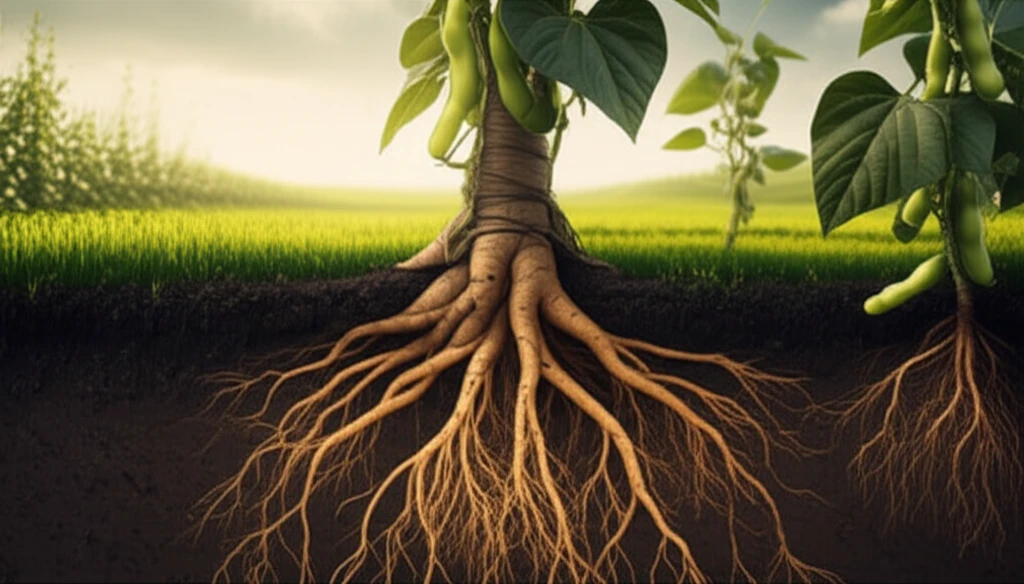
Unlock Your Farm's Potential: How Grazing and Nitrogen Balance Boost Soil & Bean Yields

"Sustainable farming practices revealed: Discover how strategic grazing and nitrogen application can dramatically improve soil health and bean productivity."
In the world of agriculture, finding sustainable practices is key to ensuring long-term productivity and environmental health. Integrated crop-livestock systems (ICL) offer a promising approach by combining crop cultivation and animal grazing to create mutually beneficial relationships. Understanding how these components interact is crucial for making informed decisions that enhance both soil quality and crop yields.
A recent study investigated the effects of grazing and nitrogen levels on soil physical properties and bean productivity within an integrated system. The research focused on how different nitrogen applications on ryegrass pastures, coupled with grazing management, influence soil health indicators such as density, porosity, and resistance to penetration, ultimately impacting the subsequent bean crop.
This article breaks down the study's findings, providing practical insights into optimizing grazing and nitrogen use to achieve sustainable soil management and maximize bean yields. Learn how strategic grazing and nitrogen application can transform your farm into a more productive and environmentally sound operation.
The Science of Soil & Sustainability: Grazing and Nitrogen's Impact
The study was conducted at the CEDETEG Campus of the State University of the Center-West (UNICENTRO) in Guarapuava, Paraná, Brazil. Researchers used a randomized block design to assess the impact of varying nitrogen doses (0, 75, 150, and 225 kg ha⁻¹) applied to ryegrass pastures in the winter, followed by bean cultivation in the summer. The presence or absence of grazing was also factored in as a key variable.
- Experimental Design: Randomized block design with split-plots and three replications.
- Nitrogen Treatments: Four nitrogen levels applied to ryegrass pasture.
- Grazing Management: Continuous sheep grazing with variable stocking rates to maintain consistent pasture height.
- Data Collection: Soil physical properties (density, porosity, penetration resistance) measured at different depths and stages. Bean yield was measured after harvest.
- Statistical Analysis: Analysis of variance and regression analysis to determine significant effects and relationships.
Sustainable Soil for Future Harvests
This research underscores the importance of understanding the interactions within integrated crop-livestock systems. By carefully managing grazing intensity and nitrogen inputs, farmers can enhance soil physical properties, leading to improved crop yields and a more sustainable agricultural operation. The findings suggest that a balanced approach to grazing and nitrogen fertilization can minimize soil compaction, promote healthy root development, and optimize nutrient cycling.
The study's recommendation of 150 kg ha⁻¹ of nitrogen during the winter ryegrass phase offers a practical guideline for farmers seeking to boost bean productivity without over-fertilizing. Further research could explore the long-term effects of these practices on soil health and carbon sequestration, providing a more comprehensive understanding of their sustainability.
By implementing these strategies, farmers can create a resilient and productive farming system that benefits both the environment and their bottom line. Embracing sustainable practices is not only an investment in the future of agriculture but also a step towards creating a healthier planet.