
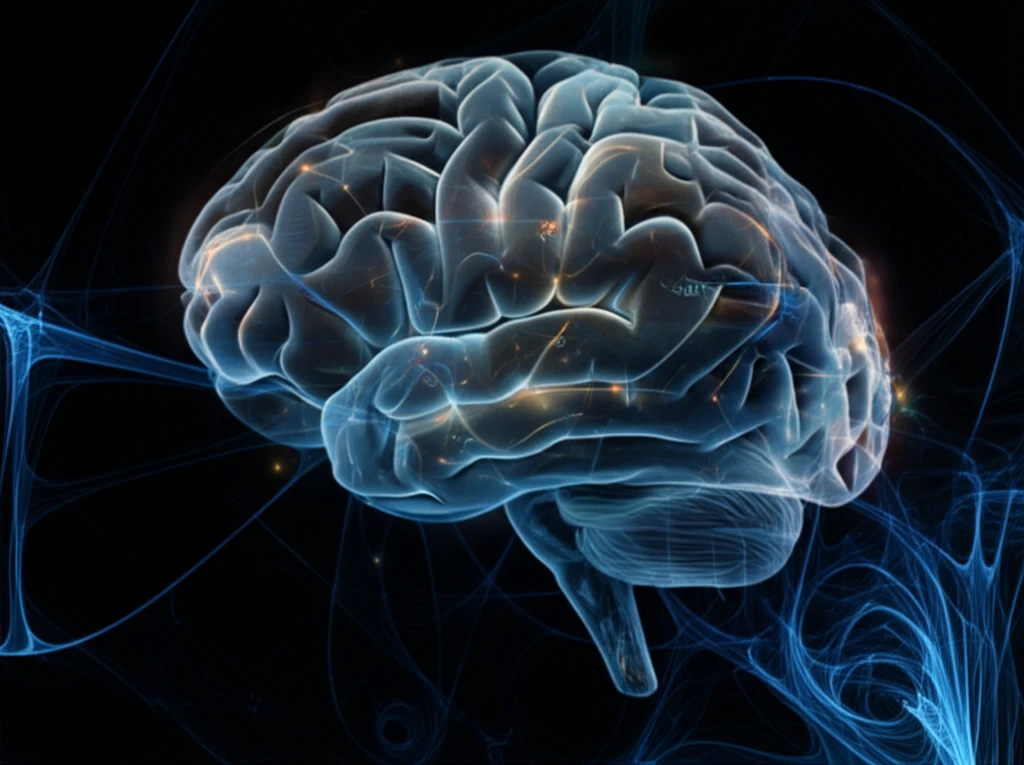
Illustration of a brain with neural pathways, TrkB, NMDA, and RasGrf1 molecules, symbolizing learning and memory.

Unlock Your Brain's Potential: How a Tiny Protein Boosts Learning and Memory

"Scientists Discover a Key Player in Brain Function, Offering Insights into Memory and Cognitive Enhancement"


Imagine a world where learning is effortless, memory is sharp, and cognitive decline is a thing of the past. While this may sound like science fiction, scientists are making remarkable strides in understanding the intricacies of the brain, inching closer to these ambitious goals. A recent study delves into the fascinating relationship between a key protein, TrkB, and the NMDA receptor, a critical player in learning and memory processes.

The research, published in the Journal of Molecular Neuroscience, unveils a complex interplay that could revolutionize our understanding of how the brain works. By unraveling the mechanisms behind this interaction, scientists are opening doors to potential therapies for neurological disorders and cognitive enhancement.

This article breaks down the complex science into digestible insights, exploring the key findings, their implications, and the potential impact on our lives. Get ready to discover how a tiny protein could hold the key to unlocking your brain's full potential.

Deciphering the Brain's Building Blocks: TrkB, NMDA Receptors, and RasGrf1

Illustration of a brain with neural pathways, TrkB, NMDA, and RasGrf1 molecules, symbolizing learning and memory.

At the heart of this research lies the TrkB receptor, a type of protein known as a tyrosine kinase receptor, which is activated by brain-derived neurotrophic factor (BDNF). BDNF is like a brain fertilizer, nourishing neurons and supporting their growth and function. Simultaneously, the NMDA receptor acts as a crucial gatekeeper for memory and learning, allowing electrical signals to pass between brain cells.

The study shines a light on the role of RasGrf1, a guanine nucleotide exchange factor. Think of RasGrf1 as a cellular messenger, communicating between TrkB and NMDA receptors. This protein's ability to bind to both receptors is vital for facilitating the brain's plasticity, its capacity to reorganize itself by forming new neural connections throughout life.

  • TrkB's Role: Facilitates neuronal differentiation and synaptic plasticity by activating downstream signaling pathways.
  • NMDA Receptor's Function: Plays a critical role in excitatory synaptic transmission, and is vital for learning and memory.
  • RasGrf1's Significance: Acts as a cellular messenger, linking TrkB and NMDA receptors.
The researchers discovered that TrkB, when activated by BDNF, can influence NMDA receptor signaling in two significant ways: uncoupling RasGrf1 from NMDA receptors and recruiting it to TrkB. This dual action triggers a cascade of events that influence learning and memory. These findings provide a better understanding of the intricate signaling pathways involved in cognitive functions and highlight the potential of targeting these pathways for therapeutic interventions.

The Future of Brain Health: Promising Avenues for Research and Treatment

The research presented in this study opens exciting new avenues for exploration in the field of brain health. By understanding the interactions of TrkB, NMDA receptors, and RasGrf1, we can move closer to innovative treatments for cognitive impairments and age-related memory loss. The findings also suggest the possibility of enhancing cognitive function and promoting overall brain wellness. As scientists continue to unravel the complexities of the brain, the promise of unlocking our full cognitive potential becomes increasingly tangible.

About this Article -

This article was crafted using a human-AI hybrid and collaborative approach. AI assisted our team with initial drafting, research insights, identifying key questions, and image generation. Our human editors guided topic selection, defined the angle, structured the content, ensured factual accuracy and relevance, refined the tone, and conducted thorough editing to deliver helpful, high-quality information.See our About page for more information.

This article is based on research published under:

DOI-LINK: 10.1007/s12031-018-1214-z, Alternate LINK

Title: Trkb Regulates N-Methyl-D-Aspartate Receptor Signaling By Uncoupling And Recruiting The Brain-Specific Guanine Nucleotide Exchange Factor, Rasgrf1

Subject: Cellular and Molecular Neuroscience

Journal: Journal of Molecular Neuroscience

Publisher: Springer Science and Business Media LLC

Authors: Asghar Talebian, Kim Robinson-Brookes, Susan O. Meakin

Published: 2018-12-13

Everything You Need To Know

1

What is the role of the TrkB receptor in the brain, and how does it relate to brain-derived neurotrophic factor (BDNF)?

The TrkB receptor, a tyrosine kinase receptor, is activated by brain-derived neurotrophic factor (BDNF). BDNF acts like a brain fertilizer, supporting neuron growth and function. By activating downstream signaling pathways, TrkB facilitates neuronal differentiation and synaptic plasticity, which are crucial for learning and memory. Without BDNF to activate TrkB, neurons may not function optimally, affecting cognitive processes.

2

Can you explain the function of the NMDA receptor and its significance in learning and memory processes?

The NMDA receptor is a vital component in the brain, acting as a gatekeeper for learning and memory. It allows electrical signals to pass between brain cells, a process critical for forming new memories and learning new information. The NMDA receptor plays a critical role in excitatory synaptic transmission. Dysfunction of the NMDA receptor is implicated in various cognitive disorders, highlighting its importance.

3

What is RasGrf1, and how does it act as a messenger between TrkB and NMDA receptors?

RasGrf1 is a guanine nucleotide exchange factor that serves as a cellular messenger, linking the TrkB receptor and the NMDA receptor. It binds to both receptors, facilitating communication between them. This interaction is crucial for the brain's plasticity, allowing it to reorganize itself by forming new neural connections. Without RasGrf1, the communication between TrkB and NMDA receptors would be impaired, affecting the brain's ability to adapt and learn.

4

How does the interaction between TrkB, NMDA receptors, and RasGrf1 influence cognitive functions, and what are the implications for treating cognitive impairments?

When TrkB is activated by BDNF, it influences NMDA receptor signaling by uncoupling RasGrf1 from NMDA receptors and recruiting it to TrkB. This dual action triggers a cascade of events that influence learning and memory. Understanding these intricate signaling pathways opens avenues for therapeutic interventions targeting cognitive impairments, such as age-related memory loss and neurological disorders. By modulating the activity of these proteins, it may be possible to enhance cognitive function and treat conditions associated with cognitive decline. However, the exact mechanisms and potential side effects need further investigation.

5

The study mentions that TrkB influences NMDA receptor signaling. What specific actions does TrkB take, and why are these actions significant for learning and memory?

TrkB influences NMDA receptor signaling in two key ways: first, it uncouples RasGrf1 from NMDA receptors; second, it recruits RasGrf1 to TrkB. These actions are significant because they trigger a cascade of events that ultimately influence learning and memory. By uncoupling RasGrf1 from NMDA receptors, TrkB can modulate the activity of NMDA receptors, affecting how signals are transmitted between brain cells. Recruiting RasGrf1 to TrkB further enhances TrkB's signaling pathways, promoting synaptic plasticity. This dual action allows for fine-tuned control over the processes involved in cognitive function.

Newsletter Subscribe

Subscribe to get the latest articles and insights directly in your inbox.