
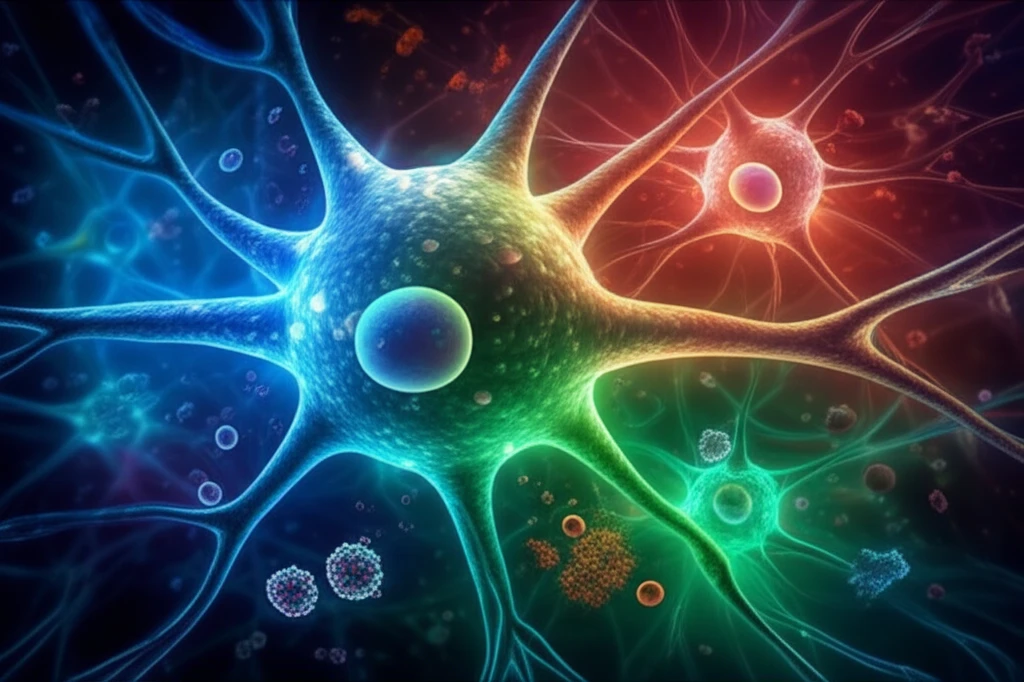
Unlock Your Brain's Natural Shield: How Astrocytes Power Antioxidant Defense

"Discover the unsung heroes of brain health: astrocytes. Learn how these star-shaped cells protect neurons from oxidative stress and why they're key to future therapies."
The intricate dance between astrocytes and neurons is essential for maintaining a stable and healthy brain. One of the most vital aspects of this relationship is the defense against oxidative stress. Neurons rely heavily on antioxidants, and astrocytes play a crucial role in supplying and maintaining this protective army.
For over two decades, since pioneering work revealed how astrocytes synthesize and then export glutathione to neurons, scientists have been unraveling the mechanisms by which these cells respond to oxidative stress, inflammation, and infection. This growing understanding highlights the potential of astrocytes as therapeutic targets for enhancing neuronal survival.
This article delves into recent research that sheds light on the mechanisms of astrocyte-mediated antioxidant defense, revealing potential new strategies to protect the brain. It examines the roles of key molecules and pathways involved in this critical process.
Astrocyte-Powered Protection: Key Antioxidant Mechanisms
Recent studies have illuminated several key ways astrocytes contribute to antioxidant defense. One important discovery focuses on the pro-inflammatory cytokine, IL-1ß. Research shows that IL-1ß not only protects astrocytes themselves from oxidant damage by up-regulating glutathione production, but it also extends this protection to neurons.
- Small GTP-binding proteins (p21Ras family): These proteins, particularly H-Ras and K-Ras, act as sensors for changes in reactive oxygen species (ROS) within astrocytes.
- Regulation of Cellular Redox State: H-Ras and K-Ras respond to changes in ROS levels by upregulating antioxidant genes, including Mn-superoxide dismutase and NADPH oxidase.
- Transcriptional and Translational Pathways: Acute oxidative stimulation of primary astrocytes leads to the upregulation of K- and H-Ras via processes targeting both transcriptional and translational pathways, suggesting that these proteins play a key role in boosting astrocyte antioxidant capacity in response to stress.
The Future of Brain Protection: Harnessing Astrocyte Power
Despite the increasing knowledge of Nrf2's involvement, endogenous Nrf2 responses often fail to prevent oxidative stress and maintain normal neuronal activity in neurodegenerative diseases. Further research is needed to understand why these protective mechanisms falter and how they can be enhanced.
Another area of intense study is the thiol redox balance in astrocytes, particularly the roles of cysteine/cystine and reduced/oxidized glutathione redox couples. Scientists are working to fully understand the biochemical pathways that contribute to glutathione synthesis in astrocytes and how these pathways are regulated.
Ultimately, understanding the role of astrocytes in providing antioxidant protection for neurons is of paramount importance. Further investigation is needed to fully realize the potential of these cells as therapeutic targets for promoting antioxidant defense and preserving brain health.