
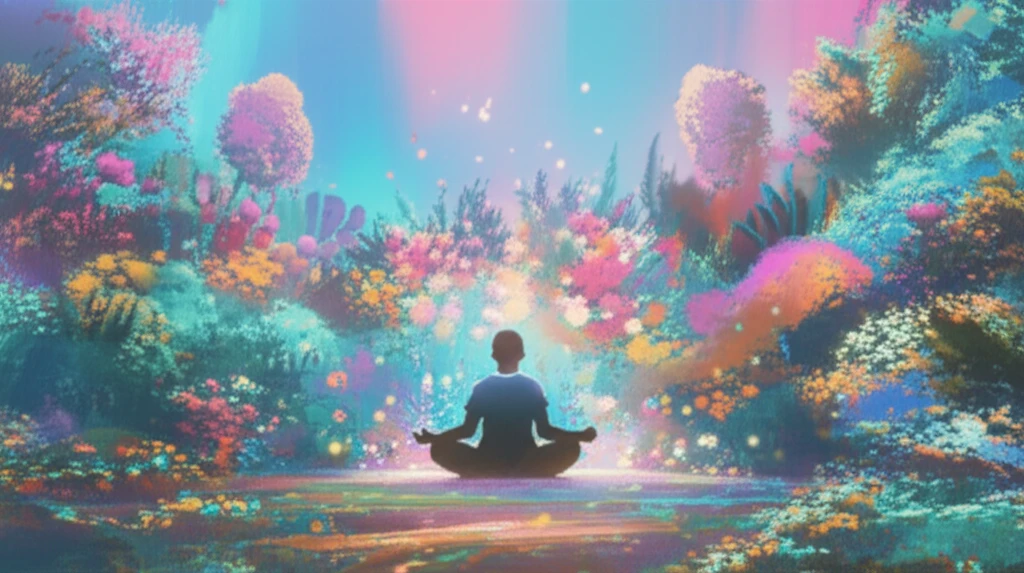
Person meditating in nature, experiencing landscape feeling.

Unlock the Power of Landscape: How Feeling Nature Boosts Creativity and Well-being

"Explore the historical journey of 'landscape feeling' and discover how engaging with nature can enhance your mental and emotional landscape."


In our fast-paced digital age, it's easy to lose touch with the natural world. Yet, throughout history, thinkers and artists have recognized the deep connection between our inner lives and the landscapes around us. This connection, often termed "landscape feeling" or Stimmung, is more than just a pleasant sensation; it's a powerful force that can shape our creativity, well-being, and understanding of the world.

The concept of 'landscape' has evolved significantly. Initially, it was tied to physical territories and human settlements. Over time, it transformed into a concept deeply intertwined with personal experiences and emotions. This shift reflects a growing awareness of how our interactions with nature influence our perceptions and feelings.

This article explores the historical roots of 'landscape feeling', tracing its development through the ideas of influential figures like Kant, Sulzer, Herder, Goethe, Humboldt, and Carus. By understanding this intellectual journey, we can gain valuable insights into how to cultivate a more meaningful relationship with nature and harness its transformative power.

The Philosophical Roots of Landscape Feeling: From Kant to Carus

Person meditating in nature, experiencing landscape feeling.

The journey to understanding 'landscape feeling' begins with grappling with the age-old conflict between reason and emotion. Immanuel Kant, while emphasizing reason, acknowledged the possibility of experiencing nature beyond the purely rational. This opened the door for exploring the emotional and sensory dimensions of our connection to the environment.

Following Kant, thinkers like Sulzer and Herder further explored the role of emotion and sensory experience in our understanding of the world. They recognized that nature could evoke pleasure and excitement, paving the way for a more holistic view of human-environment interaction.

Here are some key philosophers:
  • Immanuel Kant: Emphasized reason but acknowledged the possibility of experiencing nature beyond the purely rational.
  • Sulzer and Herder: Recognized nature's ability to evoke pleasure and excitement, paving the way for a more holistic view of human-environment interaction.
  • Carl Gustav Carus: Directly linked landscape to feeling, drawing inspiration from Goethe and Humboldt, emphasizing the role of painting in capturing the essence of landscape feeling.
Carl Gustav Carus, building on these foundations, directly linked 'landscape' to 'feeling'. Inspired by the scientific observations of Humboldt and the artistic sensibilities of Goethe, Carus emphasized the role of painting in capturing the essence of 'landscape feeling'. He believed that art could evoke a sensitive understanding of the world, bridging the gap between objective observation and subjective experience.

Reconnecting with Nature in the Modern World

In today's technology-driven world, cultivating 'landscape feeling' is more important than ever. By consciously engaging with nature – whether through art, mindful observation, or simply spending time outdoors – we can tap into a powerful source of creativity, emotional well-being, and deeper understanding. Embrace the 'landscape feeling' and transform your connection to the world around you.

About this Article -

This article was crafted using a human-AI hybrid and collaborative approach. AI assisted our team with initial drafting, research insights, identifying key questions, and image generation. Our human editors guided topic selection, defined the angle, structured the content, ensured factual accuracy and relevance, refined the tone, and conducted thorough editing to deliver helpful, high-quality information.See our About page for more information.

This article is based on research published under:

DOI-LINK: 10.1590/2236-9996.2016-3712, Alternate LINK

Title: Em Busca Do Sentimento Da Paisagem

Subject: General Medicine

Journal: Cadernos Metrópole

Publisher: FapUNIFESP (SciELO)

Authors: Margareth Afeche Pimenta

Published: 2016-12-01

Everything You Need To Know

1

What exactly is meant by 'landscape feeling'?

'Landscape feeling', or Stimmung, refers to the deep connection between our inner lives and the landscapes around us. It's the recognition that our interactions with nature significantly influence our perceptions, emotions, and creative processes. This concept evolved from a focus on physical territories to encompass personal experiences and emotional responses to nature.

2

Why is this idea of 'landscape feeling' considered important?

The concept of 'landscape feeling' is significant because it highlights the transformative power of nature on our creativity and well-being. Thinkers like Kant, Sulzer, Herder, Goethe, Humboldt, and Carus, explored how engaging with nature can enhance our emotional and mental states. Cultivating this connection is seen as a pathway to enriching our daily lives and deepening our understanding of the world.

3

What role did Immanuel Kant play in the development of 'landscape feeling'?

Immanuel Kant, although emphasizing reason, recognized the possibility of experiencing nature beyond the purely rational. This acknowledgment opened the door for exploring the emotional and sensory dimensions of our connection to the environment. His work provided a foundation for later philosophers to delve deeper into the subjective experience of nature.

4

How did Carl Gustav Carus contribute to our understanding of 'landscape feeling'?

Carl Gustav Carus directly linked the concept of 'landscape' to 'feeling', emphasizing the role of art, particularly painting, in capturing the essence of landscape feeling. He drew inspiration from Goethe and Humboldt, viewing art as a bridge between objective observation and subjective experience, enabling a sensitive understanding of the world.

5

How can someone cultivate or enhance their 'landscape feeling' in their daily life?

We can cultivate 'landscape feeling' by consciously engaging with nature through various means such as art, mindful observation, or simply spending time outdoors. By doing so, we can tap into a source of creativity and emotional well-being. This involves actively seeking experiences in nature and reflecting on how those experiences shape our inner landscape.

Newsletter Subscribe

Subscribe to get the latest articles and insights directly in your inbox.