
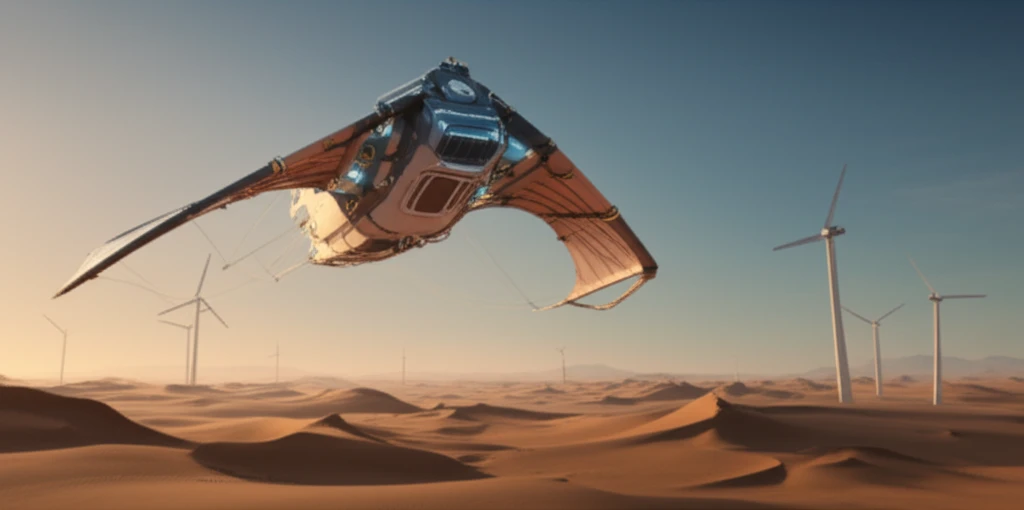
Unlock the Middle East's Untapped Energy: How High-Altitude Wind Could Power the Future

"Is airborne wind energy the solution to the Middle East's energy needs? A new study explores the potential of high-altitude winds in the region."
The Middle East faces a significant challenge: meeting growing energy demands while reducing reliance on fossil fuels. Near-surface wind resources, while promising, often prove inconsistent. However, a groundbreaking study reveals a potential game-changer: the abundant and persistent wind resources found at high altitudes.
This research, leveraging data from the Modern-Era Retrospective Analysis for Research and Applications Version 2 (MERRA-2), identifies areas within the Middle East ideally suited for airborne wind energy (AWE) systems. It also determines the optimal operating heights for these systems, paving the way for a more efficient and reliable energy source.
By comparing the potential of AWE with traditional near-surface wind generation, the study highlights the significant advantages of tapping into these high-altitude winds. The findings suggest that AWE could play a crucial role in diversifying the energy mix, particularly in regions with high energy demands and low annual wind variability.
The Promise of Airborne Wind Energy: A Solution Blowing in the Wind?
The study highlights the immense potential of AWE in the Middle East. Unlike near-surface winds, which are often intermittent and unreliable, high-altitude winds offer a consistent and powerful energy source. This is particularly crucial for a region heavily dependent on fossil fuels, offering a pathway towards a more sustainable energy future.
- Optimal Locations: Eastern Saudi Arabia, Kuwait, Bahrain, and Qatar show significant potential during winter. In summer, coastal areas of Yemen and Oman emerge as prime locations.
- Altitude Matters: The study determined the ideal altitudes for AWE systems to maximize energy capture, considering factors like wind speed and variability.
- Reduced Variability: High-altitude winds demonstrate less diurnal and seasonal variability compared to near-surface winds, ensuring a more consistent energy supply.
A Future Powered by the Skies: Embracing Airborne Wind Energy
This study provides compelling evidence for the viability of AWE as a significant energy source in the Middle East. By tapping into the region's abundant high-altitude wind resources, countries can reduce their reliance on fossil fuels, diversify their energy mix, and pave the way for a more sustainable future.
While further on-site studies and measurement campaigns are necessary to refine these findings and optimize AWE deployment, the research offers a clear roadmap for policymakers and investors looking to capitalize on this untapped energy potential.
Airborne wind energy presents a unique opportunity for the Middle East to champion technological innovation and transition towards a knowledge-based, energy-intensive economy. By embracing this next-generation technology, the region can secure a cleaner, more reliable, and sustainable energy future for generations to come.