
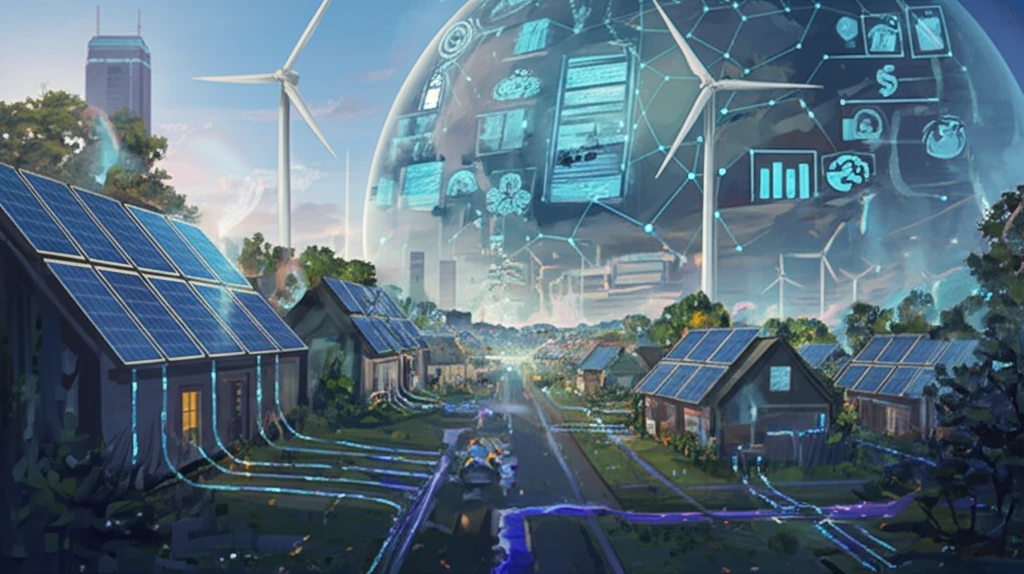
A surreal illustration of an energy community powered by renewable resources.

Unlock Savings and Sustainability: How Energy Communities are Revolutionizing Home Energy

"Discover how cooperative energy models and smart tech can lower your bills and create a greener future."


Are you searching for ways to reduce your carbon footprint while saving money on your energy bills? The concept of energy communities is emerging as a powerful solution, transforming how we generate, distribute, and consume electricity. These communities empower individuals to collectively manage their energy resources, leading to greater efficiency and resilience.

An energy community operates as a cooperative where members, often neighbors, pool their resources to generate and share energy. This model frequently involves distributed energy resources (DERs) such as solar panels, wind turbines, and battery storage. By working together, members can reduce their reliance on the traditional grid, maximize the use of renewable energy, and unlock significant cost savings.

This article will explore the benefits of energy communities, focusing on how they function, the technologies they utilize, and the various strategies for distributing energy and cost savings among members. We'll also examine the challenges and opportunities associated with these innovative energy models, providing you with a comprehensive understanding of how you can participate in a more sustainable and affordable energy future.

How Do Energy Communities Work?

A surreal illustration of an energy community powered by renewable resources.

At the heart of an energy community is the idea of sharing resources. Members integrate DERs behind a central meter, typically managed under a Net Energy Metering (NEM) tariff. This setup allows the community to draw power from the grid when needed while also exporting excess energy back to the grid, earning credits that offset members' energy costs.

The key to a successful energy community lies in optimizing the scheduling and distribution of DERs. Two primary models exist:

  • Centralized Scheduling: A central controller manages all DERs within the community, maximizing overall efficiency and ensuring that energy is used in the most cost-effective way.
  • Decentralized Scheduling: Each member manages their own DERs, making individual decisions about energy consumption and generation. This model promotes greater autonomy but may result in less overall efficiency.
Both models present unique advantages and challenges. Centralized scheduling can optimize energy use across the community, leading to greater cost savings. However, it requires a high degree of coordination and may raise privacy concerns. Decentralized scheduling offers greater individual control but may not achieve the same level of overall efficiency.

The Future of Energy is Cooperative

Energy communities represent a promising path toward a more sustainable and affordable energy future. By embracing cooperative models and innovative technologies, individuals can take control of their energy resources, reduce their carbon footprint, and unlock significant cost savings. As these communities continue to grow and evolve, they have the potential to revolutionize the energy landscape and create a more resilient and equitable energy system for all.

About this Article -

This article was crafted using a human-AI hybrid and collaborative approach. AI assisted our team with initial drafting, research insights, identifying key questions, and image generation. Our human editors guided topic selection, defined the angle, structured the content, ensured factual accuracy and relevance, refined the tone, and conducted thorough editing to deliver helpful, high-quality information.See our About page for more information.

This article is based on research published under:

DOI-LINK: https://doi.org/10.48550/arXiv.2311.18792,

Title: Resource Sharing In Energy Communities: A Cooperative Game Approach

Subject: cs.gt cs.sy econ.th eess.sy

Authors: Ahmed S. Alahmed, Lang Tong

Published: 30-11-2023

Everything You Need To Know

1

What exactly is an energy community and how does it benefit its members?

An energy community is a cooperative arrangement where individuals, often neighbors, pool resources to generate and share energy. This setup typically involves distributed energy resources (DERs) like solar panels, wind turbines, and battery storage. By working together, community members reduce their reliance on the traditional grid, maximize the use of renewable energy sources, and unlock significant cost savings on their energy bills. This cooperative model promotes a more sustainable and affordable energy future for everyone involved.

2

How do energy communities leverage distributed energy resources (DERs) and Net Energy Metering (NEM) to operate effectively?

Energy communities utilize distributed energy resources (DERs), such as solar panels and battery storage, to generate and store electricity locally. These DERs are often integrated behind a central meter, typically managed under a Net Energy Metering (NEM) tariff. NEM allows the community to draw power from the grid when needed and export excess energy back to the grid, earning credits that offset members' energy costs. This arrangement optimizes energy usage and reduces reliance on the traditional grid.

3

What are the key differences between centralized and decentralized scheduling models within an energy community, and what are the pros and cons of each?

Energy communities utilize two primary models for scheduling and distributing DERs: centralized and decentralized. Centralized scheduling involves a central controller managing all DERs within the community, optimizing overall efficiency and cost-effectiveness. However, it requires high coordination and may raise privacy concerns. Decentralized scheduling allows each member to manage their own DERs, promoting autonomy but potentially sacrificing overall efficiency. Centralized scheduling maximizes cost savings through optimization, while decentralized scheduling offers greater individual control. The optimal model depends on the community's priorities and preferences.

4

In what ways do energy communities contribute to a more sustainable energy system, beyond just cost savings for their members?

Beyond cost savings, energy communities promote a more sustainable energy system by reducing reliance on the traditional grid and maximizing the use of renewable energy sources like solar and wind power. By collectively managing their energy resources, communities reduce their carbon footprint and contribute to a cleaner environment. The cooperative model fosters a more resilient and equitable energy system by empowering individuals to take control of their energy resources and participate in a more sustainable future.

5

What are some potential challenges or barriers that energy communities might face as they grow and evolve, and how can these be addressed?

As energy communities grow, they may face challenges related to coordination, privacy concerns, and regulatory hurdles. Centralized scheduling, while efficient, requires a high degree of coordination among members. The optimal model depends on the community's priorities and preferences. Moreover, navigating varying state and local energy regulations can be complex. Overcoming these challenges requires clear communication, robust data privacy measures, and proactive engagement with policymakers to create a supportive regulatory environment for energy communities.

Newsletter Subscribe

Subscribe to get the latest articles and insights directly in your inbox.