
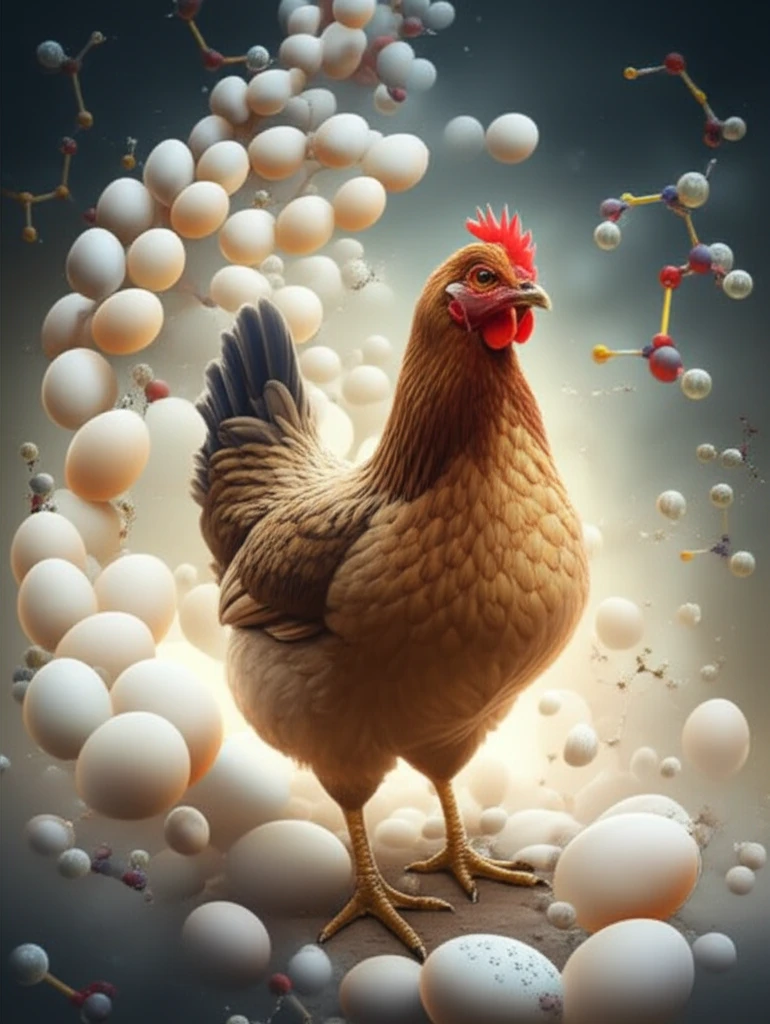
Layer hen with a cascade of eggs, representing enhanced production through chelated minerals and optimized limestone particle size.

Unlock Egg-cellent Production: How Chelated Minerals & Limestone Size Boost Layer Hen Health

"Boost Egg Production and Quality: Discover the Power of Chelated Minerals and Optimal Limestone Particle Sizes for Healthier, More Productive Hens."


In the fast-evolving poultry industry, the pursuit of higher egg production is relentless. While genetic improvements, better housing, and optimized feeding strategies have pushed layer hens to produce more eggs, maintaining eggshell quality and bone health throughout their laying cycles remains a critical challenge.

Supplementing layer hen diets with essential minerals is a common practice to support these vital functions. Traditional inorganic minerals have long been the standard, but recent research explores the benefits of chelated (organic) minerals and the impact of limestone particle size on calcium absorption—a key element for strong eggshells and bones.

This article examines a study investigating the effects of chelated minerals and varying limestone particle sizes on egg production, egg quality, and bone health in commercial layer hens during their second laying cycle. Discover how these nutritional strategies can optimize hen performance and improve the quality of their eggs.

Chelated Minerals vs. Inorganic Minerals: What's the Real Difference for Layer Hens?

Layer hen with a cascade of eggs, representing enhanced production through chelated minerals and optimized limestone particle size.

The study compared layer hen diets supplemented with either inorganic or chelated minerals. Chelated minerals, bound to organic molecules, are believed to be more easily absorbed and retained by the birds, potentially leading to improved performance and reduced mineral excretion into the environment.

The results revealed that hens receiving chelated mineral supplementation exhibited significantly higher egg production and egg mass compared to those fed inorganic minerals. This suggests that the increased bioavailability of chelated minerals may play a crucial role in supporting the demands of egg production.

  • Enhanced Absorption: Chelated minerals are designed for better absorption in the digestive tract.
  • Improved Performance: The study showed a direct link between chelated minerals and increased egg production and mass.
  • Environmental Benefits: Reduced mineral excretion contributes to a more sustainable poultry operation.
These findings align with previous research indicating the positive impact of organic mineral supplementation on layer hen performance. However, it's important to note that not all studies show consistent results, highlighting the complexity of mineral metabolism and the influence of various factors.

The Bottom Line: Optimizing Layer Hen Diets for Sustainable Egg Production

This study underscores the importance of carefully considering mineral sources and calcium particle sizes when formulating layer hen diets. Chelated minerals offer a promising strategy for enhancing egg production and bone quality, while the combination of fine and coarse limestone can contribute to improved eggshell quality.

While more research is needed to fully elucidate the complex interactions between minerals, calcium, and hen physiology, these findings provide valuable insights for poultry producers seeking to optimize the health, productivity, and sustainability of their operations.

By strategically tailoring mineral and calcium supplementation, poultry farmers can enhance egg production, eggshell integrity, and bone strength of their layer hens. Future study should focus on hen well-being and minimizing environmental impact for sustainable practices.

About this Article -

This article was crafted using a human-AI hybrid and collaborative approach. AI assisted our team with initial drafting, research insights, identifying key questions, and image generation. Our human editors guided topic selection, defined the angle, structured the content, ensured factual accuracy and relevance, refined the tone, and conducted thorough editing to deliver helpful, high-quality information.See our About page for more information.

This article is based on research published under:

DOI-LINK: 10.1590/s1519-99402017000100010, Alternate LINK

Title: Chelated Minerals And Two Limestone Particle Sizes On Production Of Layers In The Second Laying Cycle

Subject: Animal Science and Zoology

Journal: Revista Brasileira de Saúde e Produção Animal

Publisher: FapUNIFESP (SciELO)

Authors: Alisson Melo De Sousa, Silvana Cavalcante Bastos-Leite, Cláudia De Castro Goulart, Maria Luana Da Silva Barroso, Josefa Deis Brito Silva

Published: 2017-03-01

Everything You Need To Know

1

What are chelated minerals, and how do they differ from inorganic minerals in layer hen diets?

Chelated minerals are bound to organic molecules, enhancing their absorption and retention in layer hens, leading to improved egg production and reduced mineral excretion. Inorganic minerals, on the other hand, are not bound to organic molecules and are typically less bioavailable, potentially resulting in lower absorption rates and higher mineral excretion. The increased bioavailability of chelated minerals plays a crucial role in supporting the demands of egg production, affecting egg mass.

2

How does supplementing layer hen diets with chelated minerals affect egg production and egg mass according to this study?

The study indicates that layer hens supplemented with chelated minerals showed significantly higher egg production and egg mass compared to those fed inorganic minerals. This suggests that the improved absorption of chelated minerals directly supports the hen's ability to produce more eggs and larger eggs, a factor vital for optimizing poultry yields.

3

How does limestone particle size impact eggshell quality in layer hens?

Limestone particle size affects eggshell quality by influencing calcium absorption. The combination of fine and coarse limestone particles ensures a steady supply of calcium. This is critical because the hen needs a constant supply to create the shell during the shell formation process.

4

What are the environmental benefits of using chelated minerals in layer hen diets compared to inorganic minerals?

Chelated mineral supplementation results in reduced mineral excretion, contributing to a more sustainable poultry operation by decreasing environmental pollution. This is significant because excess minerals in waste can contaminate soil and water. This contrasts with inorganic minerals where a higher percentage is excreted.

5

Besides genetics and housing, what critical challenges in layer hen health can be addressed by chelated minerals and optimized limestone particle size?

While genetics, housing, and feeding strategies improve egg production, eggshell quality and bone health remain challenges. The study suggests that supplementing diets with chelated minerals and optimizing limestone particle size could address these issues. Chelated minerals enhance mineral absorption, improving egg production and bone quality. Limestone provides calcium for eggshell formation and bone strength.

Newsletter Subscribe

Subscribe to get the latest articles and insights directly in your inbox.