
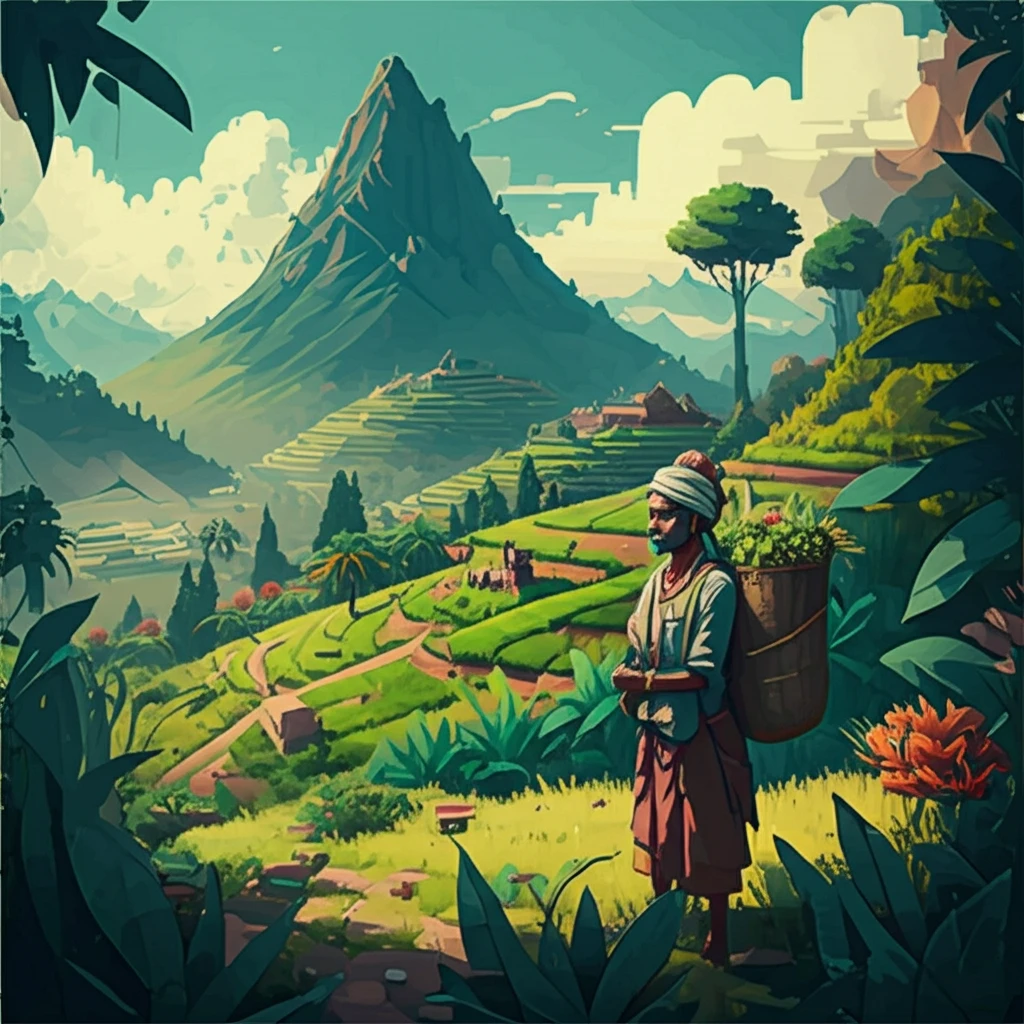
Unlock Bumper Harvests: How Crop Rotation Can Transform Your Farm Income

"Discover how tribal farmers in Eastern India are boosting their earnings through strategic crop diversification. A simple guide to modernizing your agricultural practices."
For generations, agriculture has been the backbone of countless communities, particularly for tribal groups in regions like the Eastern Ghats of India. Traditional methods, often centered around a single crop like paddy, have sustained families but also left them vulnerable to market fluctuations and environmental challenges. However, a quiet revolution is taking place: crop diversification. This shift, from relying on one crop to strategically rotating several, is proving to be a game-changer for farm incomes and long-term sustainability.
Crop diversification isn't just about planting different things; it's a comprehensive approach that considers everything from soil health and water usage to market demand and risk management. By understanding the principles behind this method, farmers can unlock new potentials for their land. The initial hesitancy towards change is understandable, but the tangible benefits—increased yields, better prices, and a more resilient ecosystem—are hard to ignore. What was once seen as a departure from tradition is now embraced as a pathway to prosperity and stability.
This article delves into the experiences of tribal farmers in the Eastern Ghats who have embraced crop diversification. By examining their successes and challenges, we aim to provide a practical guide for anyone looking to enhance their agricultural practices. We'll explore the key factors that influence diversification, the specific crops that are making a difference, and the strategies that can be adapted to various farming contexts. Whether you're a seasoned farmer or just starting, the insights shared here can help you cultivate a more abundant and sustainable future.
Why Diversify? The Benefits of Modern Crop Rotation
Crop diversification refers to the strategic shift from producing a single crop to cultivating multiple crops on the same land. For many tribal farmers in the Eastern Ghats, this has meant moving away from a heavy reliance on paddy (rice) and embracing a variety of vegetables and other high-value crops. The benefits of this transition are multi-fold:
- Reduce Risk: Depending on a single crop makes farmers highly vulnerable to market downturns, pests, and diseases. Diversification spreads this risk across multiple crops.
- Improve Soil Health: Different crops have different nutrient needs and root structures. Rotating crops can improve soil fertility, reduce erosion, and break cycles of pests and diseases.
- Increase Income: High-value crops like vegetables often fetch better prices than traditional staples like paddy, boosting farmer incomes.
- Enhance Resilience: A diversified farm is more resilient to climate change and other environmental challenges.
- Meet Market Demands: Diversification allows farmers to respond to changing market demands and consumer preferences.
Cultivating a Sustainable Future
Crop diversification offers a pathway to greater income and resilience for tribal farmers in the Eastern Ghats and serves as a model for sustainable agriculture worldwide. By adopting strategic crop rotation and embracing modern farming practices, communities can unlock new potentials for their land and ensure a more prosperous future. The journey may require initial investment and learning, but the long-term rewards are abundant.