
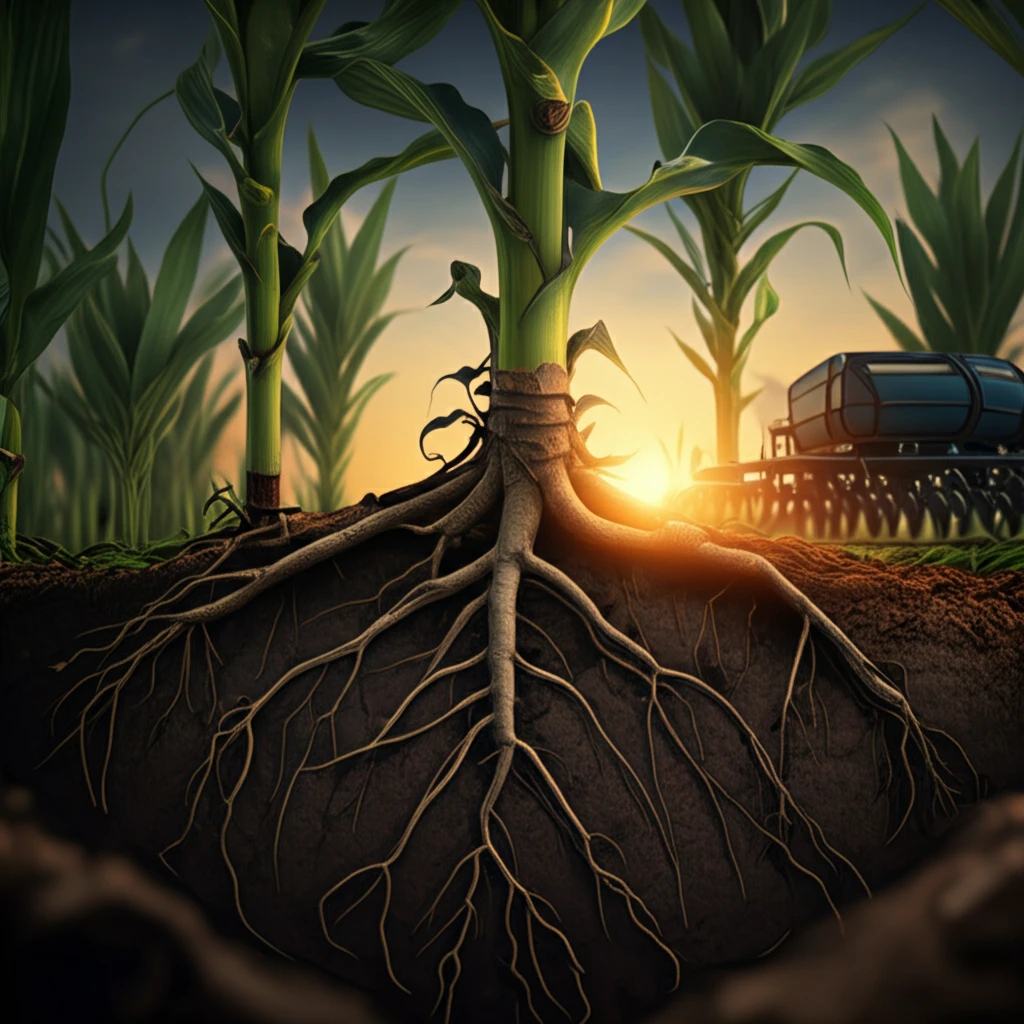
Unlock Bountiful Harvests: The Ultimate Guide to Organic Maize Landrace Farming

"Discover how to boost your maize yields using organic fertilizers and sustainable no-till practices for a healthier planet and bigger profits."
In an era where sustainability meets agricultural innovation, no-till systems have emerged as a cornerstone strategy for eco-conscious farming. By minimizing soil disturbance and conserving vital nutrients, no-till practices promise to revolutionize crop yields while safeguarding our precious ecosystems. For farmers in regions like South America, where no-till farming is rapidly expanding, understanding the nuances of these methods is essential for long-term success.
Maize landraces, with their rich genetic diversity and adaptability, present unique opportunities for farmers seeking resilience in the face of changing climates and market demands. However, unlocking the full potential of these varieties requires a deep understanding of their nutritional needs and how they interact with different fertilization strategies. As the cost of traditional mineral fertilizers continues to rise, the appeal of organic alternatives, like poultry litter, grows ever stronger.
This guide delves into the groundbreaking research on optimizing maize landrace performance under no-till conditions, focusing on the strategic use of organic and mineral fertilizers. Whether you're a seasoned farmer or just starting out, this comprehensive overview will provide you with the knowledge and tools to cultivate thriving maize crops while minimizing your environmental footprint.
The Economic Promise of Organic Maize
A study of 480 smallholder organic maize farmers in Northern Nigeria investigated the profitability and food security implications of organic maize farming using descriptive statistics, profitability analysis, and regression modeling. Organic maize prices can range from 1.5 to 2 times the price of conventional maize, making it a potentially lucrative venture when marketed through farmer-to-farmer networks or sold to elevators and feed mills specializing in organic grain. However, realizing this price premium requires careful management and adherence to organic certification standards, which remain a barrier for many smallholders.
Conventional Organic Methods and Their Constraints
Standard organic maize farming relies on organic seeds and natural inputs such as compost and manure to maintain soil fertility, steering entirely clear of synthetic chemicals for pest control and fertilization. In Nigeria, research on organic maize farming practices has identified key drivers and barriers, with the majority of farmers practising rainfed agriculture — a significant constraint that limits their production capacity. Beyond choosing to avoid fertilizers and pesticides, organic farming encompasses a broader philosophy that includes rejecting genetically modified organisms, but this broader scope adds complexity for smallholders seeking to transition.
From Teosinte to Tradition
The natural history of maize began approximately nine thousand years ago when Mexican farmers started collecting seeds from the wild grass teosinte, eventually transforming it into one of the world's most important food crops. Invaluable as a food source, maize permeated Mexican culture and religion, becoming deeply intertwined with the civilization that domesticated it. When maize is allowed to grow naturally, it develops a support system beneath the soil that helps it survive harsh conditions, including a symbiotic relationship with soil fungi — an ancient biological advantage that organic farming seeks to preserve.
Organic vs. Mineral Fertilizers: Finding the Right Balance for Maize Landrace
The core of sustainable maize farming lies in understanding the intricate relationship between soil health, nutrient availability, and fertilizer types. A recent study meticulously examined the effects of both organic (poultry litter) and mineral (NK + reactive natural phosphate, NK + triple superphosphate) fertilizers on maize landrace yields. The results offer invaluable insights into how to optimize your fertilization strategy for maximum productivity.
- At Sowing: The experiment compared no fertilization, surface application of organic poultry litter, and furrow application of mineral fertilizers (NK + reactive natural phosphate and NK + triple superphosphate).
- Topdressing: Treatments included no fertilization, organic poultry litter fertilization, and urea application.
- Nutrient Levels: Fertilization rates were carefully calibrated based on soil analysis and maize nutritional demands, ensuring a balanced approach to nutrient management.
- Data Collection: Researchers meticulously collected data on soil chemical attributes, leaf nutrient content, plant growth characteristics, and final grain yield.
Advancing Organic Maize Knowledge
Contemporary research defines organic maize production as the cultivation of maize without synthetic fertilizers, pesticides, or genetically modified organisms, a process requiring systematic understanding of soil biology and natural nutrient cycling. Studies examining organic maize farming practices in Nigeria have emphasized that enhancing participation requires comprehensive support systems, including financial assistance, accessible organic accreditation centres, training, educational support, and reliable access to organic inputs. These findings suggest that the technical knowledge base for organic maize farming is growing, but the institutional infrastructure needed to support widespread adoption remains underdeveloped in many regions.
Challenges and Barriers in Practice
Despite organic farming's global recognition for providing safe food, income, and environmental sustainability, research has documented significant problems associated with organic maize farming in practice. An analysis of women farmers' involvement in organic maize farming revealed that while participation is high — with 98.8% practicing intercropping, 85% using shifting cultivation, and 54% relying on animal manure — these methods come with their own complexities and limitations. The gap between organic farming's theoretical benefits and the real-world challenges faced by practitioners highlights the need for context-specific solutions rather than one-size-fits-all approaches.
Organic vs. Conventional: The Numbers
Economic analysis of smallholder organic maize farms revealed a gross profit of USD 604.81 per hectare, with a profit ratio of 0.46 and a gross ratio of 0.54. The operating ratio stood at 0.32, while the benefit-cost ratio reached 1.85, indicating that for every dollar invested, organic maize farming returns approximately $1.85. With a return on capital invested of 0.85, the data suggests that organic maize farming is a productive and profitable venture for smallholders, though these figures are based on specific study conditions and may vary across different agricultural contexts.
Embracing a Balanced Approach to Maize Landrace Fertilization
In conclusion, the study underscores the importance of a balanced fertilization strategy tailored to the specific needs of maize landraces under no-till conditions. While organic poultry litter proves effective in enhancing soil phosphorus levels and promoting early plant growth, supplementing with urea at the topdressing stage is essential for optimizing nitrogen nutrition and maximizing grain yield. By integrating these findings into your farming practices, you can unlock the full potential of maize landraces while fostering a healthier, more sustainable agricultural ecosystem.
Smallholder Efficiency and the Organic Reality
Research on 480 organic maize farmers in Nigeria found an average technical efficiency of 0.76, suggesting that small-scale organic farmers are operating at 76% of their potential output — a figure that points to both room for improvement and reasonable baseline performance. The experience of Sikkim, India, which was formally declared the first fully organic state, offers a cautionary tale: organic farming has gradually become a bitter fruit for many farmers there, challenging the assumption that a full-scale transition automatically delivers promised benefits. These contrasting outcomes underscore that organic maize farming's success depends heavily on local conditions, support systems, and realistic expectations.
The Road Ahead for Organic Maize
While comprehensive future projections for organic maize farming remain limited in the current literature, the trajectory suggests a growing but complex evolution. Advances in understanding maize organogenesis and hormonal regulation may eventually inform organic breeding strategies that enhance natural resilience without synthetic inputs. The expansion of organic markets and certification infrastructure, particularly in developing nations, will likely determine whether organic maize farming scales from niche practice to mainstream agricultural system. Continued research into soil biology, traditional landrace varieties, and farmer support networks will be essential to realizing organic maize's full potential.
Gender, Labor, and Structural Inequality
Women farmers play a pivotal role in advancing sustainable agriculture globally, particularly in the adoption of organic fertilizers in smallholder maize systems, yet their contributions often remain underrecognized. Constituting approximately 43% of the global agricultural labor force, women are central to food security and soil management — roles that are especially critical in organic systems where labor-intensive practices like composting and manual pest management are the norm. The intersection of gender inequality with the demands of organic farming creates a systemic challenge: those doing much of the work often have the least access to land, credit, and decision-making power.
Beyond the Numbers: What Organic Maize Really Means
Organic maize farming promises lower input costs, premium prices, and growing consumer demand — an easy win on paper. But the reality in India, as in many regions, is far more complicated, requiring honest assessment of whether organic practices actually deliver for individual farmers. The gap between the promise of organic maize and its real-world outcomes is shaped by access to markets, quality of inputs, farmer knowledge, and the infrastructure needed to maintain organic certification. For organic maize landrace farming to truly succeed, it must move beyond idealized narratives and confront the practical realities that determine whether a farmer thrives or struggles.