
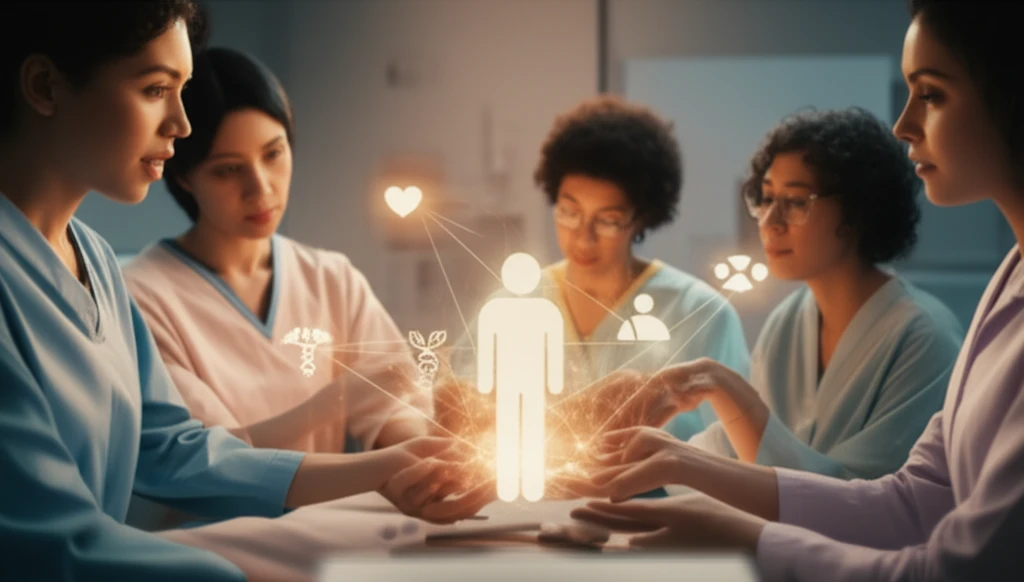
Symbolic illustration of empathy and support in healthcare, representing human vulnerability and well-being.

Understanding Human Vulnerability: How Healthcare Can Enhance Well-being

"Exploring the multifaceted aspects of vulnerability and how tailored support can empower individuals facing life's challenges."


Human vulnerability is a universal condition, heightened during times of loneliness, illness, injury, and loss. Healthcare professionals play a crucial role in supporting individuals facing these challenges, helping them achieve improved health and well-being. This article explores the complexities of human vulnerability and highlights strategies for empowerment through tailored care.

Recent qualitative research emphasizes the importance of understanding the lived experiences of vulnerable individuals. By examining diverse situations – from children with chronic conditions to elders facing mobility issues – researchers are uncovering valuable insights into how healthcare can be more responsive and effective.

This article synthesizes findings from multiple studies to provide a comprehensive overview of human vulnerability. It offers practical knowledge and actionable strategies for healthcare professionals seeking to enhance their support for those in need, fostering resilience and improving overall quality of life.

Key Aspects of Vulnerability and Well-being

Symbolic illustration of empathy and support in healthcare, representing human vulnerability and well-being.

Several key themes emerge from the research regarding human vulnerability. These themes underscore the need for healthcare approaches that are sensitive, individualized, and empowering:

Understanding these core needs is crucial for healthcare professionals aiming to provide effective support:

  • Maintaining a Sense of Self: Vulnerable individuals often strive to preserve their identity and autonomy in the face of challenging circumstances. Support should focus on enabling them to continue engaging in activities and roles that are meaningful to them.
  • Equality in Decision-Making: Genuine dialogue and shared decision-making processes are essential. Healthcare providers should prioritize the individual's personal resources, insights, and preferences.
  • Empowerment through Support: Vulnerability can be mitigated through interventions that enhance coping strategies and foster a sense of control. This includes providing emotional support, practical assistance, and access to resources.
By focusing on these key aspects, healthcare professionals can create environments that promote well-being and empower vulnerable individuals to navigate their challenges with greater resilience.

Moving Forward: Enhancing Healthcare for Vulnerable Populations

The insights from these studies highlight the need for a paradigm shift in how healthcare professionals approach vulnerable populations. By embracing a more holistic and person-centered approach, healthcare can become a powerful force for empowerment and well-being.

Further research is needed to explore the long-term impact of these interventions and to develop more effective strategies for addressing the diverse needs of vulnerable individuals. Collaboration between researchers, healthcare providers, and community organizations is essential to drive innovation and improve outcomes.

Ultimately, by prioritizing the needs and preferences of vulnerable individuals, healthcare can play a vital role in fostering resilience, promoting well-being, and enhancing the quality of life for all.

About this Article -

This article was crafted using a human-AI hybrid and collaborative approach. AI assisted our team with initial drafting, research insights, identifying key questions, and image generation. Our human editors guided topic selection, defined the angle, structured the content, ensured factual accuracy and relevance, refined the tone, and conducted thorough editing to deliver helpful, high-quality information.See our About page for more information.

This article is based on research published under:

DOI-LINK: 10.3402/qhw.v11.31477, Alternate LINK

Title: Perspectives On Health And Well-Being In Human Vulnerability

Subject: Health Policy

Journal: International Journal of Qualitative Studies on Health and Well-being

Publisher: Informa UK Limited

Authors: Henrika Jormfeldt

Published: 2016-01-01

Everything You Need To Know

1

In what situations do people experience heightened vulnerability, and how can healthcare professionals make a real difference in their lives?

Human vulnerability is a state heightened by experiences such as loneliness, illness, injury, and loss. During these times, individuals may find it difficult to cope with daily life and maintain their well-being. Healthcare professionals can significantly impact the lives of these individuals by offering tailored care and support. This involves understanding their unique needs and providing resources that help them navigate their challenges effectively.

2

Why is 'maintaining a sense of self' so important for those experiencing vulnerability, and what specific actions can healthcare providers take to support this?

Maintaining a sense of self is crucial for vulnerable individuals. It involves enabling them to continue participating in activities and roles that provide meaning and purpose. Healthcare support should focus on preserving their identity and autonomy, helping them remain connected to what matters most to them, even when facing challenging circumstances. This ensures that their sense of self is upheld despite any limitations caused by illness or aging.

3

What does 'equality in decision-making' look like in the context of healthcare for vulnerable individuals, and why is it ethically important?

Equality in decision-making means engaging vulnerable individuals in genuine dialogue and shared decision-making processes. Healthcare providers should prioritize the individual's insights, preferences, and personal resources. This approach ensures that care plans are aligned with the person's values and goals, fostering a sense of control and respect. When individuals feel heard and valued, they are more likely to actively participate in their care and experience better outcomes.

4

How can healthcare professionals empower vulnerable individuals through support, and what specific interventions can make a tangible difference in their lives?

Empowerment through support can be achieved by interventions that enhance coping strategies and foster a sense of control. This includes providing emotional support, practical assistance, and access to necessary resources. By empowering individuals in this way, healthcare professionals can help mitigate the negative impacts of vulnerability, enabling them to navigate their challenges with greater resilience and improve their overall quality of life. It is about creating an environment where individuals feel capable and supported.

5

What is a 'person-centered' healthcare approach, and how can this paradigm shift improve outcomes for vulnerable populations?

By adopting a person-centered approach, healthcare professionals can create environments that promote well-being and empower vulnerable individuals. This requires a shift towards holistic care that considers the individual's emotional, social, and psychological needs, not just their physical health. This paradigm shift enables healthcare to become a powerful force, fostering resilience, improving quality of life, and supporting them to navigate difficulties effectively.

Newsletter Subscribe

Subscribe to get the latest articles and insights directly in your inbox.