
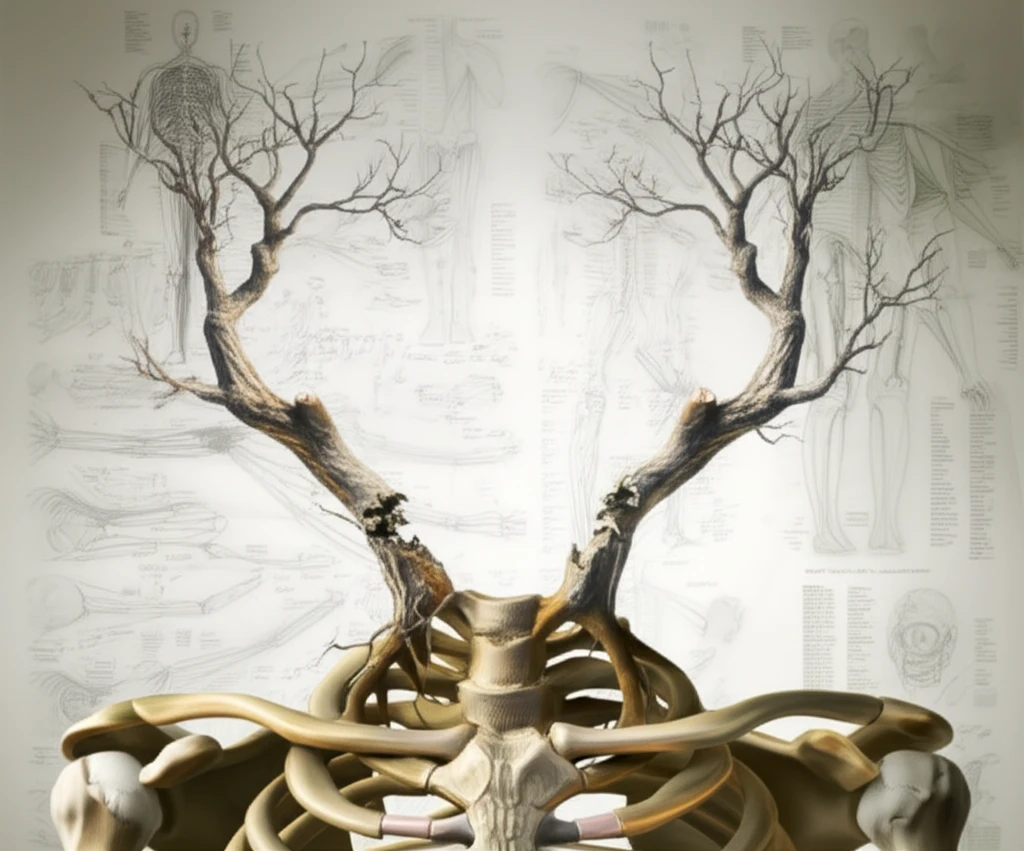
Uncommon Clavicle Conditions: Understanding Clavicle Duplication After Injury

"Rare cases of clavicle duplication following physeal injury and congenital origin."
Clavicle fractures are a relatively common injury, accounting for approximately 2.6% to 4% of all fractures. Among these, fractures of the lateral end of the clavicle make up 21% to 28%. However, what happens when a clavicle injury leads to something far more unusual than a simple break? Clavicle duplication, a rare condition, presents a unique challenge in diagnosis and treatment, particularly in young patients.
The clavicle, or collarbone, is unique in that it's one of the first bones to begin ossifying during development, with this process typically completing between the ages of 21 and 25. In children and adolescents, the clavicle is more vulnerable to injuries at the physeal-metaphyseal junction—the area where bone growth occurs—because the bone is weaker than the surrounding ligaments. When trauma occurs, the distal end of the clavicle may remain in its normal anatomical position due to intact ligaments, while the fracture occurs at this weaker junction.
Adding to the complexity, the periosteal sleeve, a membrane covering the bone, has significant osteogenic potential in youngsters. This means it can generate new bone tissue, potentially filling gaps between the periosteum and metaphysis. However, this can also lead to unusual shoulder deformities, including clavicle duplication, where the clavicle essentially splits into two.
Decoding Clavicle Duplication: Causes and Mechanisms
Clavicle duplication is a rare condition, with only a limited number of documented cases. The primary theories to explain this anatomical variation revolve around congenital origins and trauma-related mechanisms. Congenital duplication may arise from supernumerary ossification centers or displacement and fragmentation of these centers. Trauma, on the other hand, can lead to clavicle duplication following injuries to the distal clavicular physis, the growth plate at the end of the clavicle.
- Congenital Factors: Supernumerary ossification centers or their displacement.
- Trauma: Distal clavicular physeal injuries.
- Periosteal Sleeve: Osteogenic potential leading to new bone formation.
Implications and Future Directions
Clavicle duplication is a rare condition that can stem from either congenital factors or trauma to the distal physis. When clavicle duplication isn't associated with acromioclavicular joint duplication, distal physeal injury emerges as a plausible underlying mechanism. In skeletally immature patients, trauma can trigger physeal-metaphyseal injury rather than acromioclavicular strain. The remarkable osteogenetic capacity of the intact periosteum may then promote new bone formation between the epiphysis and displaced metaphysis, culminating in clavicle duplication. Further research into the biomechanics of clavicle injuries and the osteogenic potential of the periosteal sleeve will enhance our understanding of this unusual condition, paving the way for refined treatment strategies that optimize outcomes for young patients.