
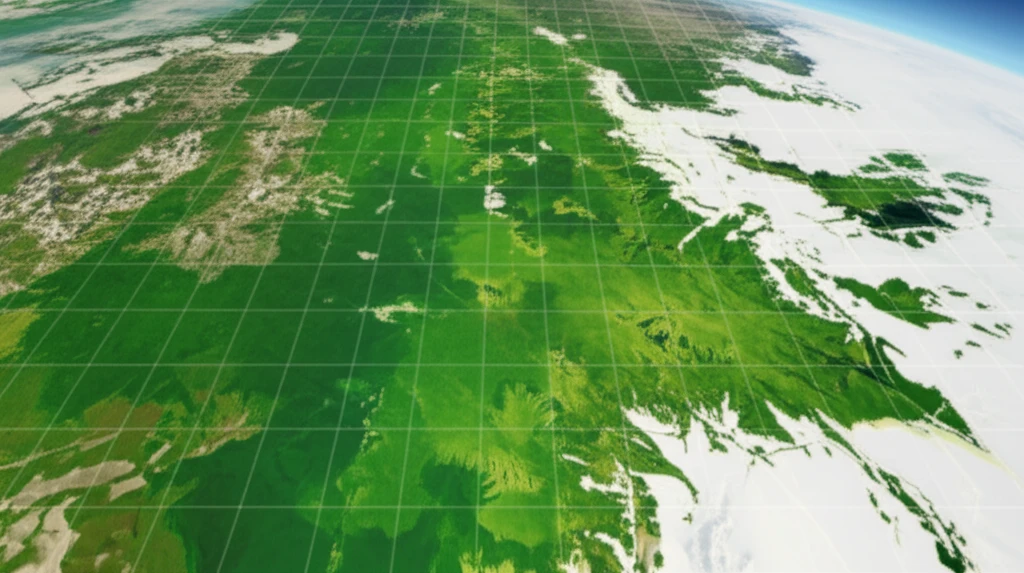
Satellite view of Tunisian landscape showing halophyte distribution.

Tunisia's Salty Secret: How Mapping Halophytes Can Help Fight Salinization

"Using Sentinel-2 satellite imagery and a decision tree approach to map halophyte cover could be a game-changer for monitoring and managing soil salinity in Tunisia and beyond."


The environment around Ghannouch, in southeastern Tunisia, faces a significant challenge: widespread hypersaline soils. These soils, characterized by high salt concentrations, are often colonized by halophytes—salt-tolerant plants. Understanding the distribution of these plants is crucial to assessing the extent and dynamics of soil salinization.

Traditional methods of monitoring soil salinization are often time-consuming and resource-intensive. However, remote sensing offers a promising alternative. By analyzing optical data, scientists can identify halophyte vegetation and gain valuable insights into the spatial and temporal dimensions of this environmental issue.

This article explores how a decision tree approach, applied to European Space Agency Sentinel-2 imagery, is being used to map land cover in the Ghannouch district with remarkable precision. This method combines spectral information from various channels, including visible and near-infrared, along with several optical indices, such as the Normalized Difference Water Index (NDWI), Normalized Difference Vegetation Index (NDVI), and soil salinity indices, to create a detailed land cover map.

Why is Mapping Halophytes Important?

Satellite view of Tunisian landscape showing halophyte distribution.

High levels of soil salinity can arise from both natural processes and human activities. Primary causes are related to natural factors, while secondary salinization is often the result of human land management practices, especially inappropriate irrigation and water logging. Salinity affects approximately 107 hectares worldwide, posing a significant hazard to about 3% of global soil resources. In semi-arid regions like Tunisia, salt-affected soils account for around 3% of the area, with the problem being particularly acute in irrigated zones.

In southern Tunisia, the Gabès oasis, which spans approximately 900 hectares, faces considerable salinization issues. Over 100 hectares are affected due to the high salt content in irrigation water. Halophytic vegetation thrives in these areas, and its distribution can change over time, influenced by agricultural practices and water quality. Natural environments impacted by salinity include sebkhas, which are typically hyper-saline and densely populated by halophytes.

Halophytes play several vital roles:
  • Protecting shorelines by stabilizing dunes
  • Supporting biodiversity
  • Greening salt marshes
  • Leaching and sequestering salt through enhanced percolation
  • Storing salt in their tissues, which can cleanse soils for conventional crop cultivation
Furthermore, halophytes have the potential to be a source of bioactive molecules and biofuel due to their rapid growth and high biomass production, especially in microalgae cultivations. Despite their importance, halophytic areas in Tunisia are not well-defined due to limited accessibility and vastness, making remote sensing methodologies essential for reliable distribution mapping.

Looking Ahead: Applications and Implications

This study highlights the potential of using Sentinel-2 satellite imagery and decision tree algorithms to map halophyte cover accurately. The mapping exercise in Ghannouch classified 68% of the area of interest as halophyte land cover, marking a significant step toward improved halophyte mapping in Tunisia. This approach can be used to monitor the status of other salinity-prone regions worldwide, contributing to better environmental management and sustainable governance policies. By understanding the interactions between land use and climate change, we can preserve high-value natural areas and combat secondary salinization in rural districts.

About this Article -

This article was crafted using a human-AI hybrid and collaborative approach. AI assisted our team with initial drafting, research insights, identifying key questions, and image generation. Our human editors guided topic selection, defined the angle, structured the content, ensured factual accuracy and relevance, refined the tone, and conducted thorough editing to deliver helpful, high-quality information.See our About page for more information.

Everything You Need To Know

1

What is the primary environmental challenge addressed by mapping halophytes in Tunisia?

The primary environmental challenge addressed is soil salinization. This issue is particularly prevalent in regions like Ghannouch, Tunisia, where high salt concentrations in the soil negatively impact land productivity and overall environmental health. Understanding and monitoring the extent of soil salinization, which affects about 3% of global soil resources and approximately 3% of Tunisia's land, is crucial for effective environmental management and sustainable land use practices.

2

How is Sentinel-2 imagery used to map halophytes, and what are the benefits of this approach?

Sentinel-2 satellite imagery is used in conjunction with a decision tree approach to map halophytes. This method analyzes optical data from various channels, including visible and near-infrared, along with optical indices like the Normalized Difference Water Index (NDWI), Normalized Difference Vegetation Index (NDVI), and soil salinity indices. The benefits include the ability to create detailed land cover maps with remarkable precision, providing valuable insights into the spatial and temporal dimensions of soil salinization. This remote sensing approach is more efficient and less resource-intensive than traditional methods.

3

What are the various roles of halophytes in managing and mitigating the effects of soil salinity?

Halophytes play several vital roles in managing soil salinity. They protect shorelines by stabilizing dunes, support biodiversity, and help green salt marshes. Halophytes also aid in leaching and sequestering salt through enhanced percolation, and they store salt in their tissues, which can cleanse soils, making them suitable for conventional crop cultivation. In essence, halophytes are nature's way of remediating salt-affected areas.

4

Can you explain the significance of the Ghannouch district in the context of this study, and what were the key findings?

The Ghannouch district in southeastern Tunisia serves as a case study for mapping halophytes and addressing soil salinization. The study utilized Sentinel-2 imagery and a decision tree approach to classify land cover. A key finding was that 68% of the area of interest in Ghannouch was classified as halophyte land cover. This signifies the effectiveness of the mapping methodology and highlights the prevalence of halophytes in salt-affected areas. This methodology can be extended to other salinity-prone regions worldwide.

5

Besides soil salinity, are there any other potential applications or implications of studying halophytes and their distribution?

Yes, besides addressing soil salinity, studying halophytes has other applications and implications. Halophytes have the potential to be a source of bioactive molecules and biofuel due to their rapid growth and high biomass production. The mapping of halophytes can also contribute to better environmental management and sustainable governance policies. Furthermore, understanding the interactions between land use and climate change, as revealed by halophyte distribution, helps in preserving high-value natural areas and combating secondary salinization in rural districts worldwide.

Newsletter Subscribe

Subscribe to get the latest articles and insights directly in your inbox.