
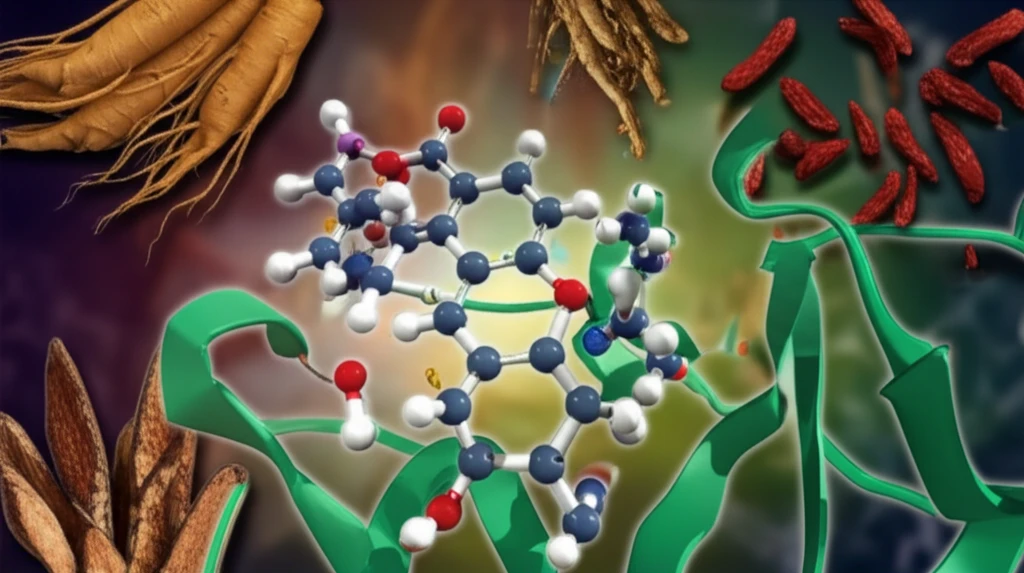
Molecular illustration of triptolide interacting with a protein.

Triptolide and the Body: Unlocking the Secrets of This Traditional Chinese Medicine

"A deep dive into how triptolide interacts with the body's proteins, offering new insights into its potential benefits and risks."


For centuries, traditional Chinese medicine has offered a treasure trove of natural compounds with potential healing properties. Among these, triptolide, derived from the Tripterygium wilfordii Hook F plant (also known as Lei gong teng), stands out. This compound has garnered significant attention for its immunosuppressive, anticancer, and antifertility effects.

However, triptolide's therapeutic potential is shadowed by its narrow therapeutic window and significant toxicity, including hepatotoxicity and reproductive toxicity. To harness its benefits safely, scientists are working to understand how triptolide interacts with the body at a molecular level.

A key player in this interaction is serum albumin, the most abundant protein in the cardiovascular system. Serum albumin acts as a transporter, binding to various compounds, including drugs, and influencing their distribution, metabolism, and efficacy. Understanding how triptolide binds to serum albumin is crucial for predicting its behavior in the body.

Triptolide-Protein Interactions: What Does the Science Say?

Molecular illustration of triptolide interacting with a protein.

A recent study delved into the interaction between triptolide and bovine serum albumin (BSA), a protein similar to human serum albumin, using spectroscopic and molecular modeling methods. Fluorescence spectroscopy, circular dichroism (CD), and molecular docking were employed to analyze how triptolide binds to BSA, revealing critical insights into this interaction.

The study's findings revealed several key aspects of triptolide's interaction with BSA:

  • Quenching Mechanism: Triptolide effectively quenched the intrinsic fluorescence of BSA through static quenching, indicating the formation of a triptolide-BSA complex.
  • Conformational Changes: Synchronous fluorescence and CD spectra showed that triptolide induced changes in the conformation of BSA, suggesting a structural alteration upon binding.
  • Binding Site: Triptolide primarily binds to site II (subdomain IIIA) of BSA, driven by hydrogen bonding and Van der Waals forces.
These findings suggest that triptolide's interaction with BSA is spontaneous and involves specific binding sites and forces. Understanding these details is essential for predicting how triptolide will behave in the body, its distribution, and potential side effects.

What Does This Mean for Triptolide's Future?

This research provides a foundation for optimizing triptolide's therapeutic use. By understanding how it interacts with serum albumin, researchers can potentially design strategies to improve its delivery, reduce its toxicity, and enhance its efficacy. Further studies are needed to explore these possibilities and unlock the full potential of this traditional Chinese medicine.

About this Article -

This article was crafted using a human-AI hybrid and collaborative approach. AI assisted our team with initial drafting, research insights, identifying key questions, and image generation. Our human editors guided topic selection, defined the angle, structured the content, ensured factual accuracy and relevance, refined the tone, and conducted thorough editing to deliver helpful, high-quality information.See our About page for more information.

This article is based on research published under:

DOI-LINK: 10.21010/ajtcam.v13i6.17, Alternate LINK

Title: Studies On The Interaction Between Triptolide And Bovine Serum Albumin (Bsa) By Spectroscopic And Molecular Modeling Methods

Subject: Complementary and alternative medicine

Journal: African Journal of Traditional, Complementary and Alternative medicines

Publisher: African Traditional Herbal Medicine Supporters Initiative (ATHMSI)

Authors: Haidong Wang, Hailang Shi, Jie Pang, Xingfa Song, Caiyun Xu, Zengxian Sun

Published: 2016-09-29

Everything You Need To Know

1

What is triptolide?

Triptolide is a compound derived from the Tripterygium wilfordii Hook F plant, also known as Lei gong teng. It has been used in traditional Chinese medicine for centuries due to its potential immunosuppressive, anticancer, and antifertility effects. It's significant because of its promising therapeutic applications, but also because of the need to understand and manage its toxicity.

2

Why is serum albumin important in the context of triptolide?

Serum albumin is the most abundant protein in the cardiovascular system. It acts as a transporter, binding to various compounds, including drugs, and influencing their distribution, metabolism, and efficacy. This is crucial because the interaction between triptolide and serum albumin affects how triptolide moves through the body, its effectiveness, and the potential for side effects like hepatotoxicity and reproductive toxicity.

3

What methods were used to study triptolide's interaction with proteins?

The study used techniques like fluorescence spectroscopy, circular dichroism (CD), and molecular docking to analyze how triptolide interacts with bovine serum albumin (BSA), a protein similar to human serum albumin. These methods helped to reveal the nature of the interaction, including the binding site and the forces involved. By understanding these interactions, scientists can better predict the behavior of triptolide in the body.

4

What were the main findings of the study regarding triptolide-protein interactions?

The study found that triptolide interacts with BSA through a static quenching mechanism, forming a complex. It also showed that triptolide induces conformational changes in BSA, and it primarily binds to site II (subdomain IIIA) of BSA, driven by hydrogen bonding and Van der Waals forces. These findings are significant because they provide a detailed understanding of how triptolide interacts with a key protein in the body.

5

What are the implications of this research for the future of triptolide?

Understanding how triptolide interacts with serum albumin can lead to strategies to improve its delivery, reduce its toxicity, and enhance its efficacy. This could involve modifying the triptolide molecule or using delivery systems that target specific areas of the body. The implications are substantial, as they could lead to safer and more effective uses of this traditional Chinese medicine in the future. Further studies are needed to explore these possibilities.

Newsletter Subscribe

Subscribe to get the latest articles and insights directly in your inbox.