
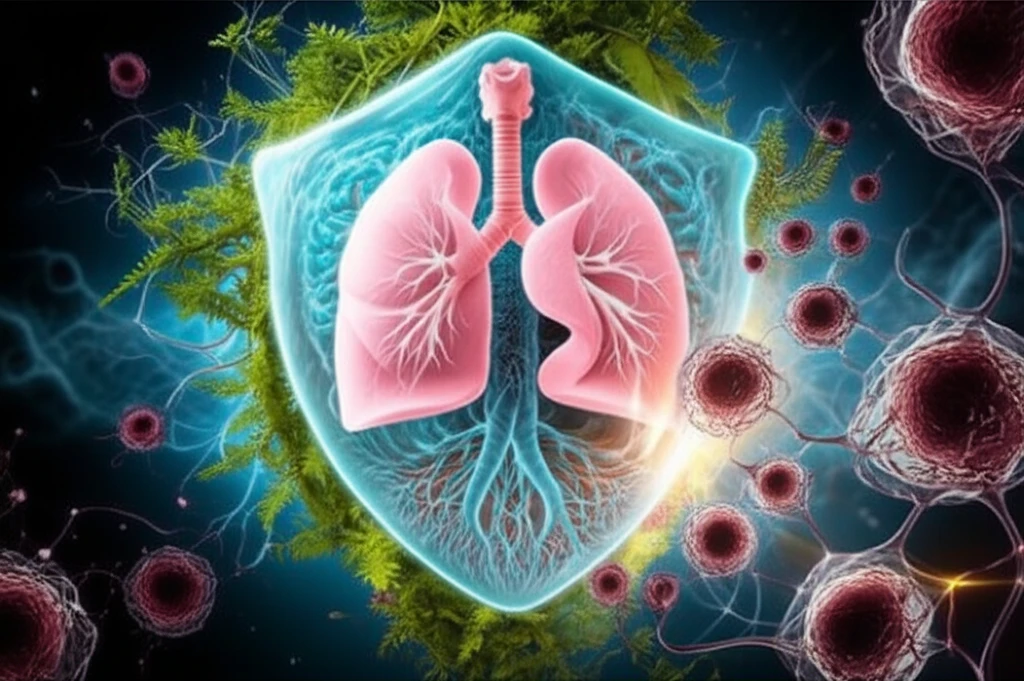
Lung Cancer Breakthrough: Can This Herbal Formula Boost Immunity and Fight Tumors?

"Discover how a traditional Chinese medicine-inspired blend of Astragalus Polysaccharide (APS) and Polysaccharopeptide (PSP) could revolutionize lung cancer treatment by enhancing immunity and suppressing tumor growth."
Lung cancer remains a significant global health challenge, demanding innovative therapeutic strategies. While conventional treatments like chemotherapy and radiation play a crucial role, researchers are increasingly exploring complementary approaches to improve patient outcomes and quality of life. One promising area of investigation lies in the realm of traditional Chinese medicine (TCM), where herbal remedies have been used for centuries to promote health and well-being.
Among the diverse array of TCM therapies, Astragalus Polysaccharide (APS) and Polysaccharopeptide (PSP) have garnered attention for their potential immunomodulatory and anti-tumor properties. APS, derived from Astragalus mongholicus, and PSP, a protein-bound polysaccharide extracted from cultivated mycelia, have individually demonstrated promising effects in preclinical studies. Now, researchers are exploring the combined power of these two compounds in a synergistic herbal formula.
This article delves into a recent study investigating the immunomodulatory and anti-tumor effects of a combined APS and PSP herbal formula in mice with lung cancer. By examining the impact of this formula on immune parameters, tumor growth, and overall health, we aim to shed light on its potential as a complementary therapy for lung cancer and explore the implications for future research and clinical applications.
Lung Cancer: A Global Mortality Leader
Lung cancer carries the highest mortality rate of any cancer worldwide, making immune system preservation during treatment increasingly critical. Non-small cell lung cancer (NSCLC) is a leading cause of cancer-related mortality, particularly in advanced stages, and its long-term impacts are not fully elucidated. Traditional herbal texts have documented a wide range of anti-cancer plant species, and modern clinical trials are now testing standardized formulas such as the SYW formula, which contains 23 natural Chinese herbs in randomized, double-blinded, placebo-controlled studies.
Challenges in Standardizing Herbal Cancer Therapy
While conventional Western medicine has made significant strides in lung cancer treatment, singular treatment approaches carry inherent limitations that drive interest in integrative models. A major barrier to research and clinical application of traditional Chinese medicine in lung cancer is the high variability in herbal formulations and dosing regimens. Even the same named formula may be modified by different practitioners based on individual patient syndrome differentiation, making it difficult to draw firm conclusions about clinical usefulness. Prior studies of Chinese herbs have used inconsistent methodologies, complicating efforts to standardize protocols.
Traditional Roots and Modern Collaborations
Lung cancer remains a major global health challenge and one of the leading causes of cancer-related deaths worldwide, even as treatment advances continue. Persistent obstacles including drug resistance, side effects, metastasis, and recurrence have fueled centuries-old interest in herbal interventions. An international cooperation platform established by the United States National Cancer Institute has enabled systematic study of the scientific connotation of traditional Chinese medicine in lung cancer prevention and treatment, advancing new Chinese drug development.
APS and PSP: A Dynamic Duo for Lung Cancer Treatment?
The study, published in the International Journal of Biological Macromolecules, investigated the effects of an herbal formula combining APS and PSP on mice with lung cancer. The researchers aimed to determine if this formula could enhance the immune system's ability to fight cancer and directly inhibit tumor growth.
- Improved Immune Function: The herbal formula significantly increased white blood cell (WBC) counts, indicating a boosted immune response. It also enhanced thymus and spleen indices, crucial organs for immune function.
- Enhanced Immune Cell Activity: The formula increased the ratio of CD4+ to CD8+ T cells, critical for coordinating immune responses against cancer.
- Modulated Cytokine Levels: The herbal blend upregulated key Th1 cytokines (IL-2, TNF, IFN-γ) and IL-17A, known for their roles in anti-tumor immunity, while reducing levels of IL-10, a cytokine associated with immune suppression in cancer.
- Tumor Growth Inhibition: The PSP+APS formula demonstrated a comparable tumor-inhibiting effect to the chemotherapy drug ADM, suggesting a direct anti-cancer activity.
Immunotherapy Integration and Immune Support
Recent advances in lung cancer treatment are exploring the integration of immunotherapy with herbal approaches to enhance patient outcomes. Case reports have documented successful treatment of immune-related side effects, such as lichenoid dermatitis in non-small cell lung cancer patients, using the herbal decoction Weiling. Lung cancer is the second most common cancer globally, and with advances in early detection and surgery, the five-year relative survival rate for localized disease has risen to 62.8 percent. However, mortality remains high, underscoring the need for complementary immune-supportive strategies.
Mixed Evidence and Survival Questions
Complementary and alternative medicine encompasses a broad field of approaches, and herbal medicine alone is used by approximately 48 percent of lung cancer patients. Meta-analyses of randomized trials from China suggest that herbal therapies combined with platinum-based chemotherapy may offer benefits, but the evidence remains contested. Concerns persist about the quality of trial data, potential interactions with standard treatments, and the lack of large-scale Western validation studies. These gaps in evidence mean herbal medicine cannot yet be considered a proven standalone strategy for improving survival.
Integrative vs. Alternative: Weighing the Options
Integrative medicine, which combines complementary therapies with standard treatment, can help control pain, reduce anxiety, lessen side effects, and improve quality of life for lung cancer patients. While natural therapies are not a cure, they may ease symptoms and support overall well-being when used alongside conventional care. The American Lung Association emphasizes that complementary and alternative therapies should be discussed openly with healthcare providers to ensure safe integration. Patients are encouraged to distinguish between evidence-informed complementary approaches and unproven alternative treatments that may delay effective care.
The Future of Lung Cancer Treatment: A Blend of Tradition and Science?
This study offers a compelling glimpse into the potential of herbal formulas like APS and PSP as complementary therapies for lung cancer. By modulating the immune system and directly targeting tumor growth, this approach could offer a more holistic and personalized treatment strategy.
Immune Function as a Therapeutic Target
Lung cancer is the second most common cancer worldwide and holds the highest mortality rate, accounting for 22.3 percent of all cancer deaths in Korea in 2022. While the five-year survival rate for localized disease has improved to 62.8 percent through early detection and surgery, advanced cases still face poor outcomes. Preserving immune function during treatment is increasingly recognized as a critical priority, and herbal medicines are being investigated for their potential to reduce adverse events while supporting the body's natural defenses. This immune-focused approach represents a promising avenue for improving patient quality of life alongside conventional therapies.
Validating Natural Compounds for Mainstream Oncology
Lung cancer remains a leading cause of cancer-related death globally, and despite notable therapeutic progress, drug resistance, side effects, metastasis, and recurrence continue to affect patient outcomes. There is an urgent need for safer and more effective therapeutic alternatives, and herbal-derived compounds are drawing increasing research attention. Future progress will depend on rigorous scientific validation and technological innovations to unlock the full potential of natural compounds. Integrating herbal drugs into mainstream oncological treatment requires standardized formulations, robust clinical trials, and collaborative interdisciplinary research.
Systemic Barriers to Herbal Medicine Integration
Integrating herbal medicines into mainstream oncology faces systemic hurdles beyond clinical evidence alone. Regulatory frameworks in many countries lack clear pathways for approving complex herbal formulations, and reimbursement policies rarely cover herbal treatments. Cultural attitudes toward traditional medicine vary widely, creating inconsistent patient access and physician acceptance. Without coordinated efforts to address standardization, funding, and cross-cultural dialogue, the potential of herbal approaches will remain largely untapped within conventional cancer care systems.
Patient Experiences and Access Disparities
For many lung cancer patients, the decision to explore herbal therapies is deeply personal, driven by a desire for hope and holistic care when conventional options feel insufficient. Access to quality herbal products and knowledgeable practitioners varies dramatically by geography and socioeconomic status, leaving many patients vulnerable to misinformation or unregulated supplements. Patient support groups and advocacy organizations play a vital role in sharing real-world experiences and helping individuals navigate the complex landscape of complementary care. Ultimately, centering patient voices in research and policy decisions will be essential to ensuring that herbal medicine's benefits reach those who need them most.
While these findings are encouraging, it's crucial to acknowledge that this research was conducted on mice. Further studies are needed to confirm the safety and efficacy of this herbal formula in humans. Clinical trials are essential to determine the optimal dosage, administration method, and potential interactions with conventional cancer treatments.
The integration of traditional medicine with modern scientific research holds immense promise for advancing cancer care. As we continue to unravel the complex interplay between the immune system and cancer, herbal formulas like APS and PSP may pave the way for more effective and less debilitating treatments, ultimately improving the lives of those affected by lung cancer.