
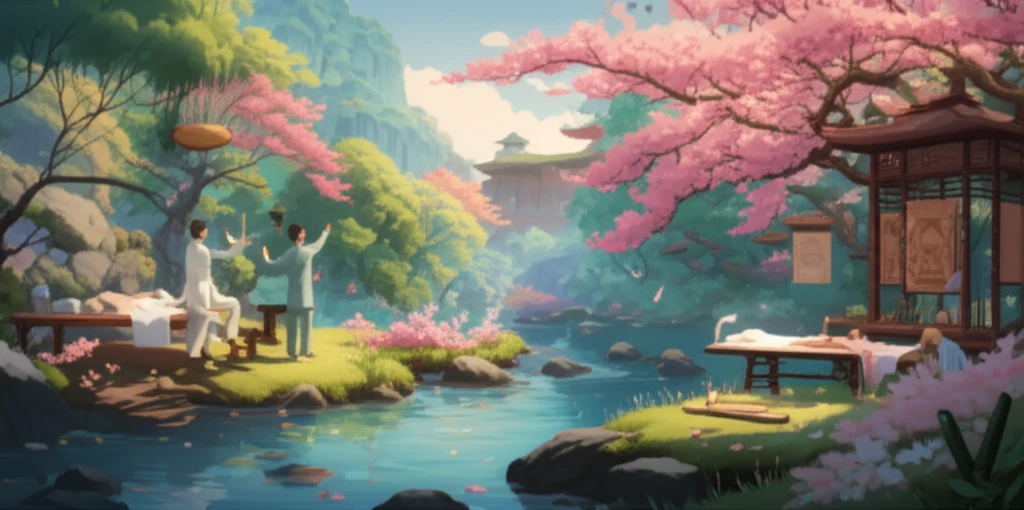
Unlocking a Healthier Tomorrow: How Traditional Chinese Medicine and Occupational Therapy are Revolutionizing Well-being

"Explore the groundbreaking synergy of ancient wisdom and modern practices, and discover how they can improve your sleep, mental health, and overall quality of life."
In a world increasingly focused on holistic well-being, the convergence of ancient healing practices and modern therapeutic approaches offers a beacon of hope for those seeking to improve their health and quality of life. This article explores the powerful synergy between Traditional Chinese Medicine (TCM) and Occupational Therapy (OT), two distinct disciplines that, when combined, can lead to significant improvements in sleep quality, mental health, and overall life satisfaction, especially for the elderly and individuals navigating the transitions of retirement.
Traditional Chinese Medicine, with its roots in centuries of practice, provides a unique perspective on the human body, emphasizing the balance of vital energy (Qi) and the interconnectedness of mind and body. Simultaneously, Occupational Therapy focuses on helping individuals engage in meaningful activities, or occupations, to promote health and well-being. Together, they offer a comprehensive approach to wellness that addresses both physical and psychological needs.
This exploration will delve into the specifics of how TCM, including acupuncture and moxibustion, positively impacts sleep quality, and how OT provides crucial support for those seeking to maintain an active and fulfilling life after retirement. Whether you're seeking to improve your sleep, support a loved one, or plan for your own retirement, this article provides valuable insights and actionable strategies for a healthier tomorrow.
Scale and Scope
A 2024 report states that China had 103,704 traditional Chinese medicine medical and health institutions and 1.823 million beds in those institutions. Research published in 2019 examined the TCM health-care workforce using statistics on board-certified TCM and non-TCM physicians across mainland China's 31 provincial-level administrative divisions. A 2026 study further investigates the epidemiological characteristics and distribution patterns of TCM-related occupational exposure events.
Toward Cultural Integration
The supplied sources describe occupational therapy as a holistic, client-centered discipline that considers cultural and societal values. They contrast its modern Western roots with TCM's multidimensional view of health. One proposed practice model highlights the potential alignment between occupational therapy and concepts from Chinese health culture, including harmony between humans and nature and Yin-Yang balance, while also indicating that integration requires attention to cultural differences.
A Developing Dialogue
The relationship between traditional Chinese medicine and occupational therapy can be understood as an evolving dialogue between distinct health traditions. Available descriptions suggest that their interaction is increasingly framed around holistic care, cultural values, and everyday participation. The historical development of this integration remains difficult to characterize precisely from the limited material provided here.
The Power of Partnership: How TCM and OT Enhance Well-being
The integration of Traditional Chinese Medicine and Occupational Therapy represents a powerful alliance in the pursuit of holistic well-being. TCM's emphasis on restoring balance and harmony within the body, through practices like acupuncture and herbal medicine, complements OT's focus on enabling individuals to participate in meaningful activities. This section explores the unique benefits of each discipline and how they converge to create a synergistic effect.
- Acupuncture and Moxibustion: Proven to enhance sleep quality and reduce anxiety.
- Herbal Medicine: Used to balance the body's internal systems, promoting overall health.
- Mind-Body Practices: Tai Chi and Qigong, to harmonize the mind and body.
- Personalized Treatment: TCM practitioners tailor treatments to individual needs.
A Culturally Integrative Model
The cited practice-model research examines how traditional Chinese health culture may inform occupational therapy in Mainland China. It emphasizes that occupational therapy considers cultural and societal values, while TCM conceptualizes health as multidimensional. The reported overlap provides a basis for culturally integrative, client-centered practice, although the supplied snippet does not establish clinical outcomes.
Limits of the Evidence
The available material does not provide outcome data showing that combining TCM and occupational therapy consistently improves health. It also does not identify specific failed interventions, adverse results, or comparative trial findings. Any claims about effectiveness should therefore remain provisional until supported by direct clinical evidence.
Different Traditions, Shared Themes
TCM and occupational therapy arise from different intellectual and cultural traditions. Even so, both can be discussed through broader ideas of whole-person care and attention to the individual's context. The limited source material does not support a detailed comparison of their techniques, risks, or effectiveness.
Embracing a Healthier Future: Actionable Steps to Enhance Well-being
The combination of Traditional Chinese Medicine and Occupational Therapy offers a comprehensive and effective approach to enhancing well-being, particularly for the elderly and those in retirement. By embracing the principles of balance, meaningful activity, and personalized care, individuals can take proactive steps toward a healthier, more fulfilling life. Incorporate these practices into your daily routine, and consult with qualified practitioners to develop a plan that meets your unique needs and aspirations. The journey to optimal health and happiness starts today.
Holistic Care in Practice
The cited presentation describes the integration of TCM and wellness into occupational therapy as a route toward culturally relevant holistic care. This framing places cultural relevance alongside the practical aims of occupational therapy. The source supports integration as an area of exploration, but it does not supply outcome statistics or expert consensus.
Building Culturally Relevant Practice
Future development may focus on occupational therapy models that reflect Chinese people's everyday lives and ways of thinking. A 2026 World Federation of Occupational Therapists Congress presentation identifies a culturally relevant occupational therapy curriculum involving Sherry Xiaochang Shi, Lihong Ma, and Michael Lee, with affiliations including Shandong University of Traditional Chinese Medicine and the University of British Columbia. The supplied article description also points to possible applications involving sleep quality, mental wellness, life challenges, older adults, and post-retirement support, while a market report states that the United States represents approximately 24% of global TCM market share and that acupuncture accounts for 41% of TCM-related healthcare utilization there.
Context Matters
Integrating TCM with occupational therapy would require attention to cultural expectations, professional roles, and the settings in which care is delivered. Differences between Western-rooted occupational therapy and Chinese health beliefs may create challenges as well as opportunities for collaboration. The available material does not provide enough evidence to identify which health systems or implementation strategies are most effective.
Occupational Harmony
The Model of Occupational Harmony presents a Chinese perspective on occupational balance by bringing together occupational therapy and Chinese culture. Its authors reviewed literature on occupational balance and Chinese culture and used systems theory to integrate the two perspectives. A case example in the model illustrates how these ideas may be applied in practice.