
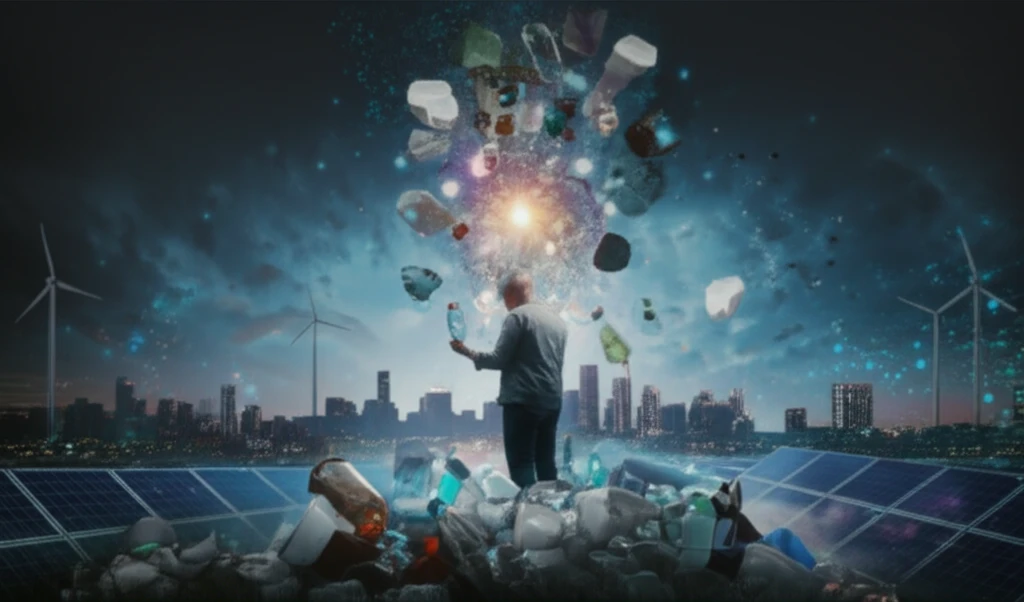
A digital illustration depicts a person sorting recycling materials, with a futuristic cityscape in the background showing clean energy

Trash Troubles: How Waste Management Can Save the Planet (and Your Wallet!)

"Unpacking the Crisis: Why Our Trash Habits Need a Serious Makeover, And How You Can Make a Difference."


Ever feel like the trash can is multiplying? You're not alone. From overflowing landfills to polluted oceans, the global waste crisis is a growing concern. But it's not just an environmental issue; it's a complex problem with economic and social implications that touch every corner of the globe.

The good news? We're not helpless! This article explores the often-overlooked world of waste management, examining the root causes of our trash troubles, the innovative solutions being developed, and, most importantly, how you can be part of the solution. Whether you're a seasoned eco-warrior or just starting to think about your impact, there's something here for you.

We'll journey from the challenges faced in developing nations to the cutting-edge technologies reshaping waste management. You'll discover how reducing, reusing, and recycling aren't just buzzwords; they're powerful tools for a healthier planet and a more sustainable future. Plus, we'll show you how smarter waste habits can actually save you money!

The Wasteful World: Why Do We Have a Trash Problem?

A digital illustration depicts a person sorting recycling materials, with a futuristic cityscape in the background showing clean energy

The sheer volume of waste generated globally is staggering. Factors like population growth, urbanization, and our increasingly consumer-driven lifestyles are major contributors. In many parts of the world, waste management systems are overwhelmed, leading to overflowing landfills, illegal dumping, and significant environmental pollution. These issues disproportionately affect low-income communities and developing nations, where waste management infrastructure is often lacking.

But the problem goes far beyond overflowing bins. The way we produce, consume, and dispose of goods has a massive impact on the environment. Manufacturing processes, transportation, and the decomposition of waste all contribute to greenhouse gas emissions, contributing to climate change. Plastic pollution chokes our oceans and harms wildlife. The improper disposal of hazardous waste poses serious health risks.

  • Population Growth: More people, more waste.
  • Consumerism: The 'buy, use, discard' mentality fuels the problem.
  • Inefficient Systems: Lack of infrastructure in many areas.
  • Poor Recycling: Low rates of recycling and reuse.
  • Lack of Awareness: Many people are unaware of the impacts of their waste habits.
Understanding these root causes is the first step toward finding effective solutions. We must move away from a linear 'take-make-dispose' model and embrace a circular economy that prioritizes reducing waste, reusing materials, and recycling what we can't avoid.

From Trash to Triumph: Your Role in the Waste Revolution

The waste crisis is a complex challenge, but it's not insurmountable. By adopting mindful habits, supporting sustainable initiatives, and advocating for change, we can collectively create a healthier planet and a more sustainable future. It’s time to rethink our relationship with waste. Small changes can create a big impact. Embrace the power of reduce, reuse, and recycle!

About this Article -

This article was crafted using a human-AI hybrid and collaborative approach. AI assisted our team with initial drafting, research insights, identifying key questions, and image generation. Our human editors guided topic selection, defined the angle, structured the content, ensured factual accuracy and relevance, refined the tone, and conducted thorough editing to deliver helpful, high-quality information.See our About page for more information.

This article is based on research published under:

DOI-LINK: 10.4314/ejesm.v10i3.11, Alternate LINK

Title: Generation Rate And Physical Composition Of Solid Waste In Wolaita Sodo Town, Southern Ethiopia

Subject: General Medicine

Journal: Ethiopian Journal of Environmental Studies and Management

Publisher: African Journals Online (AJOL)

Authors: Endrias Goa, Solomon Sorsa Sota

Published: 2017-05-18

Everything You Need To Know

1

What are the primary drivers behind the global waste crisis?

The global waste crisis is fueled by several interconnected factors. Population growth increases the sheer volume of waste generated. Consumerism, the 'buy, use, discard' mentality, accelerates this issue. Inefficient systems, particularly in developing nations, lack the infrastructure to manage waste effectively. Poor recycling practices and a general lack of awareness regarding waste's environmental impacts further exacerbate the problem. These factors collectively contribute to overflowing landfills, pollution, and health risks.

2

How does consumerism contribute to the waste problem, and what are the consequences?

Consumerism, characterized by the 'buy, use, discard' mentality, significantly fuels the waste crisis. It encourages the rapid consumption of goods, leading to increased waste generation. The consequences are far-reaching, including overflowing landfills, environmental pollution from manufacturing processes, transportation and decomposition of waste, and the release of greenhouse gas emissions contributing to climate change. Moreover, plastic pollution chokes oceans and harms wildlife, and the improper disposal of hazardous waste poses serious health risks.

3

Why is waste management a particularly challenging issue for developing nations?

Waste management poses significant challenges for developing nations due to a lack of adequate infrastructure. In many areas, waste management systems are overwhelmed or non-existent. This leads to illegal dumping, environmental pollution, and health hazards. The challenges are compounded by rapid population growth and urbanization, which strain existing resources. Addressing these issues requires investment in waste management infrastructure, education, and policy changes.

4

What is the importance of the 'reduce, reuse, and recycle' approach in waste management?

The 'reduce, reuse, and recycle' approach is a cornerstone of effective waste management. Reducing waste involves minimizing consumption and choosing products with less packaging. Reusing materials extends their lifespan, diverting them from landfills. Recycling transforms waste materials into new products, conserving resources and reducing the need for raw materials. These practices help move away from a linear 'take-make-dispose' model and embrace a circular economy, promoting sustainability and reducing environmental impact.

5

Beyond individual actions, what systemic changes are needed to tackle the waste crisis?

While individual actions like reducing, reusing, and recycling are crucial, systemic changes are also essential to address the waste crisis. These changes include investing in improved waste management infrastructure, particularly in developing nations. Transitioning from a linear 'take-make-dispose' model to a circular economy is paramount. This involves designing products for durability and recyclability, promoting extended producer responsibility, and creating policies that incentivize waste reduction and reuse. Furthermore, raising public awareness regarding the impacts of waste habits and promoting sustainable consumption patterns are vital.

Newsletter Subscribe

Subscribe to get the latest articles and insights directly in your inbox.