
Tick Talk: Mapping the Threat of Soft Ticks in a Changing World

"New models predict where these disease-carrying ticks could thrive, helping us stay one step ahead."
Ticks, those tiny bloodsuckers, are more than just a nuisance. They're vectors, meaning they can transmit diseases between animals and humans. While hard ticks often grab the spotlight, their less-famous cousins, soft ticks, also pose a significant threat. These ticks can carry nasty pathogens, including the African Swine Fever Virus (ASFV) and bacteria that cause tick-borne relapsing fever (TBRF).
Understanding where these soft ticks are likely to thrive is crucial for preventing outbreaks and protecting public health. But here's the challenge: unlike hard ticks, soft ticks are notoriously difficult to study. They live in hidden environments like nests and burrows, making it hard to track their populations and habits. This lack of data makes it tough to predict where they might spread, especially with a changing climate.
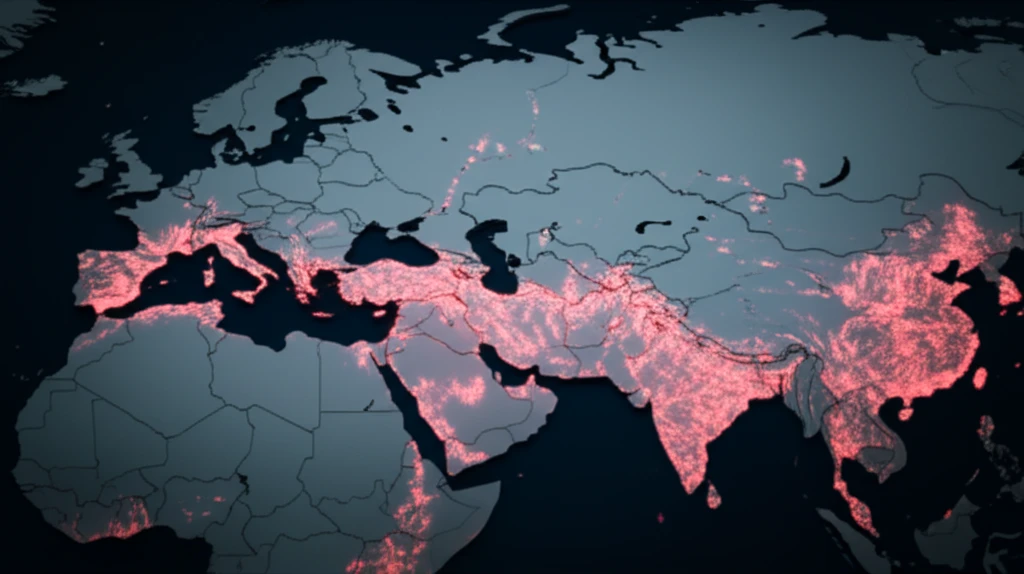
Now, researchers are tackling this problem with innovative mapping techniques. By combining existing knowledge about tick ecology with climate data, they've developed a model that predicts suitable habitats for a community of nine Ornithodoros tick species across the Western Palearctic region (Europe and parts of Asia). This model offers a valuable tool for estimating the global distribution of these ticks and targeting surveillance efforts.
Where Are These Ticks Likely to Thrive?
To create their predictive model, the researchers used a Multi-Criteria Decision Analysis (MCDA). This approach is useful when data is limited, and it relies on combining different factors based on their importance to the organism's survival.
- Spring temperatures exceeding 10°C: This signals the end of the ticks' winter dormancy.
- Three months of summer temperatures above 20°C: This allows the ticks to carry out their essential biological processes.
- Annual precipitation between 60 mm to 750 mm: Ticks thrive in semi-arid to arid environments, but need some moisture.
- Dry seasons interrupted by small rain showers: In very dry areas, these showers help maintain minimal moisture levels inside their habitats.
- Proximity to perennial rivers: Residual water from rivers can provide moisture in otherwise dry areas.
Protecting Our Future
The study's models revealed several areas with suitable habitats for these ticks, including the Mediterranean Basin and semi-desert regions in Southwest and Central Asia. The models showed good accuracy in predicting tick habitats, offering a valuable tool for estimating the global distribution of Ornithodoros ticks and targeting surveillance efforts.
This research is a crucial first step in understanding and managing the potential spread of soft ticks and the diseases they carry. By identifying high-risk areas, public health officials and veterinarians can focus their resources on surveillance and prevention efforts, ultimately protecting both human and animal health.
As climate change continues to reshape our world, understanding the shifting distributions of disease vectors like ticks becomes ever more critical. Models like these provide essential insights for informed decision-making and proactive strategies to mitigate future health risks.