
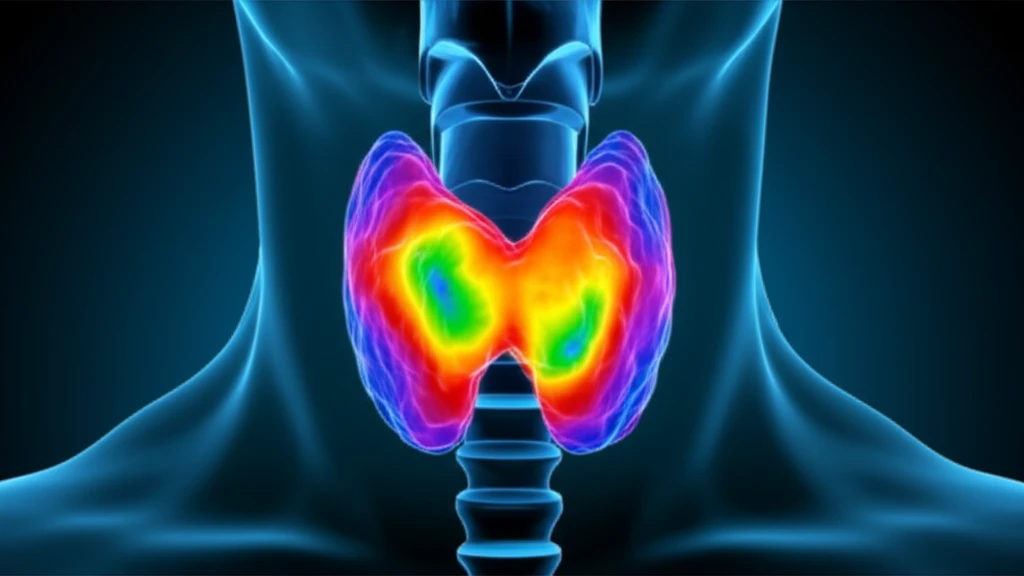
MRI scan highlighting thyroid gland with areas indicating restricted water diffusion

Thyroid Cancer Detection: Can Advanced MRI Scans Improve Accuracy?

"Discover how Diffusion-Weighted MRI (DW-MRI) enhances thyroid nodule assessment, potentially reducing unnecessary surgeries."


Thyroid nodules are common, affecting a significant portion of the population. While most are benign, the possibility of malignancy always looms, creating anxiety and diagnostic challenges. Current methods, like ultrasound and fine-needle aspiration (FNA) biopsies, have limitations in definitively ruling out cancer, leading to potential overtreatment and unnecessary surgeries.

Advanced imaging techniques offer promising solutions. Diffusion-Weighted Magnetic Resonance Imaging (DW-MRI) is emerging as a valuable tool for assessing thyroid nodules. DW-MRI measures the movement of water molecules within tissues, providing insights into cellular density and integrity – characteristics that differ significantly between benign and malignant tissues.

This article explores how DW-MRI, particularly when combined with Apparent Diffusion Coefficient (ADC) values, can improve the accuracy of thyroid cancer detection. We'll delve into the research, the benefits, and what this means for individuals facing the uncertainty of thyroid nodules.

Understanding Diffusion-Weighted MRI (DW-MRI) and ADC Values

MRI scan highlighting thyroid gland with areas indicating restricted water diffusion

DW-MRI works by detecting how water molecules move within body tissues. In areas where cells are densely packed (like in tumors), water movement is restricted. This restriction is measured by the Apparent Diffusion Coefficient (ADC). Malignant tissues typically show lower ADC values compared to benign tissues because of their higher cellular density.

Think of it like this: imagine water flowing freely through a park (benign tissue) versus trying to navigate a crowded city street (malignant tissue). The city street has more obstacles, slowing down the water's movement. DW-MRI essentially visualizes this 'crowdedness' at a microscopic level.

  • How DW-MRI Works: Measures water molecule movement in tissues.
  • ADC Values: Quantify water diffusion; lower values suggest malignancy.
  • Cellular Density: Malignant tissues have higher cellular density, restricting water movement.
A study published in 'Cirugía Española' investigated the effectiveness of DW-MRI in detecting malignant thyroid nodules. The researchers compared DW-MRI findings with postoperative pathology results from 65 thyroid nodules in 58 patients. The study focused on ADC values, aiming to determine if these values could reliably distinguish between benign and malignant nodules.

The Future of Thyroid Cancer Diagnostics

DW-MRI holds considerable promise as a supplementary tool in the diagnostic process for thyroid nodules. By providing a non-invasive method to assess the characteristics of thyroid nodules, DW-MRI can assist clinicians in making more informed decisions about the need for biopsy or surgery. While further research is needed to refine the technique and establish standardized protocols, DW-MRI is paving the way for more accurate and personalized approaches to thyroid cancer detection.

About this Article -

This article was crafted using a human-AI hybrid and collaborative approach. AI assisted our team with initial drafting, research insights, identifying key questions, and image generation. Our human editors guided topic selection, defined the angle, structured the content, ensured factual accuracy and relevance, refined the tone, and conducted thorough editing to deliver helpful, high-quality information.See our About page for more information.

This article is based on research published under:

DOI-LINK: 10.1016/j.cireng.2018.10.002, Alternate LINK

Title: Diffusion-Weighted Magnetic Resonance Imaging For The Detection Of Thyroid Cancer

Subject: General Medicine

Journal: Cirugía Española (English Edition)

Publisher: Elsevier BV

Authors: Ozgur Ekinci, Sumeyra Emine Boluk, Tunc Eren, Ibrahim Ali Ozemir, Salih Boluk, Artur Salmaslioglu, Metin Leblebici, Orhan Alimoglu

Published: 2018-12-01

Everything You Need To Know

1

What is the problem with current methods for detecting thyroid cancer?

Thyroid nodules are common, but most are benign. Current methods like ultrasound and fine-needle aspiration (FNA) biopsies have limitations in definitively ruling out cancer, potentially leading to overtreatment. Diffusion-Weighted Magnetic Resonance Imaging (DW-MRI) offers a promising, non-invasive alternative. It can improve the accuracy of thyroid cancer detection, helping clinicians make more informed decisions about the need for biopsy or surgery. It could reduce unnecessary surgeries.

2

How does Diffusion-Weighted MRI (DW-MRI) work?

Diffusion-Weighted Magnetic Resonance Imaging (DW-MRI) is an advanced imaging technique that assesses thyroid nodules by measuring the movement of water molecules within tissues. This is based on the principle that water moves differently in different types of tissue. Malignant tissues, due to their higher cellular density, restrict water movement compared to benign tissues. This difference is then quantified using Apparent Diffusion Coefficient (ADC) values.

3

What are ADC values, and why are they important?

The Apparent Diffusion Coefficient (ADC) values are crucial in interpreting DW-MRI results. ADC values quantify the rate of water diffusion within tissues. Lower ADC values typically indicate higher cellular density, which is characteristic of malignant tissues. The study in 'Cirugía Española' focused on ADC values to differentiate between benign and malignant nodules. This helps in assessing the characteristics of thyroid nodules.

4

Why is Diffusion-Weighted MRI (DW-MRI) important for thyroid cancer detection?

The significance of DW-MRI lies in its potential to improve diagnostic accuracy and reduce the need for invasive procedures. By providing a non-invasive method to assess thyroid nodules, DW-MRI can help clinicians differentiate between benign and malignant nodules more effectively. This can lead to fewer unnecessary surgeries and reduce patient anxiety. Further research is needed to refine the technique and establish standardized protocols, but DW-MRI holds considerable promise as a supplementary tool.

5

How will Diffusion-Weighted MRI (DW-MRI) change the way thyroid cancer is diagnosed?

DW-MRI is emerging as a valuable tool in thyroid cancer diagnostics because it provides a detailed view of the cellular structure of thyroid nodules. While ultrasound and FNA biopsies have limitations, DW-MRI, especially when combined with ADC values, can offer a more accurate assessment. The future of thyroid cancer diagnostics involves integrating advanced techniques like DW-MRI to enable more personalized and effective treatment strategies, moving towards a more accurate and patient-friendly approach to diagnosis.

Newsletter Subscribe

Subscribe to get the latest articles and insights directly in your inbox.