
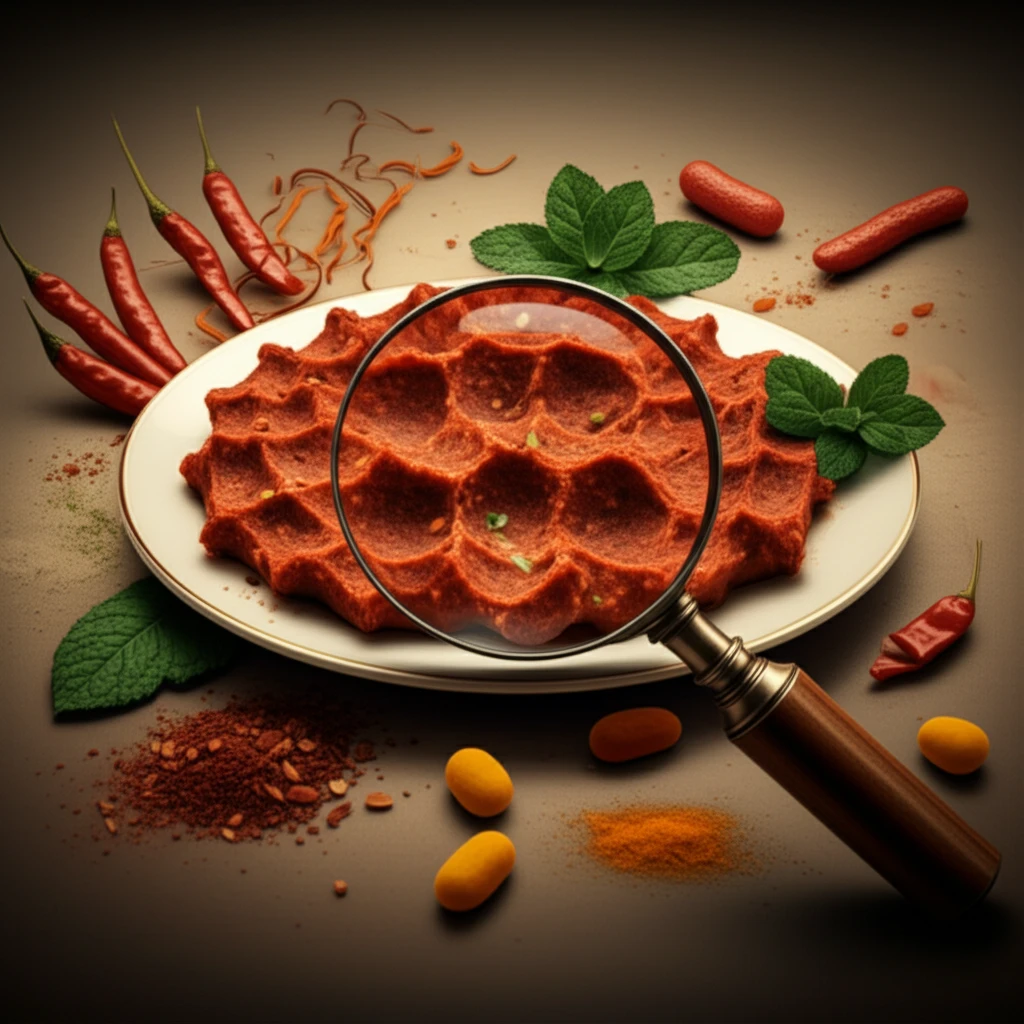
Illustration of çiğ köfte with safety elements

The Raw Truth: Is Your Favorite Meatball Safe? Unpacking the Science of Food Safety

"From street food to family dinners, the beloved çiğ köfte's popularity raises a critical question: Are we playing with fire when we eat it?"


Across Turkey and beyond, çiğ köfte, a dish of finely ground meat, bulgur, and a blend of spices, is a beloved culinary staple. Whether enjoyed as a quick snack or a centerpiece of a festive meal, its raw preparation method presents a unique set of challenges. This article dives into the science behind çiğ köfte, exploring the potential risks of bacterial contamination and offering insights into how to navigate this popular food choice safely.

The preparation of çiğ köfte is a tradition, and the ingredients and methods vary. However, the absence of cooking raises a red flag for food safety experts. Raw meat can harbor dangerous bacteria, making the consumption of uncooked dishes a potential health hazard. This is particularly relevant in a world where foodborne illnesses continue to be a significant public health concern.

This exploration aims to unpack the potential dangers of eating raw meatballs and to provide clarity on the scientific findings. We'll examine the specific bacteria that can pose a threat, the factors that influence their survival, and what consumers and producers can do to minimize risks.

Unveiling the Microbial Menace: Common Bacteria in Raw Meat

Illustration of çiğ köfte with safety elements

Raw meat, including the beef or lamb used in çiğ köfte, can be a breeding ground for various microorganisms. Some of the most concerning bacteria include Brucella, which were the focus of the original study, along with Salmonella, and various strains of E. coli. These microorganisms can cause severe illnesses, ranging from mild digestive upsets to life-threatening infections.

The presence and survival of these bacteria depend on several factors, including the initial contamination level, storage temperature, and the presence of other ingredients. For example, studies have shown that the pH, water activity, and moisture content of the meatball can influence the bacteria's survival rates. The addition of spices, which are a key component of çiğ köfte, may offer some antimicrobial benefits, but they are not always sufficient to eliminate the risk.

  • Brucella: Bacteria that can cause brucellosis, a disease with flu-like symptoms that can become chronic.
  • Salmonella: Known for causing salmonellosis, leading to diarrhea, fever, and abdominal cramps.
  • E. coli: Some strains, like E. coli O157:H7, can produce toxins and cause severe illness, including kidney failure.
Understanding these microbial threats is crucial for appreciating the risks associated with consuming raw meatballs. While the ingredients and preparation methods can vary, the inherent danger of raw meat remains a constant concern.

Eating Smart: Making Informed Choices about Raw Meatballs

The love of çiğ köfte doesn't have to come at the expense of your health. By understanding the potential risks and making informed choices, you can continue to enjoy this traditional delicacy. Always consider the source of the meat, the hygiene practices of the vendor, and your own health status. If you're uncertain about the safety, consider opting for çiğ köfte prepared with cooked meat. Your well-being is the most important ingredient.

About this Article -

This article was crafted using a human-AI hybrid and collaborative approach. AI assisted our team with initial drafting, research insights, identifying key questions, and image generation. Our human editors guided topic selection, defined the angle, structured the content, ensured factual accuracy and relevance, refined the tone, and conducted thorough editing to deliver helpful, high-quality information.See our About page for more information.

This article is based on research published under:

DOI-LINK: 10.5539/jfr.v1n2p274, Alternate LINK

Title: Behavior Of Brucella Abortus And Brucella Melitensis In Raw Meatball (Cig Kofte)

Subject: General Medicine

Journal: Journal of Food Research

Publisher: Canadian Center of Science and Education

Authors: Recep Kara, Veli Gök, Beytullah Kenar, Levent Akkaya

Published: 2012-04-28

Everything You Need To Know

1

What are the primary health risks associated with eating raw çiğ köfte?

The main health risks stem from bacterial contamination in the raw meat. Bacteria such as Brucella, Salmonella, and various strains of E. coli can be present. These microorganisms can lead to illnesses ranging from digestive issues to severe infections like brucellosis or salmonellosis. Specific strains of E. coli, such as E. coli O157:H7, can produce toxins that cause severe illness, including kidney failure. The absence of cooking means these bacteria are not eliminated, posing a risk to consumers.

2

How do factors like storage and spices affect the safety of çiğ köfte?

The survival of bacteria in çiğ köfte is influenced by factors like storage temperature, pH levels, water activity, and moisture content. Proper refrigeration can slow bacterial growth, but it doesn't eliminate it entirely. Spices added to çiğ köfte might offer some antimicrobial benefits. However, these benefits aren't always enough to completely eliminate the risk of bacterial contamination. Therefore, relying solely on spices for safety is not advisable.

3

What is Brucella, and what disease does it cause if found in raw çiğ köfte?

Brucella is a type of bacteria that can be found in raw meat used to prepare çiğ köfte. It causes brucellosis, a disease characterized by flu-like symptoms that can become chronic if left untreated. Consuming raw çiğ köfte contaminated with Brucella poses a risk of contracting this illness, highlighting the importance of safe food handling practices.

4

Beyond just avoiding raw meat, what specific steps can be taken to minimize the risk of foodborne illness from çiğ köfte?

To reduce the risk, it's crucial to consider the source of the meat used in çiğ köfte, opting for suppliers with stringent hygiene standards. Also, evaluate the vendor's hygiene practices. Individuals can choose çiğ köfte prepared with cooked meat as a safer alternative. Those with compromised immune systems should be especially cautious, as they are at higher risk of severe complications from foodborne illnesses. Furthermore, proper storage to limit bacteria growth is paramount.

5

How significant is the risk of foodborne illnesses from raw meat in the context of global public health?

Foodborne illnesses, including those from raw meat consumption, remain a substantial public health concern worldwide. The risk is amplified by factors like varying food safety standards, improper handling, and inadequate cooking. Understanding the specific threats posed by bacteria like Brucella, Salmonella, and E. coli is crucial for developing strategies to mitigate these risks. Continued education and awareness campaigns are necessary to promote safe food handling practices and reduce the burden of foodborne diseases on public health systems. While çiğ köfte represents a localized culinary tradition, it exemplifies the broader challenges of ensuring food safety in a globalized world.

Newsletter Subscribe

Subscribe to get the latest articles and insights directly in your inbox.