
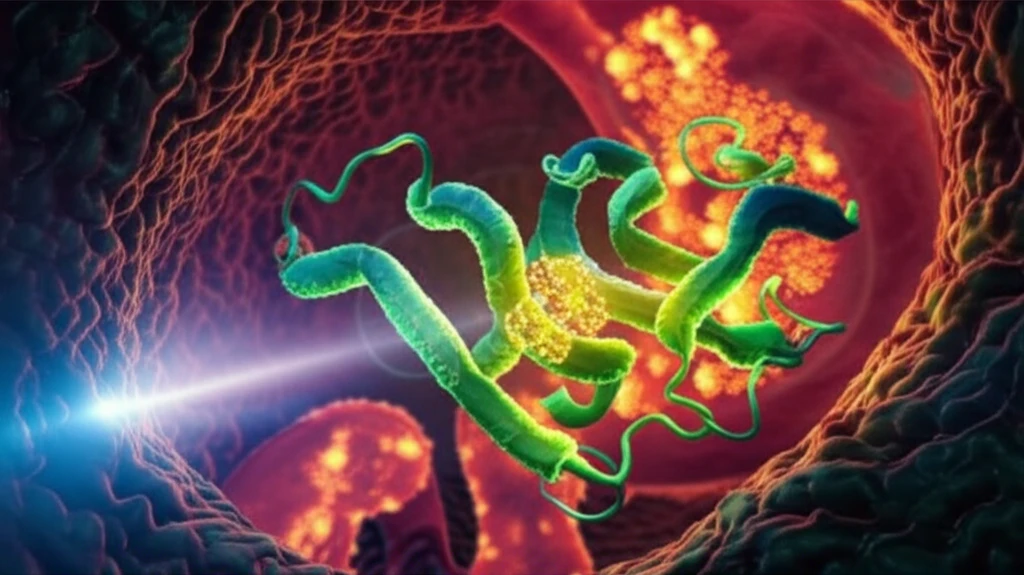
Microscopic view of a stomach tumor with the GRINA protein highlighted.

The GRINA Factor: How a Single Protein Could Revolutionize Gastric Cancer Treatment

"New research reveals that targeting the GRINA protein may halt tumor progression, offering hope for those battling this aggressive cancer."


Gastric cancer, often diagnosed at advanced stages, remains a significant global health challenge. Current treatments, which include surgery, chemotherapy, and radiotherapy, often fall short of providing long-term survival, highlighting the urgent need for novel therapeutic targets.

Recent research has focused on understanding the molecular mechanisms that drive gastric cancer progression, with the aim of identifying specific proteins that can be targeted with new drugs. One such protein, GRINA (Glutamate Receptor, Ionotropic, N-Methyl D-Aspartate-Associated Protein 1), has emerged as a potential key player in this process.

A new study published in the Journal of Experimental & Clinical Cancer Research sheds light on the role of GRINA in promoting gastric cancer. Researchers have found that GRINA is highly expressed in gastric cancer cells, where it modulates aerobic glycolysis—a process that fuels tumor growth—and inhibits cell death (apoptosis). This discovery opens exciting new avenues for developing targeted therapies that could significantly improve outcomes for patients with this deadly disease.

GRINA: The Master Regulator of Gastric Cancer Growth?

Microscopic view of a stomach tumor with the GRINA protein highlighted.

The study, led by researchers at Shanghai Jiao Tong University, explored the role of GRINA in gastric cancer by analyzing gene expression data from patient samples and conducting experiments on gastric cancer cell lines. The results revealed a strong correlation between GRINA expression and several key factors that contribute to tumor growth and spread:

High GRINA expression correlated with:

  • Increased cell proliferation: GRINA promotes the rapid growth of gastric cancer cells.
  • Enhanced migration and invasion: GRINA empowers cancer cells to move and invade surrounding tissues.
  • Inhibition of apoptosis: GRINA protects cancer cells from programmed cell death.
  • Activation of aerobic glycolysis: GRINA boosts the cancer cells' ability to metabolize glucose for energy, even in the presence of oxygen (Warburg effect).
Further investigation revealed that GRINA's pro-cancerous effects are mediated through several molecular mechanisms, including transcriptional regulation by the oncogene c-Myc and activation of the PI3K/Akt/mTOR signaling pathway, a key driver of cell growth and metabolism.

A Promising New Target for Gastric Cancer Therapy

These findings suggest that GRINA is a promising target for the development of new therapies to combat gastric cancer. By inhibiting GRINA, researchers hope to disrupt the processes that fuel tumor growth and promote cell survival. Studies are underway to explore strategies for targeting GRINA and to assess the efficacy of these approaches in preclinical models. While further research is needed, the discovery of GRINA's role in gastric cancer offers a beacon of hope for improving outcomes for patients battling this devastating disease.

About this Article -

This article was crafted using a human-AI hybrid and collaborative approach. AI assisted our team with initial drafting, research insights, identifying key questions, and image generation. Our human editors guided topic selection, defined the angle, structured the content, ensured factual accuracy and relevance, refined the tone, and conducted thorough editing to deliver helpful, high-quality information.See our About page for more information.

This article is based on research published under:

DOI-LINK: 10.1186/s13046-018-0974-1, Alternate LINK

Title: Transmembrane Protein Grina Modulates Aerobic Glycolysis And Promotes Tumor Progression In Gastric Cancer

Subject: Cancer Research

Journal: Journal of Experimental & Clinical Cancer Research

Publisher: Springer Science and Business Media LLC

Authors: Dan-Hua Xu, Qing Li, Hao Hu, Bo Ni, Xu Liu, Chen Huang, Zi-Zhen Zhang, Gang Zhao

Published: 2018-12-01

Everything You Need To Know

1

What exactly is GRINA and what does it do in gastric cancer?

GRINA, or Glutamate Receptor, Ionotropic, N-Methyl D-Aspartate-Associated Protein 1, is a protein that has been found to be highly expressed in gastric cancer cells. It plays a significant role in promoting cancer cell growth, migration, and invasion, while also inhibiting cell death. GRINA's influence on aerobic glycolysis allows cancer cells to metabolize glucose for energy, even in the presence of oxygen, which is vital for tumor development. Understanding GRINA's role provides a target for new therapies.

2

Why is the GRINA protein important in the context of gastric cancer?

GRINA is significant because it directly impacts multiple key factors that drive gastric cancer progression. High GRINA expression leads to increased cell proliferation, enhanced cell migration and invasion, inhibition of apoptosis (cell death), and activation of aerobic glycolysis. By targeting GRINA, researchers aim to disrupt these processes, potentially halting tumor growth and improving patient outcomes. Targeting GRINA could offer a more effective therapeutic approach.

3

What are the potential implications of targeting the GRINA protein for gastric cancer treatment?

Targeting GRINA aims to disrupt the molecular mechanisms that fuel tumor growth and promote cell survival. By inhibiting GRINA, researchers intend to interfere with processes like increased cell proliferation, enhanced migration and invasion, and the activation of aerobic glycolysis. These targeted therapies could lead to the development of more effective treatments that improve survival rates and quality of life for individuals battling gastric cancer.

4

What did the research study discover about the relationship between GRINA and gastric cancer?

The study revealed a strong correlation between GRINA expression and key factors contributing to tumor growth and spread. Specifically, high GRINA expression correlated with increased cell proliferation, enhanced migration and invasion, inhibition of apoptosis, and activation of aerobic glycolysis. These findings highlight GRINA as a key regulator of gastric cancer growth and progression.

5

How does GRINA actually promote cancer, what biological processes are involved?

GRINA's pro-cancerous effects are mediated through several molecular mechanisms, including transcriptional regulation by the oncogene c-Myc and activation of the PI3K/Akt/mTOR signaling pathway. The oncogene c-Myc regulates gene expression, promoting cell growth and proliferation. The PI3K/Akt/mTOR pathway is a key signaling pathway that drives cell growth and metabolism. Understanding these mechanisms provides insights into how GRINA can be effectively targeted to disrupt cancer cell growth and survival.

Newsletter Subscribe

Subscribe to get the latest articles and insights directly in your inbox.