
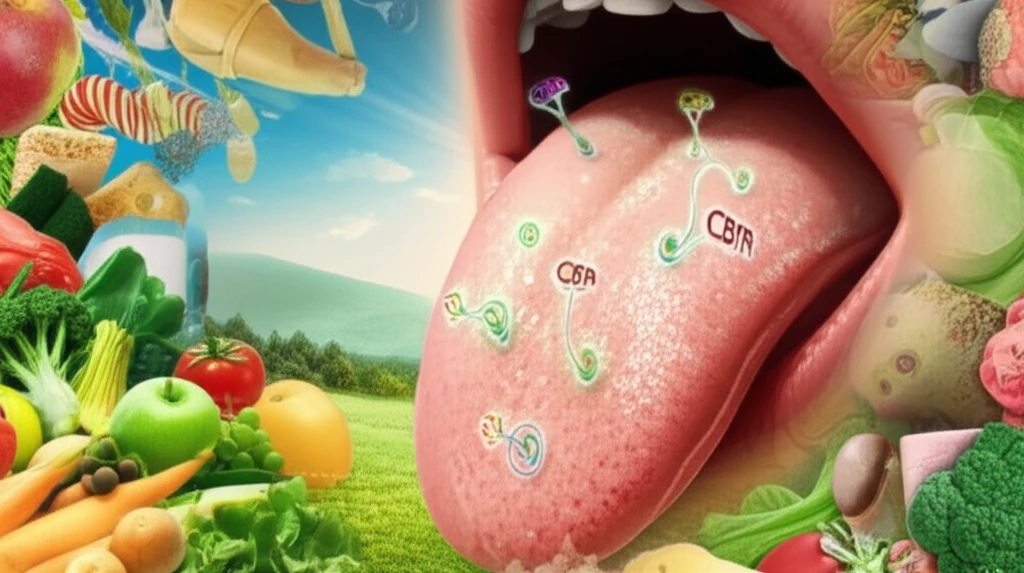
The Fat Taste Debate: How Our Brain's 'Mouthfeel' System Could Be The Key To Curbing Cravings

"New research explores how cannabinoid receptors in the tongue could rewrite our understanding of fat preference and obesity."
For years, scientists have understood the basic tastes: sweet, sour, salty, bitter, and umami. But what about fat? In today's world, where high-fat diets are common, understanding how we perceive fat on our tongues could be a game-changer in tackling obesity and related health issues.
The body's endocannabinoid system (ECS), known for its role in pleasure and appetite, has been linked to our desire for tasty, often unhealthy, foods. Now, a study is digging into whether specific receptors in our mouths—cannabinoid 1 receptors (CB1R)—play a part in how we detect and crave fatty foods.
This article breaks down the latest research into how our taste buds might be directly influenced by these receptors when it comes to 'tasting' fat. It explores the potential of targeting these receptors to shift fat preferences and, potentially, help manage weight.
Do Our Tongues Have a 'Fat Sensor'?
Researchers used mice to explore how the absence of CB1R affects the preference for fatty foods. They compared regular mice with those lacking the CB1R gene to see if there were differences in their attraction to fatty solutions.
- Preference Tests: Mice were given choices between plain solutions and those containing rapeseed oil or linoleic acid (a common fatty acid). Researchers measured which solutions the mice preferred.
- Licking Tests: The number of licks for control vs. fatty solutions were recorded to gauge immediate interest, minimizing the impact of post-ingestion feelings.
- Taste Bud Analysis: Taste bud cells were examined to see how CB1R affects the presence of proteins like CD36 and GPR120, which are thought to be involved in fat taste.
- Calcium Signaling: The study looked at how cells responded to fatty acids by measuring changes in calcium, a key signal in cellular processes.
- GLP-1 Release: They measured levels of GLP-1, a hormone that can affect appetite, to see if CB1R influences its release in response to fat.
A New Path to Weight Management?
This research opens interesting possibilities for managing dietary fat preferences. If CB1R in the mouth can affect how tasty we find fatty foods, targeting these receptors could potentially help reduce cravings and support healthier eating habits.
The study also found that CB1R affects the release of GLP-1, a hormone known to regulate appetite. This could mean that CB1R not only influences the initial taste experience but also impacts longer-term appetite control mechanisms.
While these findings are promising, more research is needed to fully understand how CB1R works in the context of taste and how these mechanisms can be safely and effectively targeted to combat obesity. The future may bring innovative strategies that leverage our understanding of taste to promote better health.