
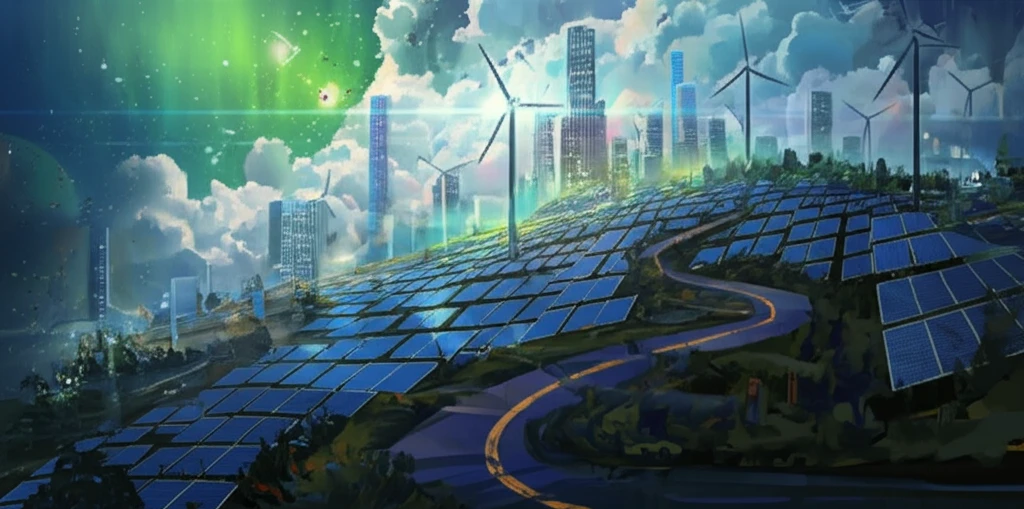
Sustainable city on a mountain powered by green energy.

The Evolution of Energy Economics: 45 Years of Trends, Challenges, and Future Predictions

"Dive into the history of energy economics, exploring its transformative journey and what it means for our energy future."


The field of energy economics stands as a critical bridge between economic theory and the practical realities of the energy sector. As the journal Energy Economics celebrates its 45th anniversary in 2024, it's an opportune time to reflect on the transformations, challenges, and future directions of this vital discipline. By examining the journal’s publications, we gain a unique lens through which to view the evolution of energy economics itself.

From its inception in 1979, Energy Economics has been a leading platform for rigorous, peer-reviewed research. The journal’s scope includes everything from the exploration and conversion of energy to the complexities of commodity markets, regulatory frameworks, and forecasting models. Over the decades, it has expanded to address pressing issues like climate change, international trade, and the intricate relationships between energy policy and economic development.

This retrospective analysis utilizes a bibliometric approach, sifting through thousands of documents indexed in databases like Web of Science and Scopus. By examining publication trends, citation patterns, and keyword co-occurrences, we can map the intellectual landscape of energy economics. This journey through the journal’s history reveals not only the evolution of research interests but also the increasing urgency and complexity of the energy challenges facing our world.

From Scarcity to Sustainability: Tracing the Key Themes in Energy Economics

Sustainable city on a mountain powered by green energy.

The initial years of Energy Economics focused heavily on the economic impacts of oil price shocks, a direct response to the energy crises of the 1970s. Publications from this era often grappled with questions of energy security, demand elasticity, and the role of government intervention in energy markets. Foundational concepts such as "elasticities,” "economic growth," "demand,” and “marginal cost pricing” were central to the discourse, reflecting a focus on theoretical and empirical analysis to inform policy.

As the field matured, environmental concerns began to take center stage. The late 1990s and early 2000s saw a surge in research related to climate change, carbon emissions, and the potential of renewable energy sources. This shift was driven by growing scientific consensus on the impacts of greenhouse gases and increasing policy efforts to promote sustainable energy solutions.

  • Rise of Renewables: The analysis shows how renewable energy became a central topic.
  • Concern over Emissions: Publications related to carbon emissions and climate change increase.
  • Efficiency Matters: Energy efficiency becomes more important.
The most recent phase of energy economics reflects an increasingly complex and interconnected world. Research now encompasses a wider range of topics, including energy poverty, the socio-economic dimensions of energy transitions, and the role of technological innovation in achieving sustainable energy systems. The rise of China as a major player in the global energy landscape is also a prominent theme, with numerous studies examining the country’s energy consumption, emissions, and policy initiatives.

Looking Ahead: The Future of Energy Economics

As we look to the future, energy economics is poised to play an even more critical role in shaping a sustainable and equitable energy future. The challenges are immense, ranging from decarbonizing the global economy to ensuring access to affordable energy for all. However, the field has demonstrated a remarkable capacity to adapt and evolve, integrating new knowledge, methodologies, and perspectives to address these complex issues. By continuing to foster rigorous research, interdisciplinary collaboration, and policy-relevant insights, energy economics can help guide the transition to a cleaner, more resilient, and more just energy system.

About this Article -

This article was crafted using a human-AI hybrid and collaborative approach. AI assisted our team with initial drafting, research insights, identifying key questions, and image generation. Our human editors guided topic selection, defined the angle, structured the content, ensured factual accuracy and relevance, refined the tone, and conducted thorough editing to deliver helpful, high-quality information.See our About page for more information.

This article is based on research published under:

DOI-LINK: https://doi.org/10.48550/arXiv.2407.05974,

Title: 45 Years Of Publications In Energy Economics: Evolution And Thematic Trends

Subject: econ.gn q-fin.ec

Authors: Maria Laura Victoria Marques, Ronaldo Seroa Da Motta, Daniel De Abreu Pereira Uhr, Julia Ziero Uhr

Published: 08-07-2024

Everything You Need To Know

1

What were the primary focuses of *Energy Economics* in its early years, and how did they reflect the global energy landscape?

In its early years, *Energy Economics* primarily focused on the economic impacts of oil price shocks, a direct consequence of the energy crises of the 1970s. Publications during this period extensively examined energy security, demand elasticity, and the role of government intervention in energy markets. Foundational concepts like "elasticities," "economic growth," "demand," and "marginal cost pricing" were central to the discourse. This focus reflected the urgent need to understand and mitigate the economic disruptions caused by volatile oil prices and supply uncertainties, which were major challenges facing the world at that time. The journal served as a platform to analyze the causes and consequences of these crises, offering insights for policy formulation and economic management.

2

How did the key themes addressed within the field of energy economics evolve over time, particularly regarding environmental concerns and renewable energy?

The field of energy economics has evolved significantly over time. Initially centered on oil price shocks and energy security, the late 1990s and early 2000s saw environmental concerns, climate change, carbon emissions, and renewable energy sources take center stage. The scientific consensus on greenhouse gases and policy efforts to promote sustainable energy solutions spurred this shift. The analysis highlights the rise of renewables as a central topic and a surge in publications related to carbon emissions and climate change, emphasizing the increasing importance of energy efficiency. The evolution reflects a broadening of the field to encompass the environmental consequences of energy production and consumption, paving the way for research on cleaner energy technologies and sustainable practices.

3

What role has technological innovation played in shaping the evolution of the field and its focus areas?

Technological innovation has profoundly shaped energy economics, driving shifts in focus and research priorities. The expansion of research now encompasses technological innovation in achieving sustainable energy systems. As new technologies emerged, research expanded to analyze their economic implications, including investment costs, efficiency gains, and market integration challenges. The development of renewable energy technologies like solar and wind power has created new areas of study around their cost-effectiveness, grid integration, and impact on energy markets. The increasing complexity of energy economics also reflects the need to understand the socio-economic dimensions of energy transitions and the role of technology in addressing energy poverty.

4

How has the rise of China influenced the key topics and research within energy economics?

The rise of China as a major player in the global energy landscape has become a prominent theme within energy economics. Numerous studies now examine China's energy consumption patterns, carbon emissions, and policy initiatives. This shift reflects China's significant role in global energy markets, both as a major consumer and producer, and its growing influence on international energy policy. Understanding China's energy dynamics is crucial for assessing global energy trends, forecasting future demand, and formulating effective strategies to address climate change and ensure energy security. The focus on China also highlights the interconnectedness of global energy systems and the importance of international collaboration.

5

What are some of the significant challenges and opportunities that energy economics faces in shaping a sustainable and equitable energy future?

Energy economics faces immense challenges in shaping a sustainable and equitable energy future. These challenges include decarbonizing the global economy, ensuring access to affordable energy for all, and navigating the complexities of energy transitions in a way that promotes economic development and social justice. The field must continue to foster rigorous research, interdisciplinary collaboration, and policy-relevant insights to address these issues. The opportunities lie in the potential for energy economics to guide the transition to a cleaner, more resilient, and more just energy system by informing policy decisions, promoting technological innovation, and fostering international cooperation. The ability to adapt and integrate new knowledge, methodologies, and perspectives will be crucial for realizing this vision.

Newsletter Subscribe

Subscribe to get the latest articles and insights directly in your inbox.