
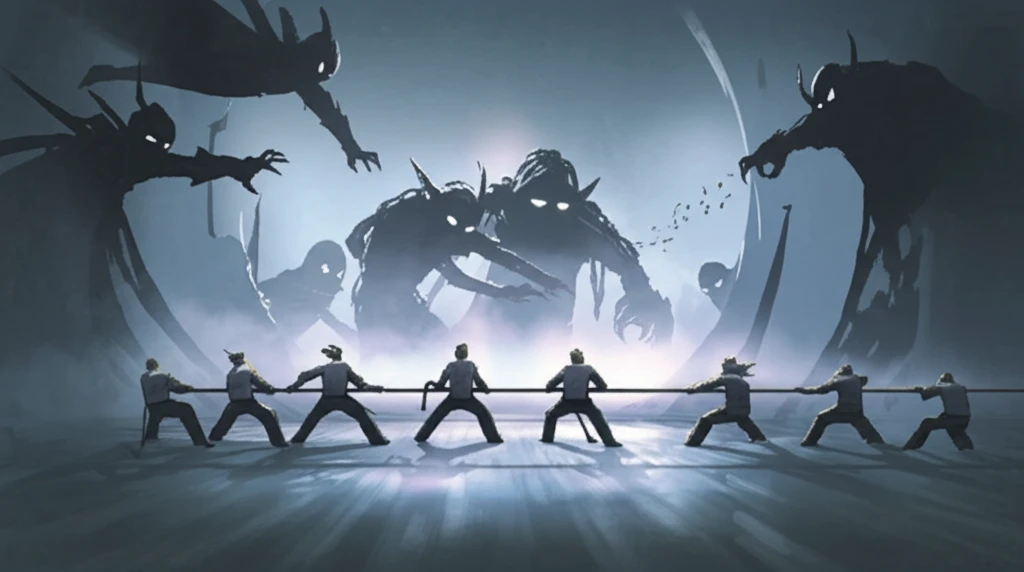
The Dark Side of Crowdsourcing: How Competition Can Sabotage Collaboration

"Uncover the surprising ways peer reviews in online communities can backfire, leading to strategic sabotage and undermining the collaborative spirit."
Crowdsourcing has revolutionized problem-solving and innovation, evolving into a powerful tool for businesses and organizations alike. However, as contests and challenges become embedded within online communities, a hidden tension emerges: the conflict between competitive motives and the desire for collaboration. This tension can lead community members to choose between acting in self-interest or upholding the collaborative ideal of the community.
Imagine a scenario where community members are asked to evaluate their rivals' ideas. The competitive motive whispers, urging them to strategically downplay strong contenders to increase their own chances of winning. The collaborative motive, on the other hand, encourages honest and fair evaluations for the benefit of the entire community. How do individuals navigate this challenging landscape? Do they succumb to the allure of self-interest, or do they champion the spirit of collaboration?
Recent research delves into this very question, analyzing peer evaluations in the Threadless online community. With a vast dataset of over 38 million peer evaluations spanning 10 years, the study uncovers the surprising ways competition can undermine collaboration, leading to strategic behavior, including sabotage. This exploration highlights the importance of understanding these dynamics to foster more sustainable and collaborative crowdsourcing environments.
Strategic Sabotage: When Competition Turns Destructive
The study reveals a nuanced picture of how community members resolve the tension between competition and collaboration. As skill level increases, individuals become more strategic, shifting from self-promotion to actively sabotaging their closest competitors. This sabotage takes the form of unfairly negative evaluations, strategically designed to diminish the chances of rivals who pose the greatest threat.
- Increased Competition: As skill level rises, individuals prioritize competitive strategies.
- Strategic Sabotage: Highly skilled members target close competitors with negative evaluations.
- Calculated Leniency: Some leniency is extended to non-threatening community members.
Building a Sustainable Crowdsourcing Community
The research provides valuable insights for fostering more sustainable crowdsourcing communities. By understanding how competition can lead to strategic sabotage, platforms can implement design changes to encourage collaboration and mitigate the negative effects of self-interest. This might involve refining evaluation mechanisms, promoting a stronger sense of community, or finding new ways to reward participation beyond simply winning the contest.