
The Buzz About Bees: Rethinking How We Value Pollination

"Are managed honeybees masking the importance of wild pollinators and forage provisioning in sustainable agriculture?"
We often think of crop pollination as a simple service provided by bees, especially the managed honeybee (Apis mellifera). But what if our understanding of pollination is too narrow? What if we're overlooking the crucial role of wild pollinators and the natural resources that support both them and managed bees?
A new perspective suggests that managed honeybees, frequently treated as mere agricultural tools, are deeply intertwined with the surrounding environment. Unlike wild pollinators that reside within the ecosystem, managed bees are often brought in temporarily, raising questions about their long-term sustainability and true impact.
This article explores the often-underestimated dependence of managed honeybees on forage provisioning – the availability of pollen and nectar from diverse floral sources. We'll delve into why this ecosystem service is vital for maintaining healthy bee populations and ensuring sustainable crop pollination, especially in regions facing increasing agricultural demands.
The Double Life of Honeybees: Agricultural Input or Ecosystem Partner?
Globally, the demand for crops that rely on insect pollination is skyrocketing, driven by population growth and improved living standards. To meet this demand, agriculture has turned to monoculture farming, which often reduces the natural habitats that support wild pollinators. This shift has made managed honeybees seem like the go-to solution for crop pollination.
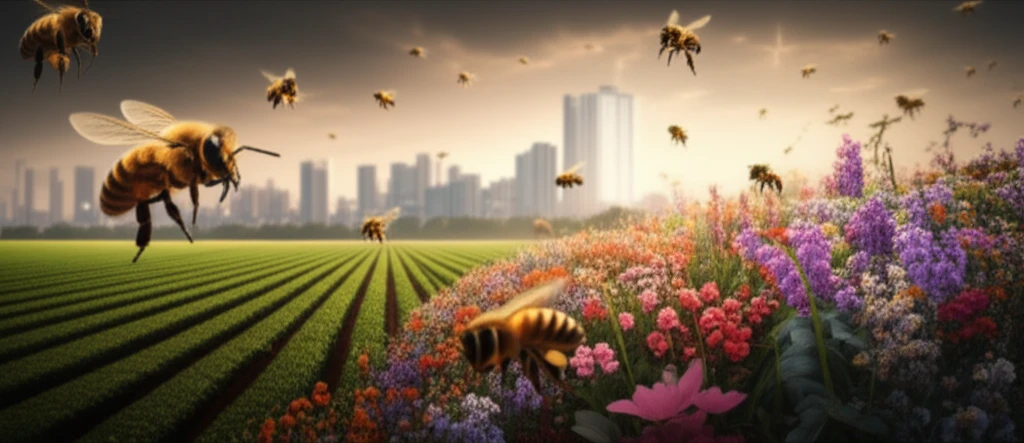
- Wild Pollinators vs. Managed Bees: Wild pollinators are residents, while managed bees are temporary visitors.
- The Forage Factor: Managed bees rely on forage resources (pollen and nectar) found outside of crop fields.
- Monoculture Drawbacks: Intensive agriculture reduces natural habitats, impacting wild pollinator populations.
Beyond the Hive: Recognizing the Value of Forage
The idea that managed pollinators are purely an agricultural input overlooks their dependence on off-farm resources. These resources provide essential forage, acting as a subsidy to the managed honey bee pollination service. When landowners don't maintain forage resources, beekeepers and the wider community lose out, creating ripple effects throughout the food supply chain.
In regions with high crop pollination demands and limited natural forage, it is vital to consider the trade-offs between land use for water conservation and forage provision. We can't afford to ignore the needs of managed pollinators. We must account for all resources used when honey bees are not being rented for crop pollination.
By recognizing forage provision for managed pollinators as a legitimate ecosystem service, we can move toward more sustainable agricultural practices. It also encourages policies and initiatives that support both wild pollinators and the managed bees we rely on for crop production, as well as securing our food systems into the future.