
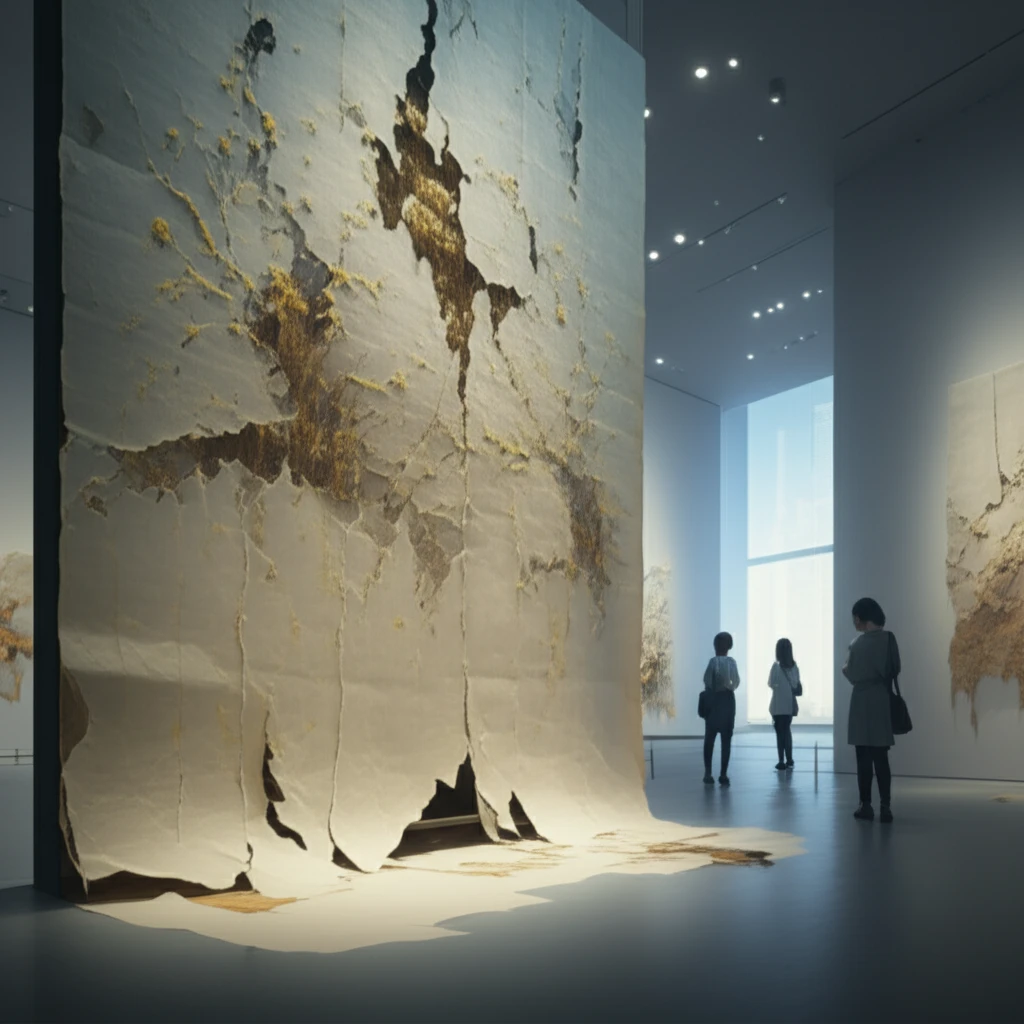
Surreal image of a crumbling rice paper mural symbolizing the art of impermanence.

The Art of Impermanence: How Embracing Change Can Spark Creativity

"Discover how artist Kim Huynh's 'If I Had a Hammer' uses transient materials to inspire a deeper appreciation for the creative process and the beauty of fleeting moments."


In a world obsessed with permanence, there's a quiet revolution brewing: the art of impermanence. This concept, deeply rooted in philosophies like Buddhism and Wabi-Sabi, invites us to find beauty in the fleeting nature of things. But what does this have to do with creativity? More than you might think. By embracing the temporary, we can unlock new avenues for artistic expression and find a deeper connection to our work.

Artist Kim Huynh exemplifies this philosophy in her piece, 'If I Had a Hammer,' a large wall mural constructed from ephemeral materials. These are not your typical museum-grade, archival pieces. Huynh uses rice paper and embossing techniques to create a work that acknowledges its own transience. Each embossed page, measuring 8.5" x 11", contributes to a larger composition of approximately 445 pages.

This isn't just about using delicate materials. It's a conscious decision to create art that lives and breathes, changes over time, and eventually fades. By understanding the intent behind such artworks, we can learn to appreciate the power of impermanence in our own creative endeavors and lives.

Why Impermanence Sparks Creativity: Letting Go to Create Anew

Surreal image of a crumbling rice paper mural symbolizing the art of impermanence.

The fear of failure often stifles creativity. We hold back, afraid to make mistakes, clinging to the idea of a 'perfect' outcome. But what if we let go of that need for perfection? What if we embraced the idea that our creations, like everything else, are temporary? This is where the magic happens.

Impermanence encourages experimentation. When we know that our work isn't meant to last forever, we become more willing to take risks, to try new techniques, and to push the boundaries of our comfort zone. We understand that mistakes are not failures, but rather opportunities for learning and growth.

  • Liberation from Perfection: Allows artists to focus on the process rather than the outcome.
  • Encourages Risk-Taking: Fosters a willingness to experiment with unconventional materials and techniques.
  • Deepens Connection: Creates a stronger bond between the artist, the work, and the present moment.
  • Mindfulness: Artworks that evolve over time encourage observers to engage with them repeatedly.
Kim Huynh's choice of rice paper is no accident. Its delicate nature emphasizes the transient quality of the artwork. This awareness brings a mindful quality in observers, to cherish the present moment. Her deliberate focus on 'subject and power, reverberation, degeneration, between the original and the derivative', is her intent to explore the nature of transformation in her art work. Each piece shifts over time.

Embracing the Ephemeral: A Path to Creative Fulfillment

The art of impermanence offers a powerful lesson for artists and anyone seeking to cultivate a more creative and fulfilling life. By letting go of the need for control and embracing the beauty of change, we open ourselves to new possibilities, deeper connections, and a profound appreciation for the present moment. So, the next time you feel stuck in a creative rut, remember the wisdom of impermanence and allow yourself to create without fear, knowing that even the most fleeting creation can hold profound meaning.

About this Article -

This article was crafted using a human-AI hybrid and collaborative approach. AI assisted our team with initial drafting, research insights, identifying key questions, and image generation. Our human editors guided topic selection, defined the angle, structured the content, ensured factual accuracy and relevance, refined the tone, and conducted thorough editing to deliver helpful, high-quality information.See our About page for more information.

Everything You Need To Know

1

What is the core philosophy behind the art of impermanence, and how does it relate to creativity?

The art of impermanence, deeply rooted in philosophies like Buddhism and Wabi-Sabi, invites us to find beauty in the fleeting nature of things. In the context of creativity, this means embracing the temporary nature of creations. By letting go of the need for permanence, artists can unlock new avenues for expression and find a deeper connection to their work. This philosophy encourages experimentation, risk-taking, and a focus on the process rather than the outcome, ultimately fostering a more mindful and fulfilling creative journey.

2

How does Kim Huynh's 'If I Had a Hammer' exemplify the concept of impermanence in art?

Kim Huynh's 'If I Had a Hammer' is a large wall mural constructed from ephemeral materials like rice paper. The choice of rice paper emphasizes the transient quality of the artwork. Each embossed page contributes to a larger composition that acknowledges its own transience. This conscious decision to create art that lives and breathes, changes over time, and eventually fades, directly reflects the art of impermanence. Her work explores the nature of transformation, encouraging observers to engage with the artwork repeatedly as it evolves.

3

In what specific ways does embracing impermanence enhance an artist's creative process, according to the text?

Embracing impermanence offers several key benefits for artists. It provides liberation from the need for perfection, allowing artists to focus on the creative process rather than being fixated on the outcome. This encourages risk-taking and experimentation with unconventional materials and techniques. It also fosters a deeper connection between the artist, their work, and the present moment. The transient nature of artworks, like Kim Huynh's mural, invites repeated engagement, encouraging observers to engage with the art form mindfully.

4

What are the key benefits of adopting an impermanent approach to art, as highlighted in the article?

Adopting an impermanent approach to art offers several key benefits: It allows artists to let go of the need for control, which can often stifle creativity, by freeing them from the pressure of achieving a 'perfect' outcome. This approach fosters experimentation and a willingness to try new techniques, leading to innovative results. It deepens the connection between the artist, the artwork, and the present moment. It encourages mindfulness by prompting viewers to cherish the artwork as it evolves, creating a richer and more meaningful experience.

5

How can the principles demonstrated by Kim Huynh in 'If I Had a Hammer' inspire a mindful approach to life?

Kim Huynh's piece, 'If I Had a Hammer', constructed from ephemeral materials like rice paper, showcases the beauty of fleeting moments. By using transient materials, Huynh encourages observers to appreciate the present. This awareness brings a mindful quality, inviting us to cherish the beauty in change and the present moment. This concept encourages us to let go of the need for control, embrace change, and find meaning in the transient nature of life. The artwork's evolution over time, due to the nature of its materials, promotes an appreciation for the present moment and a deeper understanding of transformation.

Newsletter Subscribe

Subscribe to get the latest articles and insights directly in your inbox.