
Telemonitoring for COPD: Bridging the Distance to Better Breathing

"Can keeping tabs from afar improve outcomes for COPD patients? Discover how telemonitoring is changing the game in early supported discharge."
Chronic Obstructive Pulmonary Disease (COPD) affects millions worldwide, posing significant challenges for healthcare systems. Traditional management often involves lengthy hospital stays, followed by home care. However, innovative approaches are emerging to streamline care and improve patient outcomes. Telemonitoring, a technology-driven method, offers a promising avenue for managing COPD patients, especially during the critical transition from hospital to home.
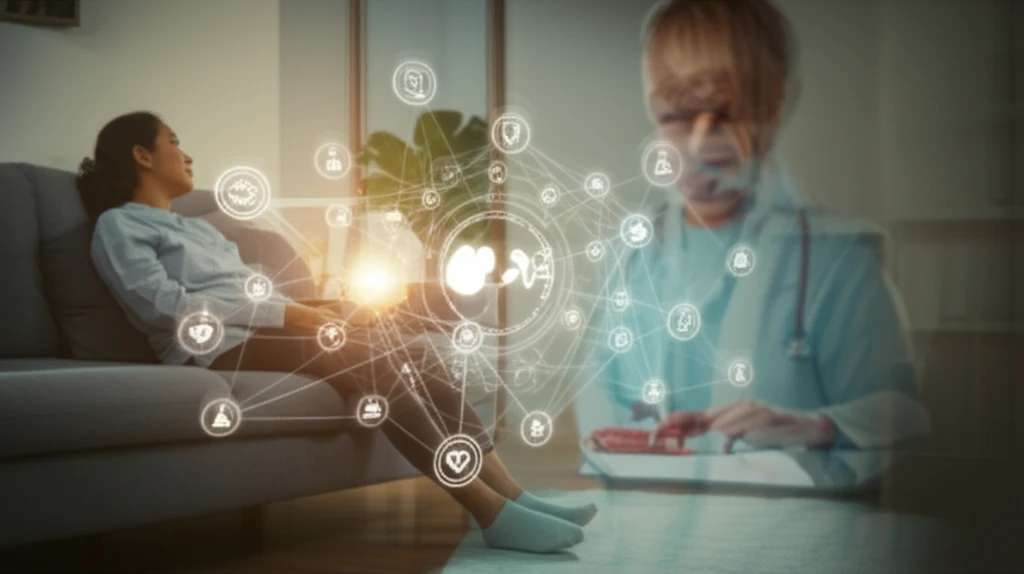
Telemonitoring involves using technology to remotely monitor a patient's health status. Devices like home-based monitoring pods collect data on vital signs, symptoms, and adherence to medication. This information is then transmitted to healthcare providers, enabling them to track patient progress and intervene proactively.
A study published in 'Thorax' explored the effectiveness of telemonitoring in assisting early supported discharge (ESD) for patients admitted with an exacerbation of COPD. The study investigated the impact of telemonitoring on readmission rates, workload, patient satisfaction, and self-care abilities. Here’s a breakdown of what the research revealed and what it means for COPD management.
Evidence on Impact
Recent work is testing whether telemonitoring can reduce COPD exacerbations by adding algorithm-supported risk prediction to clinical assessment. A May 9, 2025 study sought to isolate the effectiveness of algorithm support by giving clinicians risk data in one group while withholding the prediction algorithm in the control group. The 2020 TELEMEDCOPD-Trial examined whether telemedicine-supported early discharge and home hospitalization could be as effective and more efficient than a traditional program, while noting that earlier telemonitoring studies had produced contradictory results.
Methods and Limitations
Telemonitoring research commonly evaluates whether remote monitoring can prevent severe COPD exacerbations requiring hospitalization or emergency-room visits. A 2021 systematic review and meta-analysis focused specifically on those outcomes. A 2026 invited review cautioned that the heterogeneity of telemonitoring interventions and healthcare contexts made a formal systematic-review methodology inappropriate for its objectives, highlighting a major limitation in comparing approaches.
From Monitoring to Early Detection
Telemonitoring is defined as remote monitoring of digitally transmitted health-related data to detect changes in a patient's condition. In COPD, it has been used for several purposes, including supporting self-management, assessing adherence, and detecting early disease decompensation. A 2021 meta-analysis marked a broader effort to identify the best available evidence for telemonitoring aimed at earlier and optimized management of acute exacerbations in patients with a history of previous exacerbations.
Telemonitoring's Impact on COPD Early Discharge
The 'Thorax' study focused on integrating telemonitoring into the COPD early support discharge (ESD) team at Salford Royal NHS Foundation Trust. Seventeen HomePods were deployed for a 12-month pilot, targeting patients who could use the technology. Each patient used a HomePod for 30 days, receiving remote, real-time monitoring. This setup allowed healthcare providers to keep a close watch on patients without constant in-person visits.
- Reduced Readmission Rates: 30-day readmission rates in the telemonitoring group were 3%, compared to 8% in other ESD patients and 18% in the Respiratory directorate.
- Workload Management: Telehealth group accounted for 5% of all home visits and 25% of all phone calls made by CAST. The capacity of CAST was increased from 15 Cases to 18 cases at any one time (20%)
- Increased Capacity: CAST (COPD early support discharge) team saw a capacity increase from 15 to 18 cases at any time (20%)
- Enhanced Self-Care and Satisfaction: Patient surveys indicated excellent satisfaction and increased confidence in self-care. Patients also provided valuable suggestions for improving the telehealth system.
An Evolving Evidence Base
Current research suggests that telemonitoring for COPD remains an evolving field rather than a settled intervention. Studies may differ in the devices used, monitoring workflows, patient populations, and outcomes assessed. As a result, broad conclusions about effectiveness should be interpreted cautiously until evidence becomes more consistent.
Uncertain Benefits
Telemonitoring does not automatically produce better outcomes in every COPD care setting. Potential limitations include inconsistent intervention designs, differences in healthcare contexts, and difficulty translating controlled-study findings into routine practice. These uncertainties mean that claims of reduced exacerbations or hospital use should be evaluated against the specific program and population studied.
Telemonitoring Versus Conventional Care
Real-world research is comparing patients with COPD or asthma who receive telemonitoring with those receiving conventional care. Telemonitoring has been positioned as a substitute for outpatient clinic visits, with the aim of intervening early and preventing hospitalization. However, the available literature notes that studies conducted in controlled settings may not fully reflect routine clinical conditions, which is why retrospective real-world comparisons are important.
The Future of COPD Care: Is Telemonitoring the Answer?
Telemonitoring represents a significant step forward in COPD management. By enabling remote monitoring and early intervention, it improves patient outcomes and optimizes healthcare resource allocation. The 'Thorax' study highlights the potential of telemonitoring in assisting early supported discharge, reducing readmission rates, and enhancing patient satisfaction.
A Conditional Promise
Taken together, telemonitoring appears promising but not uniformly proven for COPD management. Its value may depend on how remote data are interpreted, how quickly clinicians respond, and how closely the program fits the surrounding healthcare system. The most defensible conclusion is that telemonitoring should be assessed as a care model whose effectiveness can vary by implementation.
Toward Better Integration
Future work is likely to focus on making telemonitoring more reliable, clinically actionable, and compatible with routine care. Important questions include which patient signals best predict deterioration and how monitoring teams should respond to those signals. Stronger evidence will require studies that connect technical monitoring systems with practical outcomes for patients and health services.
System-Level Evidence
A systematic review and meta-analysis examined telemonitoring for preventing severe COPD exacerbations, specifically those requiring hospitalization or emergency-room visits. This focus places telemonitoring within a broader health-system goal: reducing the need for acute care rather than merely collecting remote measurements. The evidence therefore needs to be judged by whether monitoring translates into meaningful changes in severe exacerbation outcomes.
Care Beyond the Clinic
Real-world studies are examining how telemonitoring functions for patients with COPD or asthma compared with conventional care. A prospective study in Andalusia, Spain, is evaluating a home telemonitoring system among patients with COPD exacerbations, including its effects on exacerbations, hospital admissions, and quality of life. That study also addresses how such a system could be implemented within the local public healthcare system, underscoring that patient benefit depends partly on practical integration into existing services.
As technology advances, telemonitoring systems will become more sophisticated and user-friendly, further expanding their reach and impact. Integrating wearable sensors, AI-powered analytics, and personalized feedback mechanisms will enable even more proactive and tailored COPD care.
Telemonitoring isn't just a technological advancement; it's a shift towards more patient-centered, proactive, and efficient healthcare. As healthcare systems continue to evolve, telemonitoring will likely play an increasingly vital role in improving the lives of individuals living with COPD.