
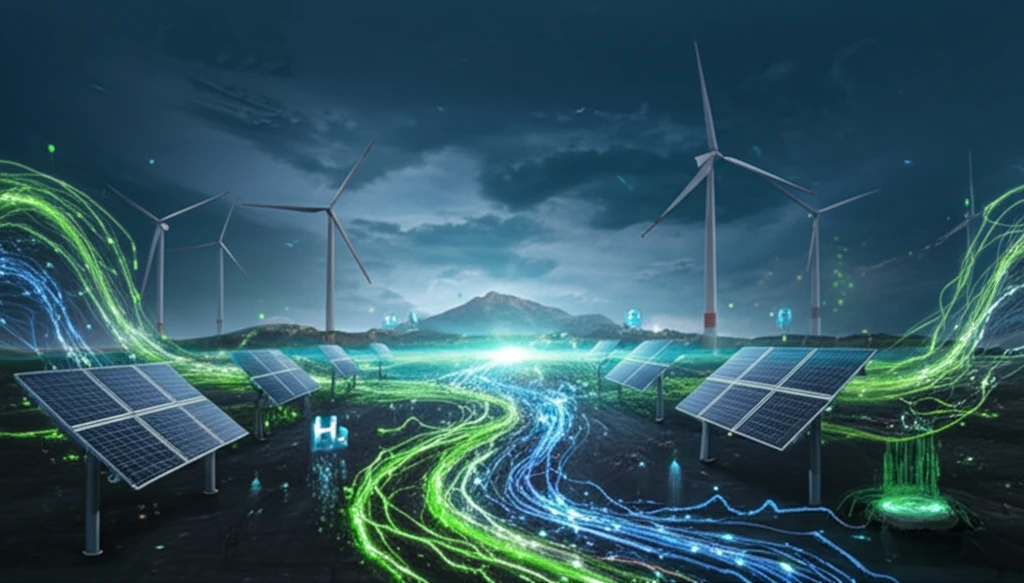
Sustainable energy ecosystem featuring hydrogen and electricity co-optimization.

Sustainable Energy Revolution: Can Hydrogen and Electricity Co-Optimization Save the Planet?

"Exploring the critical role of multi-technology approaches in achieving sustainable energy transitions by optimizing hydrogen and electricity supply chains for a greener future."


In the global race against climate change, hydrogen has emerged as a pivotal element, heralded as a carbon-free energy carrier and feedstock. As industries like heating and transportation intensify their efforts to decarbonize, the significance of understanding and managing hydrogen demand becomes paramount. This transition, however, is far from straightforward, complicated by varying regional scales and the diverse nature of hydrogen demand.

While current hydrogen production predominantly relies on steam methane reforming (SMR), its substantial carbon emissions necessitate a shift toward cleaner alternatives like blue and green hydrogen. Each production method brings its own set of characteristics, demanding a thorough exploration and co-optimization alongside electricity supply chains, carbon capture, utilization, and storage systems.

This article delves into a groundbreaking study that addresses existing research gaps by introducing a superstructure optimization framework. This framework accommodates various demand scenarios and technologies, providing a comprehensive approach to sustainable energy transitions. By examining case studies, we aim to underscore the critical role of demand profiles in shaping optimal configurations and the economics of supply chains, emphasizing the need for diversified portfolios and co-optimization.

Why Diversifying Hydrogen Production is Key to a Sustainable Future

Sustainable energy ecosystem featuring hydrogen and electricity co-optimization.

The carbon intensity of hydrogen production varies significantly depending on the electricity source, even when using the same production technology. For instance, SMR exhibits minimal variation due to its low electricity consumption rate, while blue hydrogen, which incorporates carbon capture and storage (CCS) with SMR and autothermal reforming (ATR), results in a fourfold increase in electricity consumption. Green hydrogen, on the other hand, requires approximately fifty times more electricity.

Despite its higher energy consumption, green hydrogen possesses the greatest potential for reducing carbon intensity, particularly when sourced from renewable energy. Therefore, optimizing both hydrogen and electricity supply chains simultaneously is crucial for addressing environmental concerns and enhancing the economic viability of hydrogen production.

  • Navigating the Transition: Transitioning to multi-technology hydrogen and electricity supply chains.
  • Optimal Configuration: Analyzing optimal configuration and economic feasibility by varying demand type and scale.
To fully understand the energy transition, various scenarios must be explored. By analyzing the benefits of a diversified portfolio—comparing results from unique cases (employing a single hydrogen production technology and electricity source) to base cases (co-optimizing diversified hydrogen and electricity supply chains)—optimal strategies for expanding demand and diverse technological environments can be identified.

Toward a Sustainable Energy Ecosystem

This exploration into hydrogen and electricity supply chains reveals complex interactions that provide critical insights for policymakers and industry stakeholders. By understanding the potential of diversified portfolios, this study contributes to a deeper comprehension of the complexities involved in transitioning toward a greener, more resilient energy ecosystem, with implications that extend beyond regional boundaries to influence global sustainable energy discussions. The insights gained emphasize the importance of configurations that consider demand characteristics, technological factors, and external market forces, providing valuable guidance for navigating the path towards sustainable energy systems.

About this Article -

This article was crafted using a human-AI hybrid and collaborative approach. AI assisted our team with initial drafting, research insights, identifying key questions, and image generation. Our human editors guided topic selection, defined the angle, structured the content, ensured factual accuracy and relevance, refined the tone, and conducted thorough editing to deliver helpful, high-quality information.See our About page for more information.

This article is based on research published under:

DOI-LINK: https://doi.org/10.48550/arXiv.2406.00669,

Title: Multi-Technology Co-Optimization Approach For Sustainable Hydrogen And Electricity Supply Chains Considering Variability And Demand Scale

Subject: eess.sy cs.sy econ.gn q-fin.ec

Authors: Sunwoo Kim, Joungho Park, Jay H. Lee

Published: 02-06-2024

Everything You Need To Know

1

What is the core objective of co-optimizing hydrogen and electricity supply chains?

The core objective is to achieve sustainable energy transitions and a greener future. This involves optimizing both hydrogen and electricity supply chains to reduce carbon emissions and enhance the economic viability of hydrogen production. The process relies on a diversified portfolio of energy sources and innovative technologies.

2

What are the primary methods for hydrogen production, and how do they impact carbon emissions?

The primary methods include steam methane reforming (SMR), blue hydrogen (SMR with carbon capture), and green hydrogen. SMR has substantial carbon emissions. Blue hydrogen, using carbon capture and storage (CCS) with SMR and autothermal reforming (ATR), has lower carbon emissions, but consumes significantly more electricity. Green hydrogen, produced using renewable energy, has the lowest carbon intensity but requires substantially more electricity compared to other methods.

3

Why is it important to diversify hydrogen production methods, and what role do diversified portfolios play?

Diversifying hydrogen production is crucial because it allows for a reduction in carbon intensity and enhances economic viability. The carbon intensity of hydrogen production varies greatly depending on the production method and electricity source. Diversified portfolios, which include a mix of technologies and energy sources, allow for optimal strategies to expand demand and adapt to different technological and market environments. This supports the transition to a greener, more resilient energy ecosystem by considering demand characteristics, technological factors, and external market forces.

4

How does the study use a 'superstructure optimization framework,' and what does it analyze?

The study employs a 'superstructure optimization framework' to analyze various demand scenarios and technologies. This framework provides a comprehensive approach to sustainable energy transitions. It examines case studies to underscore the critical role of demand profiles in shaping optimal configurations and the economics of supply chains. The framework helps in identifying optimal strategies for expanding demand and diverse technological environments by comparing unique and base cases, such as employing single hydrogen production technologies versus co-optimizing diversified hydrogen and electricity supply chains.

5

What are the broader implications of co-optimizing hydrogen and electricity, and who benefits from this approach?

The broader implications include a deeper comprehension of the complexities involved in transitioning toward a greener, more resilient energy ecosystem. This approach provides critical insights for policymakers and industry stakeholders, extending beyond regional boundaries to influence global sustainable energy discussions. By understanding the potential of diversified portfolios and configurations that consider demand characteristics, technological factors, and market forces, valuable guidance is provided for navigating the path toward sustainable energy systems. This benefits not only industries like heating and transportation which are decarbonizing but also contributes to global efforts to combat climate change.

Newsletter Subscribe

Subscribe to get the latest articles and insights directly in your inbox.