
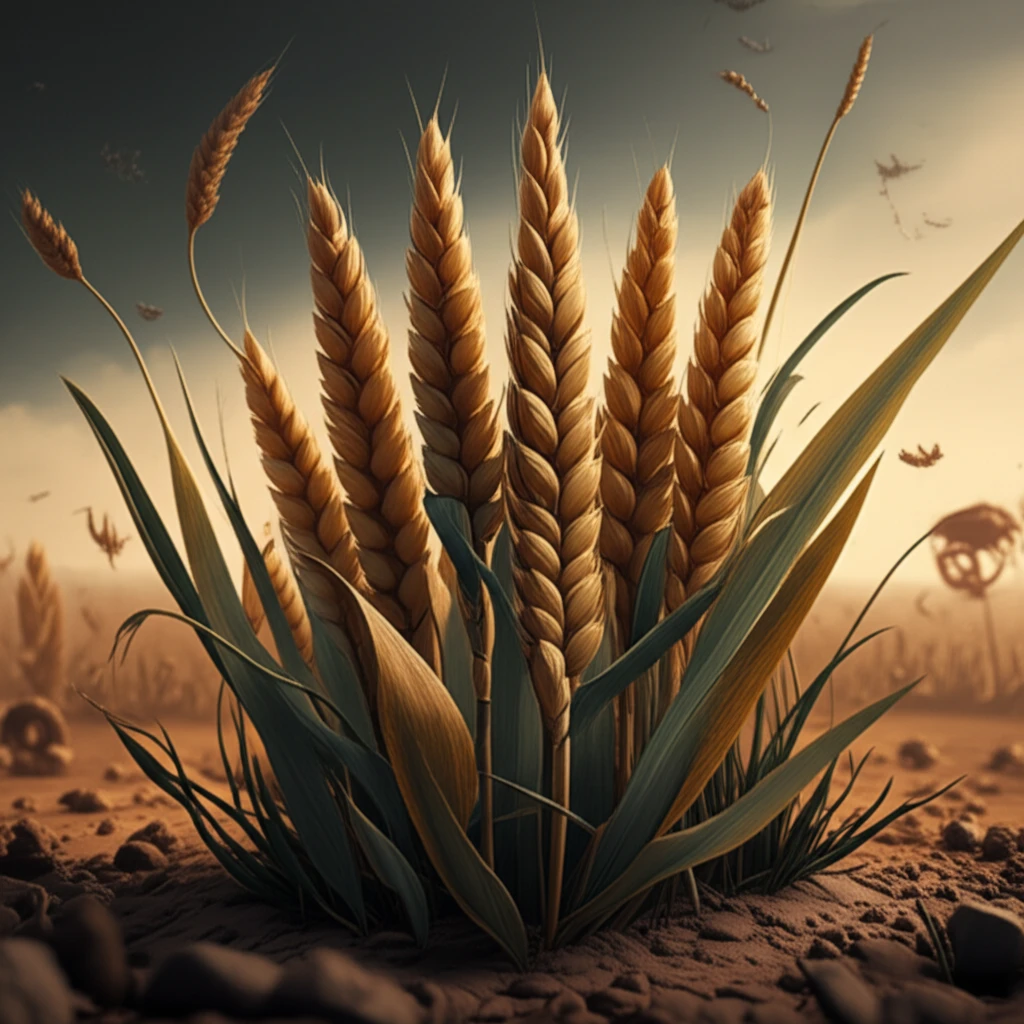
Super Wheat: How Sea Wheatgrass Could Revolutionize Crop Resistance

"Scientists develop a hardy wheat hybrid by crossing it with sea wheatgrass, unlocking resistance to pests, diseases, and harsh environmental conditions."
Wheat, a staple food for billions, faces increasing threats from climate change, diseases, and pests. These challenges impact crop yields and food security, demanding innovative solutions to enhance wheat's resilience.
One promising approach involves tapping into the genetic diversity of wild relatives. Sea wheatgrass (Thinopyrum junceiforme), a hardy coastal plant, has emerged as a potential source of valuable traits for wheat improvement. Sea wheatgrass possesses natural resistance to various stresses, making it an ideal candidate for crossbreeding.
Recent research has successfully developed a stable wheat-sea wheatgrass hybrid, known as an amphiploid. This breakthrough allows scientists to study and utilize sea wheatgrass genes to bolster wheat's defenses against environmental stresses and diseases. This article explores the development, characteristics, and potential of this super wheat.
Why is This Hybrid Such a Game-Changer?
The new wheat-sea wheatgrass amphiploid, named 13G819, exhibits a range of desirable traits. Molecular analysis confirms that 13G819 combines the complete genetic material of both wheat and sea wheatgrass. This is a significant achievement, as it creates a stable platform for incorporating the wild relative's beneficial genes into cultivated wheat.
- High tolerance to waterlogging: It can withstand prolonged periods of soil saturation.
- Resistance to manganese toxicity and salinity: It thrives in soils with high salt or manganese concentrations.
- Tolerance to low nitrogen conditions: It grows well even when nitrogen fertilizer is limited.
- Resistance to wheat streak mosaic virus (WSMV) and Fusarium head blight (FHB): It effectively fights off these devastating diseases.
- Solid stems: This provides resistance to wheat stem sawflies, a major insect pest.
What's Next for Super Wheat?
While the development of the wheat-sea wheatgrass amphiploid is a major step forward, further research is needed to fully unlock its potential. Scientists are now working to:
Identify specific genes responsible for the desirable traits: This will allow for more precise breeding strategies. Transfer these genes into elite wheat varieties: Ensuring that the beneficial traits are combined with high yield and quality. Develop molecular markers: These markers will help breeders easily track and select for the desired genes in breeding programs.
By integrating sea wheatgrass genes into cultivated wheat, researchers hope to create a new generation of climate-smart crops that can thrive in a changing world. This approach not only enhances food security but also promotes more sustainable agricultural practices.