
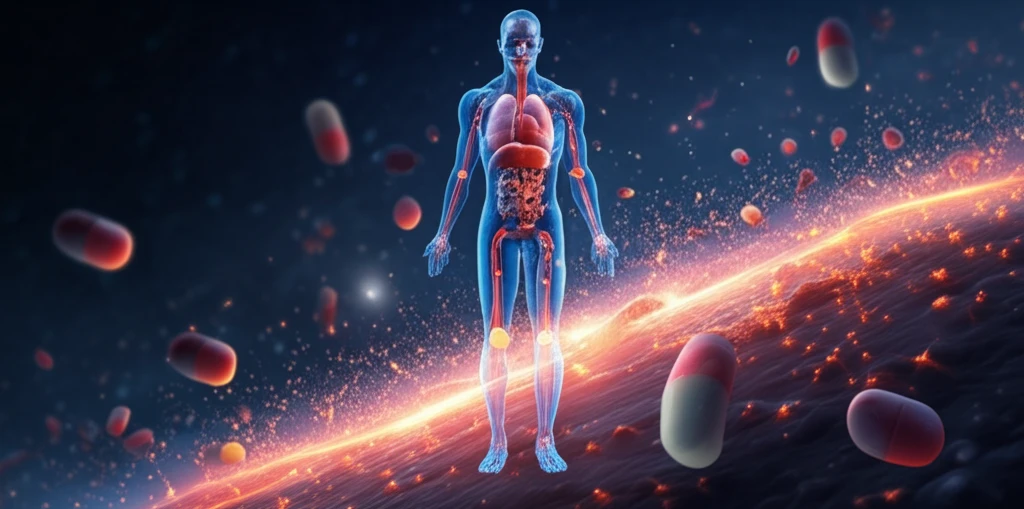
Super Absorbent Hydrogels: Revolutionizing Drug Release for a Healthier Future

"Explore how innovative hydrogels are transforming drug delivery, enhancing treatment efficacy and patient well-being."
In the realm of modern medicine, targeted drug delivery systems (DDSs) are crucial for enhancing treatment efficacy and minimizing side effects. Among the various innovations in this field, super absorbent hydrogels have emerged as promising candidates. These advanced materials offer unique capabilities for controlled drug release, biocompatibility, and biodegradability, making them ideal for a wide range of therapeutic applications.
Traditional drug delivery methods often involve administering medication in large doses, leading to systemic exposure and potential adverse effects. Super absorbent hydrogels, on the other hand, provide a sophisticated approach by encapsulating drugs and releasing them at a controlled rate and specific location. This targeted delivery ensures that the medication reaches the affected area while minimizing exposure to healthy tissues.
This article delves into the fascinating world of super absorbent hydrogels, exploring their synthesis, properties, and applications in drug delivery. We will examine how these innovative materials are revolutionizing medical treatments, improving patient outcomes, and paving the way for a healthier future.
The Growing Role of Hydrogels in Drug Delivery
Hydrogel drug delivery systems are gaining significant traction in pharmaceutical research, with multiscale mechanisms underlying their design now well-characterized. The orally controlled-release drug delivery system is considered the most constructive formulation option for increasing patient compliance and reducing healthcare costs. These systems provide control over the release of encapsulated therapeutic entities under various bioenvironmental conditions, making them versatile platforms for modern medicine.
Challenges in Characterizing Hydrogel Performance
Despite their promise, a lack of standardized methodologies used to characterize and evaluate drug release poses significant difficulties when comparing findings across studies. Some hydrogels can induce hypoxia as a state of oxygen deprivation, which can be considered either a limitation or an advantage depending on the application. The standard method for quantitatively characterizing the degradability of hydrogels in vitro involves measuring weight loss during the degradation process, though this approach has inherent constraints.
A Century of Hydrogel Development
The term hydrogel can be traced back to 1894, with the first hydrogel reported for biomedical implant in 1949. The first pH-sensitive hydrogel was synthesized in 1971 by Kopecek, who introduced inorganic groups on the pHEMA backbone to manipulate pH responsiveness. A superabsorbent cross-linked polymer starch-g-polyacrylate has been used since 1978 in Japan, marking an early commercial application of these materials in drug delivery.
How Do pH-Responsive Hydrogels Work?
At the heart of this innovation lies the pH-responsive nature of these hydrogels. Crafted from materials that react to different acidity levels, these hydrogels can be designed to release drugs in specific parts of the body. For instance, a hydrogel might remain intact in the acidic environment of the stomach but dissolve and release its cargo in the more alkaline conditions of the intestines.
- Synthesis: Acrylic monomers are graft copolymerized onto collagen backbones.
- Crosslinking: Methylene bisacrylamide acts as a crosslinker to stabilize the hydrogel structure.
- pH Sensitivity: Carboxylate groups within the hydrogel respond to changes in pH, triggering swelling or shrinking.
Injectable and Stimuli-Responsive Systems
Recent research has focused on injectable hydrogels, which offer minimally invasive administration and can adapt to irregular tissue defects. Light-responsive hydrogels enable accurate control of drug release rates by changing hydrogel properties in response to external stimuli. These systems typically have low affinity with drugs, which helps achieve controlled release profiles that are difficult to attain with conventional formulations.
Burst Release and Therapeutic Failures
Even if a hydrogel delivery formulation is designed with the appropriate physical and transport properties, it may still fail to perform its therapeutic role in clinical settings. Hydrogels face limitations like rapid burst release and non-specific drug release, requiring innovative solutions to overcome these challenges. These shortcomings highlight the gap between laboratory performance and real-world clinical outcomes.
Balancing Performance Against Limitations
Hydrogel-based drug delivery systems offer advantages over conventional formulations in terms of biocompatibility and tunable release kinetics, though they come with trade-offs in manufacturing complexity and scalability. The choice between hydrogel platforms often depends on the specific therapeutic application, desired release duration, and target tissue characteristics. Continued innovation is needed to address the inherent limitations while preserving the unique benefits these materials provide.
The Future is Hydrogel
Super absorbent hydrogels represent a significant advancement in drug delivery technology, offering unprecedented control over drug release and targeting. Their pH-responsive nature, biocompatibility, and biodegradability make them ideal candidates for a wide range of therapeutic applications. As research in this area continues to advance, we can expect to see even more innovative uses for hydrogels in the years to come, paving the way for personalized medicine and improved patient outcomes.
Defining Success Criteria for Oral Delivery
A successful oral drug delivery platform that uses superporous hydrogels is expected to meet certain criteria including safety, effectiveness, and desirable drug release profiles. Expert opinion emphasizes that these systems must demonstrate reproducibility and scalability to transition from research to clinical application. The field continues to refine what constitutes an optimal hydrogel formulation for different therapeutic contexts.
Market Growth and Emerging Trends
The global hydrogel-based drug delivery system market is valued at US$8.9 billion in 2026 and projected to reach US$14.4 billion by 2033, growing at a CAGR of 7.0%. Current trends indicate increasing investment in smart hydrogels that respond to multiple stimuli, opening new possibilities for personalized medicine. The field is moving toward more sophisticated systems that integrate biosensing capabilities with controlled release mechanisms.
Precision Delivery and External Stimuli
Recent efforts in hydrogel-based drug delivery aim at developing systems more responsive toward changes in external stimuli like pH, temperature, and magnetic fields. A team of Stanford researchers has developed a precisely controlled hydrogel drug delivery system that prevents scarring and promotes wound healing in large injuries. These advances demonstrate how hydrogels can address complex medical challenges beyond simple sustained release.
Transforming Patient Outcomes
Hydrogel drug release systems offer a cutting-edge approach to controlled drug delivery, ensuring precise release rates and enhanced therapeutic outcomes. These technologies have the potential to reduce side effects, improve patient compliance, and enable treatments that were previously impractical with conventional formulations. As the field matures, the focus shifts toward making these advanced systems accessible and affordable for broader patient populations.