
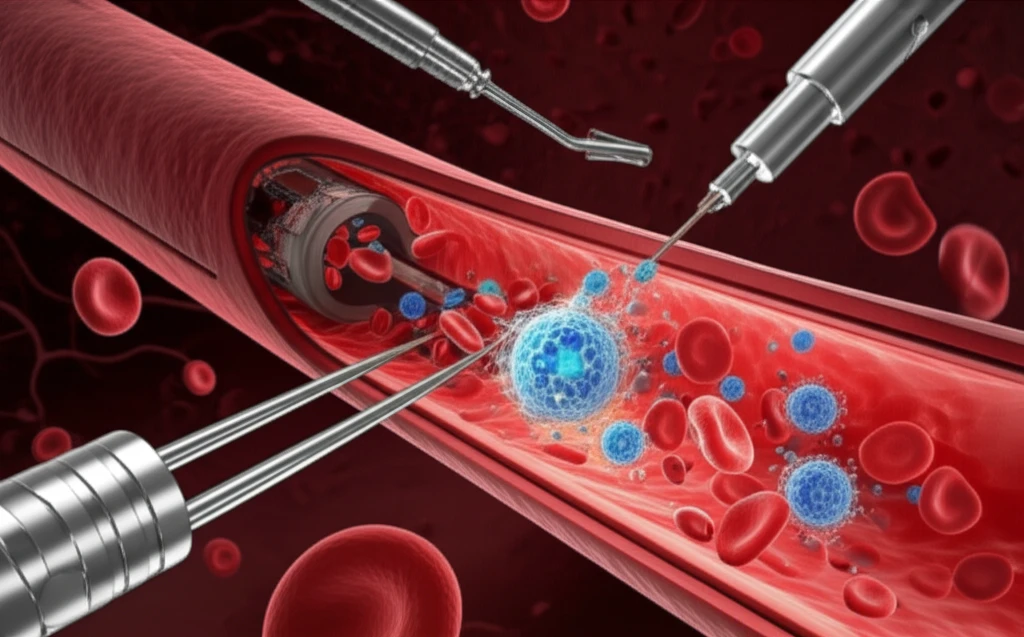
Illustration of combined stroke therapy, featuring mechanical thrombectomy and thrombolysis.

Stroke Treatment Showdown: Is Combining Therapies Better Than One?

"A new look at how combining intra-arterial thrombolysis (IAT) with mechanical thrombectomy (MT) could change stroke treatment outcomes."


Stroke is a leading cause of disability, and rapid treatment is critical. For many patients suffering from acute ischemic stroke, endovascular interventions, which involve treating the stroke from inside the blood vessels, offer a lifeline.

Among these interventions, mechanical thrombectomy (MT) has become a standard approach, particularly for those ineligible for or unresponsive to intravenous thrombolysis (clot-busting drugs). However, the role of combining MT with intra-arterial thrombolysis (IAT), where clot-busting drugs are delivered directly to the site of the blockage, has remained a topic of investigation.

A retrospective study has shed new light on the potential benefits of this combined approach, comparing outcomes of patients who received MT alone versus those who underwent combined MT and IAT. The results offer valuable insights into improving stroke care and patient recovery.

IAT and MT Combination: A Closer Look at Stroke Treatment

Illustration of combined stroke therapy, featuring mechanical thrombectomy and thrombolysis.

The study, conducted at a comprehensive stroke center, retrospectively reviewed the cases of 200 patients who underwent endovascular treatments for acute ischemic stroke between 2007 and 2011. Out of these, 115 patients met the inclusion criteria for comparison: one group received MT alone, while the other received a combination of MT and IAT. The researchers then analyzed various outcome parameters to assess the safety and efficacy of each approach.

The primary outcomes under scrutiny included:

  • Discharge NIHSS (National Institutes of Health Stroke Scale): A measure of neurological deficit.
  • Clinical improvement: Defined as a decrease of more than 4 points on the NIHSS.
  • TIMI 2-3 (Thrombolysis in Myocardial Infarction) flow: Indicating partial to complete recanalization or restoration of blood flow.
  • Discharge modified Rankin Scale (mRS) ≤3: Assessing functional independence, with a score of 3 or less indicating a better outcome.
  • Symptomatic Intracerebral Hemorrhage (ICH): Bleeding in the brain causing new or worsening neurological symptoms.
  • All-cause mortality: Death from any cause.
The study found that while both groups had similar initial stroke severity, those who received the combined MT and IAT therapy showed some promising trends. The combined approach was associated with higher rates of recanalization, a greater number of patients showing clinical improvement, and lower NIHSS scores at discharge, suggesting reduced neurological deficits. Additionally, a higher percentage of patients in the combined therapy group were independently ambulating at discharge.

Interpreting the Findings: Risks and Rewards

While the study suggests potential advantages of the combined approach, it also reported higher rates of hemorrhage and slightly increased mortality rates in the combined therapy group. These findings underscore the need for careful patient selection and meticulous execution of the combined technique. Further research, including larger, randomized controlled trials, is essential to validate these findings and refine treatment protocols. In the meantime, this study provides valuable insights for clinicians to consider when making treatment decisions for acute ischemic stroke patients.

About this Article -

This article was crafted using a human-AI hybrid and collaborative approach. AI assisted our team with initial drafting, research insights, identifying key questions, and image generation. Our human editors guided topic selection, defined the angle, structured the content, ensured factual accuracy and relevance, refined the tone, and conducted thorough editing to deliver helpful, high-quality information.See our About page for more information.

Everything You Need To Know

1

What is mechanical thrombectomy and why is it used in stroke treatment?

Mechanical thrombectomy (MT) is a critical endovascular intervention used in acute ischemic stroke treatment. It involves the physical removal of a blood clot from a blocked vessel, typically in the brain. This procedure is particularly important for patients who aren't eligible for or don't respond to intravenous thrombolysis. MT aims to restore blood flow to the affected area of the brain, reducing neurological damage and disability. The success of mechanical thrombectomy is often measured by the Thrombolysis in Myocardial Infarction (TIMI) flow, with a TIMI 2-3 indicating successful recanalization. Achieving this recanalization is vital for improving patient outcomes and functional independence.

2

What is intra-arterial thrombolysis and what role does it play in treating strokes?

Intra-arterial thrombolysis (IAT) is a treatment method for acute ischemic stroke where clot-busting drugs are delivered directly to the site of the blockage within the brain's blood vessels. The significance of IAT lies in its targeted approach, potentially dissolving the clot more effectively than intravenous thrombolysis, especially in cases where the clot is large or difficult to reach. While IAT can improve recanalization, its use, especially in combination with mechanical thrombectomy, needs careful consideration due to the risk of symptomatic intracerebral hemorrhage (ICH). Further research is needed to fully understand its role and optimize its application in stroke treatment protocols.

3

What is the NIHSS, and how is it used to assess stroke patients?

The National Institutes of Health Stroke Scale (NIHSS) is a standardized assessment tool used to evaluate the neurological deficit in stroke patients. It quantifies the severity of stroke symptoms, such as motor skills, sensory loss, language ability, and level of consciousness. The NIHSS score is significant as it provides a baseline measure of a patient's condition upon arrival and tracks changes during and after treatment. A decrease of more than 4 points on the NIHSS indicates clinical improvement. The discharge NIHSS score reflects the extent of neurological damage remaining after treatment, helping to predict long-term outcomes and guide rehabilitation strategies.

4

What is the modified Rankin Scale, and why is it important in stroke recovery?

The modified Rankin Scale (mRS) is a commonly used scale to measure the degree of disability or dependence in daily activities experienced by people who have suffered a stroke or other neurological disability. It is significant because it provides a global measure of a patient's functional outcome after stroke treatment. A score of 3 or less on the discharge modified Rankin Scale (mRS) signifies a better outcome, indicating that the patient has achieved functional independence, such as the ability to ambulate independently. This measure is crucial in evaluating the effectiveness of treatments like mechanical thrombectomy and intra-arterial thrombolysis, as it directly reflects the patient's quality of life and ability to perform everyday tasks.

5

What is symptomatic intracerebral hemorrhage, and why is it a concern in stroke treatment?

Symptomatic Intracerebral Hemorrhage (ICH) is bleeding within the brain tissue that causes new or worsening neurological symptoms in stroke patients. It represents a serious complication of stroke treatment, particularly with the use of thrombolytic agents or combined therapies. ICH is a critical consideration in stroke management because it can negate the benefits of recanalization and lead to further neurological damage or even death. The risk of ICH must be carefully weighed against the potential benefits of treatments like intra-arterial thrombolysis and mechanical thrombectomy. Careful patient selection and monitoring are essential to minimize this risk and optimize outcomes.

Newsletter Subscribe

Subscribe to get the latest articles and insights directly in your inbox.