
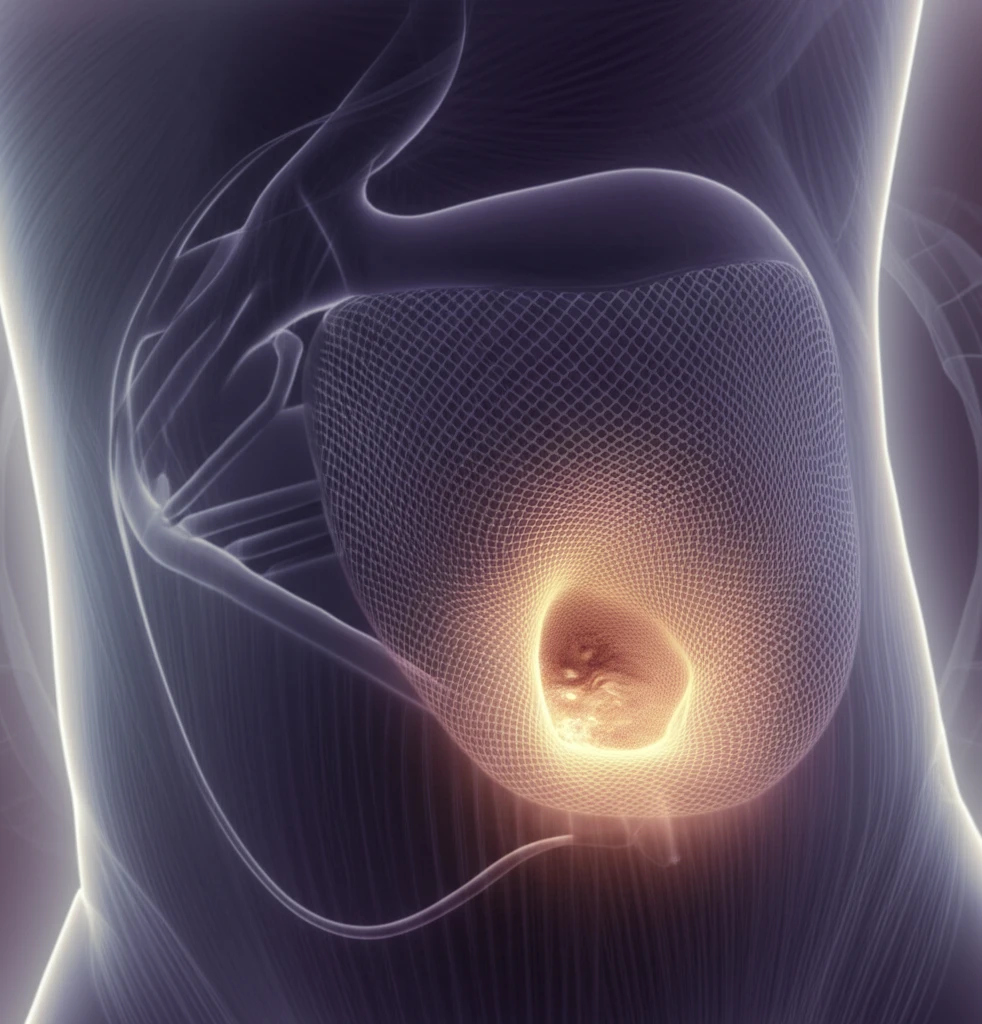
Protective mesh cradling a stoma site

Stoma Savior: Can a Simple Mesh Stop Pesky Hernias?

"Exploring Prophylactic Mesh Placement for Permanent Stomas During Colorectal Cancer Surgery"


If you're facing colorectal cancer surgery and the creation of a permanent stoma (an opening on your abdomen to divert waste), you might be wondering about potential complications down the road. One common issue is the development of a parastomal hernia, which occurs when tissue bulges around the stoma site. These hernias can cause discomfort, pain, and difficulties with appliance fitting, significantly impacting your quality of life.

Parastomal hernias are surprisingly common, affecting 30% to 50% of people who undergo colostomy formation. While some hernias are small and asymptomatic, others can lead to serious problems like strangulation or obstruction, requiring further surgery. This is why surgeons and researchers are constantly exploring ways to prevent these hernias from developing in the first place.

One promising approach is the placement of a Prolene® mesh during the initial colostomy surgery. This prophylactic (preventative) measure aims to reinforce the abdominal wall around the stoma, reducing the risk of herniation. Let's dive into the details of a recent study that investigated the effectiveness of this technique and see what the evidence suggests.

The Study: Mesh to the Rescue?

Protective mesh cradling a stoma site

Researchers in the UK conducted a study involving 41 colorectal cancer patients who underwent permanent colostomy formation. The study aimed to evaluate whether placing a Prolene® mesh at the time of the initial surgery could reduce the incidence and severity of parastomal hernias. Patients were followed up with annual CT scans to assess the stoma site and identify any hernias.

The researchers carefully analyzed the CT scans, looking for signs of parastomal hernias, measuring their size and volume, and noting the contents of the hernia sac (whether it contained bowel, omentum, or other tissue). They also measured the size of the abdominal wall defect (the opening through which the stoma passes).

  • Reduced Bowel Containing Hernias: For patients who developed hernias, the mesh significantly reduced the occurrence of bowel being present in the hernia at the one-year mark.
  • Smaller Abdominal Wall Defect: The mesh placement also resulted in a smaller diameter of the abdominal wall defect, suggesting it helped to reinforce the area around the stoma.
  • Fewer Grade III Hernias: There were no grade III hernias, which are typically the most symptomatic, in the mesh group compared to the non-mesh group.
The findings suggest that prophylactic mesh placement can indeed provide some protection against parastomal hernias. By reducing the size of the abdominal wall opening and preventing bowel from entering the hernia sac, the mesh seems to create a more stable and secure stoma site. However, it's important to note that this study, like many in the field, had certain limitations. For instance, the researchers primarily relied on radiological findings (CT scans) to assess hernias, rather than directly correlating them with patient symptoms. Additionally, the follow-up period was relatively short (one year), so the long-term effectiveness of the mesh remains to be seen.

Looking Ahead: Is Mesh the Answer?

While the results of this study are encouraging, it's important to remember that prophylactic mesh placement is not a guaranteed solution for preventing parastomal hernias. Every patient is different, and the decision to use mesh should be made on a case-by-case basis, taking into account individual risk factors and surgical considerations. However, for individuals at higher risk of developing a parastomal hernia, such as those with obesity, advanced age, or certain medical conditions, prophylactic mesh placement may be a valuable option to consider. Always discuss the risks and benefits of any surgical procedure with your surgeon to make an informed decision that is right for you. As research continues and techniques evolve, we can expect to see even more effective strategies for preventing parastomal hernias and improving the long-term outcomes for individuals with stomas.

About this Article -

This article was crafted using a human-AI hybrid and collaborative approach. AI assisted our team with initial drafting, research insights, identifying key questions, and image generation. Our human editors guided topic selection, defined the angle, structured the content, ensured factual accuracy and relevance, refined the tone, and conducted thorough editing to deliver helpful, high-quality information.See our About page for more information.

This article is based on research published under:

DOI-LINK: 10.1308/003588412x13373405386493, Alternate LINK

Title: Prophylactic Mesh Placement Of Permanent Stomas At Index Operation For Colorectal Cancer

Subject: General Medicine

Journal: The Annals of The Royal College of Surgeons of England

Publisher: Royal College of Surgeons of England

Authors: Nt Ventham, Rr Brady, Rg Stewart, Bm Ward, C Graham, S Yalamarthi, M Jones, T Daniel

Published: 2012-11-01

Everything You Need To Know

1

What is a parastomal hernia and why is it a concern for those with a stoma?

A parastomal hernia occurs when abdominal tissue bulges around the stoma site, which is an opening on the abdomen created to divert waste. This is a significant concern because these hernias can cause discomfort, pain, and difficulties with appliance fitting. In severe cases, parastomal hernias can lead to serious complications, such as strangulation or obstruction, potentially requiring additional surgery. This impacts the overall quality of life for individuals with stomas.

2

How does Prolene® mesh placement work to prevent parastomal hernias?

The Prolene® mesh is placed during the initial colostomy surgery as a preventative measure. It is designed to reinforce the abdominal wall around the stoma. This reinforcement reduces the risk of herniation by providing a barrier that prevents abdominal tissue from bulging through the weakened area. The mesh helps to create a more stable and secure stoma site.

3

What were the key findings of the study regarding Prolene® mesh and parastomal hernias?

The study showed several positive outcomes. Firstly, for patients who developed hernias, the mesh significantly reduced the occurrence of bowel being present in the hernia. Secondly, Prolene® mesh placement resulted in a smaller diameter of the abdominal wall defect. Lastly, there were no Grade III hernias in the mesh group. These findings suggest the mesh offers protection against parastomal hernias, potentially improving long-term outcomes for patients.

4

Are there any limitations to the study, and what are the implications for patients?

Yes, the study had some limitations. It primarily relied on radiological findings (CT scans) to assess hernias rather than correlating them directly with patient symptoms. Also, the follow-up period was relatively short (one year), so the long-term effectiveness of the mesh remains to be seen. For patients, this means that while the results are encouraging, prophylactic mesh placement is not a guaranteed solution. The decision to use the mesh should be made on a case-by-case basis, considering individual risk factors and surgical considerations.

5

Who might be a good candidate for prophylactic Prolene® mesh placement, and what should patients do?

Individuals at higher risk of developing a parastomal hernia, such as those with obesity, advanced age, or certain medical conditions, may be good candidates for prophylactic Prolene® mesh placement. However, the decision should be made in consultation with a surgeon, considering individual risk factors and surgical considerations. Patients should always discuss the risks and benefits of any surgical procedure with their surgeon to make an informed decision that is right for them. Staying informed about the latest research and techniques is crucial for optimizing long-term outcomes for individuals with stomas.

Newsletter Subscribe

Subscribe to get the latest articles and insights directly in your inbox.