
Spray Cooling Revolution: How Low-Alcohol Additives Are Changing Heat Dissipation

"Discover the surprising science behind spray cooling with low-alcohol additives and how it's revolutionizing thermal management in electronics."
In the fast-paced world of electronics, managing heat is a constant challenge. As devices become smaller and more powerful, the need for efficient cooling solutions has never been greater. Traditional methods are often bulky, energy-intensive, or simply unable to keep up with the demands of modern technology. That’s where spray cooling comes in—a highly effective technique that’s gaining traction for its ability to dissipate heat quickly and evenly.
But what if we could make spray cooling even better? Recent research has explored the use of low-alcohol additives to enhance the performance of spray cooling systems. This innovative approach leverages the unique properties of alcohols to improve heat transfer, reduce surface tension, and optimize the overall cooling process. Adding small amounts of alcohol can significantly alter the dynamics of spray cooling, leading to more efficient and reliable thermal management.
This article delves into the fascinating science behind spray cooling with low-alcohol additives. We’ll explore how these additives work, the benefits they offer, and the optimal conditions for their use. Whether you’re a tech enthusiast, an industry professional, or simply curious about the latest advancements in thermal management, this is your guide to understanding the spray cooling revolution.
The Growing Need for Advanced Thermal Management
Effective thermal management is critical to ensuring the normal operation and long-term stability of high-power equipment. As electronic devices continue to integrate and miniaturize, heat transfer demands surge, requiring cooling solutions with higher heat flux capacity. Spray cooling technology demonstrates robust thermal management performance, enabling efficient coolant utilization while maintaining low surface temperatures at the cooling interface.
Conventional Spray Cooling: Strengths and Shortcomings
Spray cooling is widely regarded as one of the most promising thermal management techniques, offering a high heat-transfer coefficient and the ability to keep cooling surfaces at low temperatures. Existing research has identified influential elements affecting performance, including droplet dynamics, surface properties, and coolant selection. However, persistent challenges and bottlenecks remain that limit broader practical applications, prompting ongoing optimization efforts.
The Evolution of Spray Cooling Science
Spray cooling has evolved significantly over recent decades as electronics have become smaller and more powerful. The foundational understanding of thermal dissipation mechanisms has grown alongside advances in fluid dynamics and materials science. While early work focused on basic heat transfer principles, modern research increasingly explores complex interactions between coolant chemistry, surface engineering, and spray characteristics. This progression reflects the broader trend in thermal management toward more sophisticated, application-specific solutions.
The Science of Spray Cooling with Low-Alcohol Additives
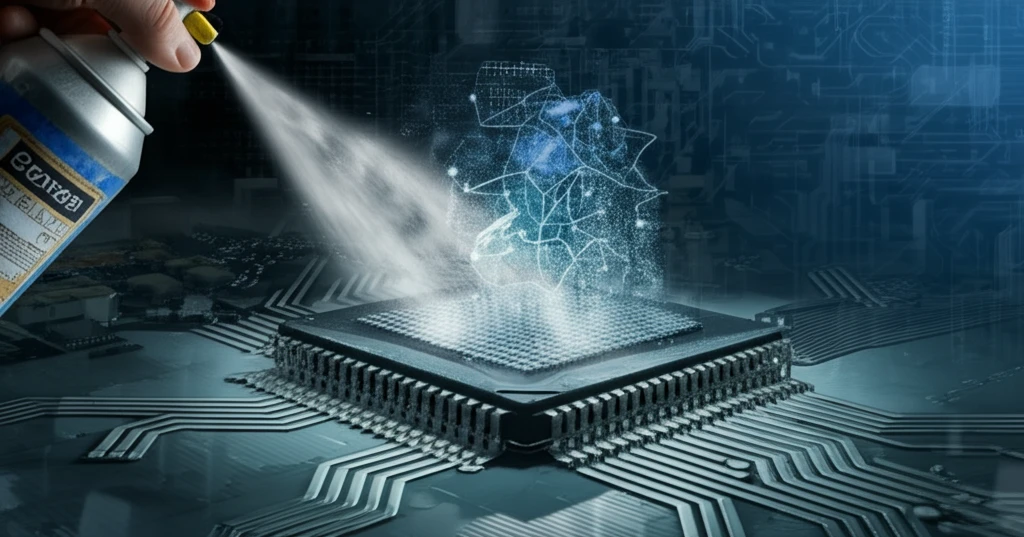
Spray cooling is a highly efficient method of heat transfer that involves spraying a liquid onto a hot surface. The liquid absorbs heat as it evaporates, effectively cooling the surface. This technique is particularly useful in electronics, where overheating can lead to reduced performance, component failure, or even catastrophic damage. The effectiveness of spray cooling depends on several factors, including the properties of the liquid, the spray pattern, and the surface characteristics.
- Reduced Surface Tension: Alcohols lower the surface tension of water, allowing the spray to form finer droplets and spread more evenly.
- Improved Wetting: Lower contact angles mean the liquid wets the surface more effectively, enhancing heat transfer.
- Enhanced Evaporation: Alcohols can promote faster evaporation, further increasing the cooling effect.
- Controlled Heat Dissipation: Adding the right amount of alcohol allows for precise control over heat dissipation, preventing hotspots and ensuring even cooling.
Emerging Trends in Spray Cooling Research
The spray cooling field continues to advance as researchers explore new coolant formulations and system designs. Recent work has examined integrated systems that combine spray cooling with other monitoring and control technologies. These developments suggest a shift toward smarter, more adaptive thermal management approaches that can respond to varying operational demands. The emphasis on efficient coolant utilization reflects growing interest in sustainable thermal solutions.
Challenges and Limitations Facing Spray Cooling
Despite its promise, spray cooling technology faces several practical hurdles that impede widespread adoption. Systems can suffer from non-uniform cooling, leading to hotspots that compromise component reliability. Additionally, the complexity of spray dynamics makes precise control difficult in many real-world implementations. Cost considerations and maintenance requirements also present barriers compared to simpler cooling alternatives.
Spray Cooling Versus Alternative Thermal Solutions
When compared to conventional air cooling or single-phase liquid cooling methods, spray cooling offers distinct advantages in heat removal density. Its ability to leverage phase-change heat transfer provides superior performance at high heat fluxes. However, the trade-off involves greater system complexity and potentially higher operational costs. The optimal cooling solution often depends on the specific thermal demands and constraints of the application.
The Future of Spray Cooling
As technology continues to advance, the demand for efficient and reliable cooling solutions will only increase. Spray cooling with low-alcohol additives represents a promising approach to meeting these demands. By understanding the science behind this technique and optimizing the use of alcohol additives, we can unlock new possibilities for thermal management in electronics and beyond. The ongoing research promises to optimize heat transfer and ensure the reliability and longevity of advanced electronic devices.
Consolidating Current Understanding
The collective body of research on spray cooling paints a picture of a technology at an inflection point. While fundamental principles are well-established, practical implementation challenges persist across diverse applications. Experts recognize that continued interdisciplinary collaboration between thermal scientists, materials engineers, and system designers will be essential. The balance between theoretical performance gains and real-world feasibility remains a central consideration.
Pathways Forward for Spray Cooling Innovation
Future research directions in spray cooling are likely to emphasize smart system integration and advanced coolant development. The incorporation of real-time monitoring and adaptive control could address current uniformity and reliability concerns. Novel coolant formulations may further enhance heat transfer characteristics while reducing environmental impact. These advances could expand spray cooling's applicability to emerging high-power electronics and energy systems.
Scaling Thermal Solutions for Industry
The broader thermal management landscape faces systemic challenges as power densities in electronics and industrial processes continue rising. Spray cooling represents one avenue in a diverse portfolio of cooling strategies needed to meet these demands. Addressing supply chain considerations, manufacturing scalability, and lifecycle sustainability will be critical for any thermal solution to achieve widespread deployment. Collaboration between academia, industry, and standards organizations will help navigate these complex requirements.
Practical Implications of Spray Cooling Advances
Advances in spray cooling technology have tangible implications for industries ranging from data centers to power electronics manufacturing. Improved thermal management can extend equipment lifespan, reduce energy consumption, and enhance operational reliability. The transition from laboratory demonstrations to production-ready systems requires careful attention to maintenance, safety, and user training. Ultimately, the success of spray cooling will depend on its ability to deliver consistent benefits in demanding real-world environments.