
Soft Tissue Tumors: How Early Detection and Innovative Imaging Can Save Lives

"Unveiling the power of ADC mapping in diagnosing and managing extramedullary plasmacytomas and other musculoskeletal lesions."
Soft tissue tumors can develop anywhere in the body, growing in muscles, fat, tendons, and other connective tissues. While some are benign (non-cancerous), others are malignant (cancerous) and can spread to other parts of the body. Early and accurate diagnosis is crucial for effective treatment and improved survival rates.
Traditional imaging techniques like X-rays and CT scans offer valuable insights, magnetic resonance imaging (MRI) has emerged as a powerful tool for visualizing soft tissue tumors. MRI provides detailed anatomical information and can differentiate between different types of tissues. However, standard MRI sequences sometimes fall short in characterizing tumors fully.
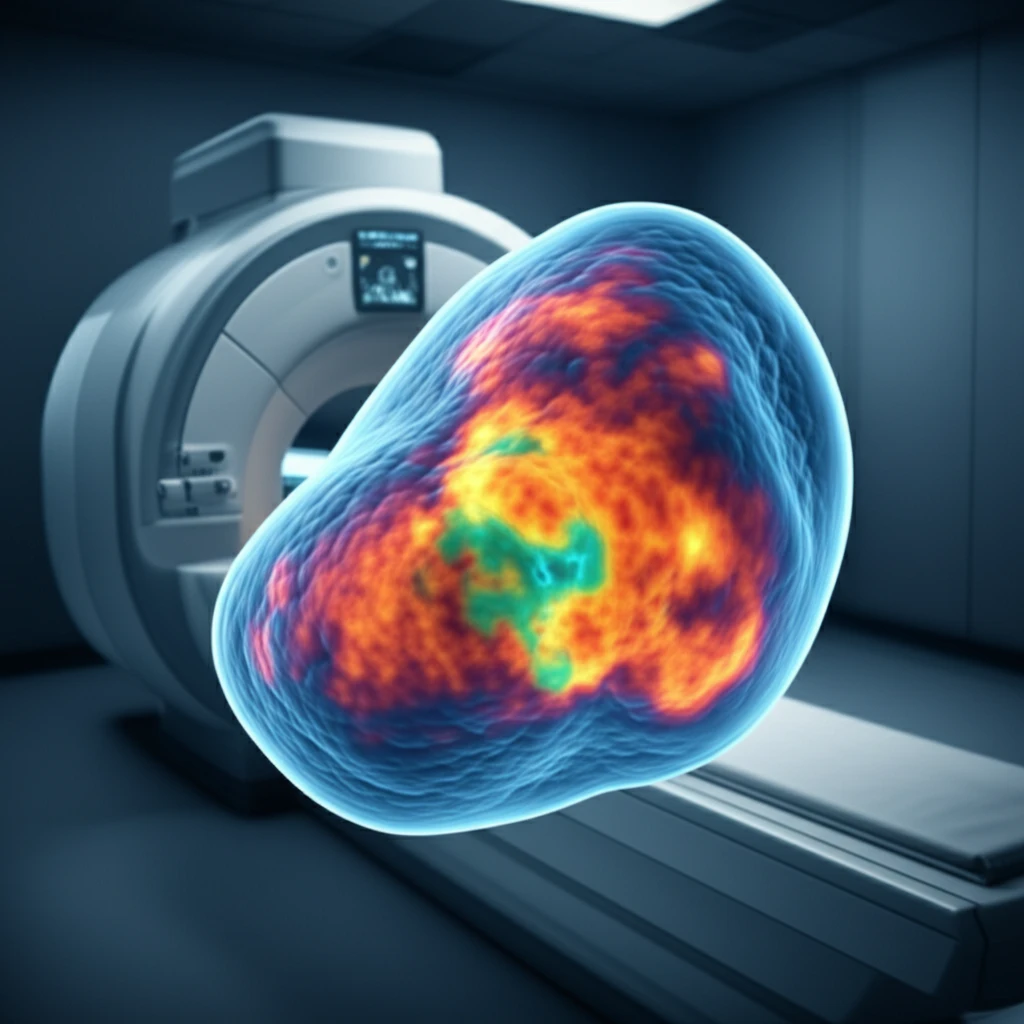
Apparent diffusion coefficient (ADC) mapping, a technique that enhances MRI, has emerged as a valuable tool in the diagnosis and management of soft tissue tumors. ADC mapping measures the diffusion of water molecules within tissues, providing information about cellularity and tissue structure. This information can help differentiate between benign and malignant tumors and assess treatment response.
Decoding ADC Mapping: A Closer Look at Tumor Diagnosis
ADC mapping works by measuring the movement of water molecules within tissues. In highly cellular tissues, such as tumors, water diffusion is restricted due to the presence of cell membranes and other cellular components. This restriction results in lower ADC values. Conversely, in tissues with less cellularity or increased extracellular space, water diffusion is less restricted, leading to higher ADC values.
- Distinguishing Tumors: ADC mapping helps differentiate between benign and malignant tumors by quantifying cellularity.
- Assessing Treatment Response: Changes in ADC values can indicate how tumors respond to treatments like chemotherapy or radiation.
- Guiding Biopsies: By pinpointing areas of high cellularity, ADC mapping assists in selecting the best sites for tissue sampling, ensuring more accurate diagnoses.
The Future of Imaging: Enhancing Diagnostics for Musculoskeletal Lesions
ADC mapping represents a significant advancement in the diagnosis and management of soft tissue tumors. By providing quantitative information about tissue cellularity, ADC mapping enhances the accuracy of MRI and helps clinicians make more informed decisions. As research continues, the applications of ADC mapping are likely to expand, further improving patient outcomes in musculoskeletal lesion diagnosis.