
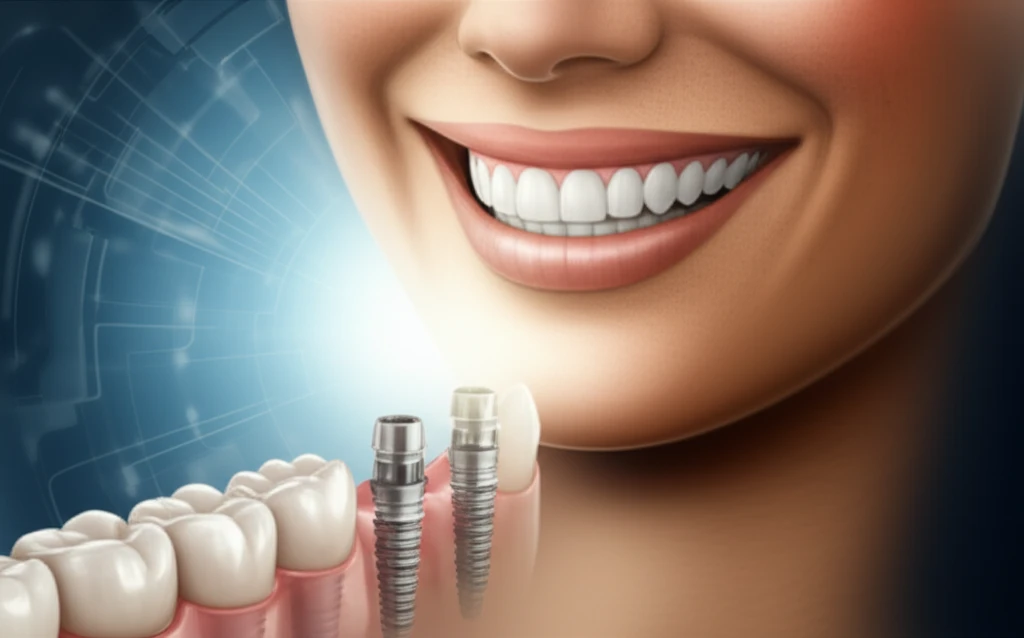
Digital illustration of a dental implant procedure without bone grafting, showcasing a healthy and confident smile.

Smile Makeover Without the Graft: New Implant Designs Revolutionizing Dental Procedures

"Discover how innovative implant designs are transforming the world of dental implants, offering hope and enhanced results for those seeking a radiant smile."


For many, the journey to a perfect smile involves navigating complex dental procedures. One common challenge is the need for bone grafting when replacing missing teeth, especially in the upper jaw where the sinus is located. This can be a lengthy and sometimes daunting process. However, a wave of innovation is changing the landscape of dental implants, offering new hope for those seeking a hassle-free path to a confident smile.

Traditional methods often involve bone grafting to ensure the implant has a solid foundation, particularly in cases of bone loss. This extra step can increase healing time and discomfort. But what if there was a way to bypass this lengthy process? The good news is, there is! Emerging implant designs are making it possible to achieve successful outcomes without bone grafting, revolutionizing how dentists approach sinus floor augmentation.

This article dives into the world of these cutting-edge dental implants. We'll explore their design, benefits, and the remarkable results they're achieving. Whether you're considering dental implants or simply curious about the latest advancements in dental care, this guide will provide valuable insights into a brighter, more accessible future for dental restoration.

The Science Behind the Smile: Understanding Graft-Less Sinus Floor Augmentation

Digital illustration of a dental implant procedure without bone grafting, showcasing a healthy and confident smile.

Graft-less sinus floor augmentation involves placing dental implants without the need for bone grafts in the upper jaw. This is a significant advancement, particularly when the space between the jaw and the sinus (the air-filled cavity above your upper teeth) is insufficient for traditional implants. This procedure uses specifically designed implants to work with the existing bone, making bone grafts unnecessary.

The key to this technique lies in the innovative design of the implants. These implants are crafted to maximize stability and promote bone integration, even in areas with limited bone volume. They often feature unique surface treatments and thread designs that encourage bone growth directly around the implant. This eliminates the need to harvest or use bone grafts, streamlining the process.

  • Innovative Implant Design: Modern implants feature advanced designs, such as a rounded apex and a sharp cutting flute oriented in the opposite direction of the implant threads.
  • Enhanced Surface Treatments: Many implants have a special surface that promotes faster bone integration.
  • Reduced Healing Time: With no bone graft needed, the recovery period is often shorter and less painful.
  • Minimally Invasive: The procedure is less invasive, leading to a more comfortable experience.
  • High Success Rates: Studies show that these new implant designs have high success rates.
This approach not only simplifies the procedure but also reduces the overall treatment time. Patients experience a more straightforward path to a restored smile, often without the additional waiting period associated with bone grafting. Moreover, the use of advanced materials ensures long-lasting results, providing patients with confidence in their new teeth.

Embrace a Confident Smile: The Future of Dental Implants

The advancements in graft-less sinus floor augmentation represent a significant step forward in dental care. These innovative implant designs offer a less invasive, more efficient, and highly effective solution for restoring smiles. If you're considering dental implants, discuss these new options with your dentist to explore how they can help you achieve the smile you've always wanted. The future of dental implants is here, and it's brighter and more accessible than ever.

About this Article -

This article was crafted using a human-AI hybrid and collaborative approach. AI assisted our team with initial drafting, research insights, identifying key questions, and image generation. Our human editors guided topic selection, defined the angle, structured the content, ensured factual accuracy and relevance, refined the tone, and conducted thorough editing to deliver helpful, high-quality information.See our About page for more information.

This article is based on research published under:

DOI-LINK: 10.1111/clr.159_13358, Alternate LINK

Title: Early Clinical Outcomes Of A New Implant Design Used In Graft-Less Sinus Floor Augmentation

Subject: Oral Surgery

Journal: Clinical Oral Implants Research

Publisher: Wiley

Authors: Giovanni Cricchio, Stefan Lundgren

Published: 2018-10-01

Everything You Need To Know

1

What is graft-less sinus floor augmentation, and how does it differ from traditional dental implant procedures?

Graft-less sinus floor augmentation is an innovative dental implant technique that eliminates the need for bone grafting in the upper jaw. Traditional methods often require bone grafting to create a solid foundation for the implant, which can extend healing time and increase discomfort. Graft-less augmentation uses specifically designed implants to integrate with the existing bone, making bone grafts unnecessary and streamlining the process. The key differences lie in the reduced invasiveness, shorter recovery times, and avoidance of a separate bone grafting procedure.

2

How do innovative implant designs facilitate graft-less sinus floor augmentation, and what are their key features?

Innovative implant designs are crucial for graft-less sinus floor augmentation. These implants are engineered to maximize stability and encourage bone integration, even in areas with limited bone volume. Key features include advanced designs such as a rounded apex and a sharp cutting flute oriented in the opposite direction of the implant threads. Enhanced surface treatments promote faster bone integration, eliminating the need for bone grafts. This combination of design and surface technology ensures successful outcomes without the additional step of bone grafting.

3

What are the benefits of choosing graft-less sinus floor augmentation over traditional dental implant procedures with bone grafting?

Opting for graft-less sinus floor augmentation offers several advantages. The most significant benefit is reduced healing time, as there is no need to wait for a bone graft to heal. The procedure is also less invasive, leading to a more comfortable experience for the patient. Graft-less techniques simplify the overall treatment, reducing the need for additional surgical procedures and associated costs. High success rates and the use of advanced materials ensure long-lasting results, providing patients with confidence in their restored smile.

4

What makes the surface treatments on these modern implants so important for graft-less procedures, and how do they enhance bone integration?

Enhanced surface treatments play a critical role in graft-less procedures by promoting faster and more effective bone integration. These treatments create a surface that encourages bone cells to attach and grow directly onto the implant. This accelerated integration is essential because it provides the necessary stability and support for the implant in areas with limited bone volume, making bone grafting unnecessary. The surface treatments help the implant to osseointegrate more quickly and securely, improving the overall success and longevity of the dental implant.

5

Who is an ideal candidate for graft-less sinus floor augmentation, and what factors should be considered when exploring this option for dental implants?

Ideal candidates for graft-less sinus floor augmentation are individuals with insufficient bone volume in the upper jaw who require dental implants. Key factors to consider include the patient's overall oral health, the specific anatomy of the sinus cavity, and the extent of bone loss. Patients should consult with a dentist to determine if they are suitable for this procedure. Graft-less options may be particularly advantageous for those seeking a less invasive and faster route to dental restoration, but a thorough evaluation is necessary to ensure the best possible outcome.

Newsletter Subscribe

Subscribe to get the latest articles and insights directly in your inbox.